AI system combined with use of extended-reality headset effectively teaches surgeons without need for an instructor
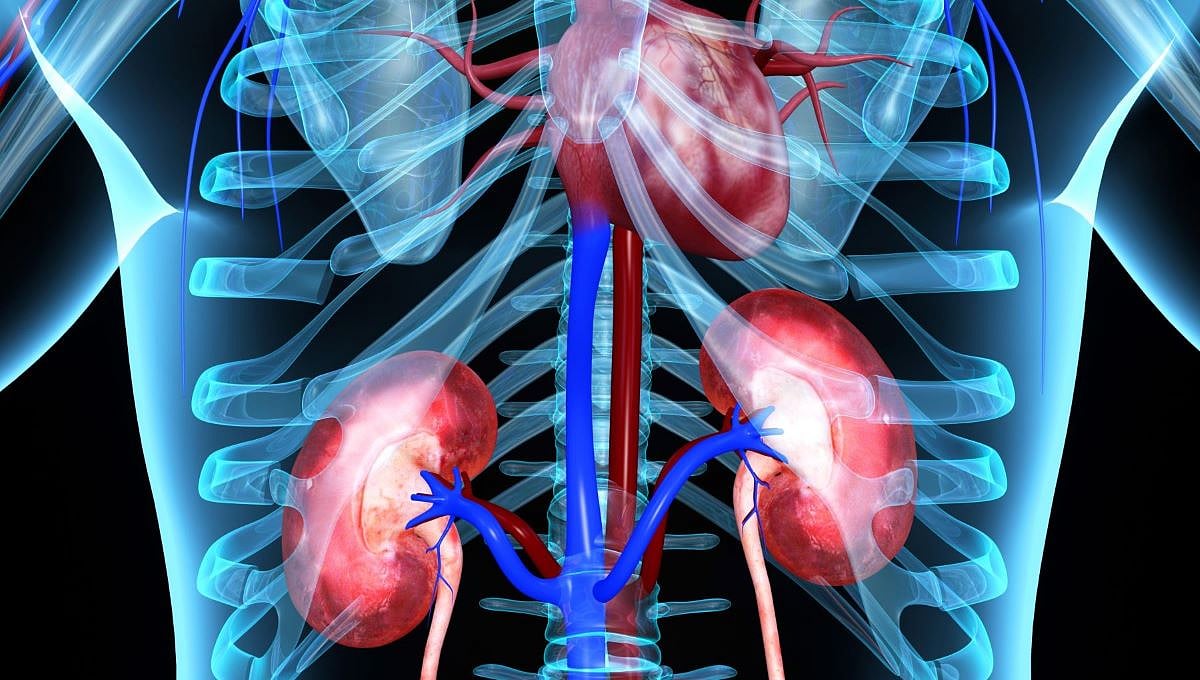
MONDAY, Aug. 11, 2025 (HealthDay News) — An artificial intelligence (AI) system can train surgeons to place a clamp on the renal artery using a phantom kidney, without the need for an instructor, according to a study published online July 23 in the Journal of Medical Extended Reality.
Jonathan J. Stone, M.D., from the University of Rochester Medical Center in New York, and colleagues examined whether AI algorithms combined with an extended reality (XR) headset could help train physicians without the need for an instructor. A partial nephrectomy phantom was created from three-dimensional-printed casts, which were filled with water-based polymers. Students wore a custom-designed XR headset, which received streamed training instructions and allowed observation while they placed a bulldog clamp on the phantom”s renal artery. Machine learning models were developed and used to create the educational system for instructorless surgical training (ESIST). After performing the procedure, 17 participants completed a 19-question survey for educational value and usability.
The researchers found that confusion matrix scores confirmed high algorithm performance, which achieved 99.91 percent accuracy for placement of the bulldog clamp on the renal artery. Survey responses to the value of ESIST were 0.3, 15.7, 47.4, and 36.6 percent strongly disagree, disagree, agree, and strongly agree, respectively. In 84 percent of the 19 questions, the responses were reported as favorable.
“We believe our study offers early proof that AI programs that substitute for proctors, who teach resident physicians, can reduce training costs and ultimately improve the quality, efficiency, and standardization of that instruction,” coauthor Nelson Stone, M.D., from the Icahn School of Medicine at Mount Sinai in New York City, said in a statement.
Several authors disclosed ties to Viomerse.
 Adenotonsillectomy Tied to Increase in Respiratory Tract Infections in Children
  Robotic Arm-Assisted TKR Offers Similar Outcome to Conventional TKR
  Preoperative Chemo + Immunotherapy Combo Shrinks Head, Neck Cancer Tumors
  Childhood-Onset Epilepsy Tied to Lower Rate of Educational Attainment
  Probable Postictal Psychosis Linked to Risk for Subsequent Primary Psychotic Disorders
  Paternal Exposure to Valproate Not Linked to Offspring Neurodevelopmental Disorders
  Bidirectional Association Found Between TBI, Neurological Diagnoses
  Patients From Most Rural Counties Have Worse Epilepsy Outcomes