


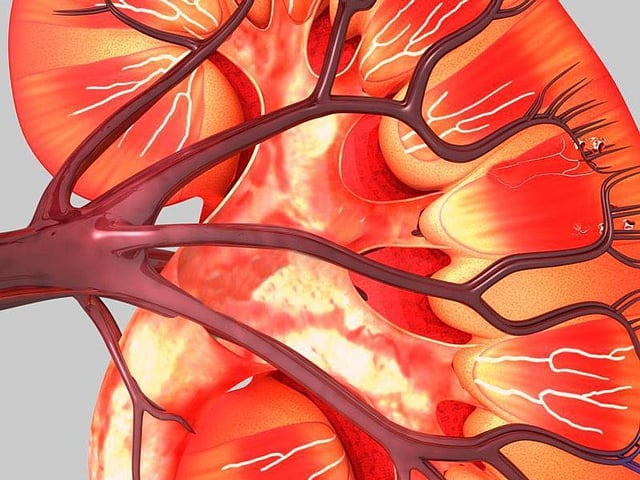
Objective response seen in 49 percent of patients with renal cell carcinoma associated with von Hippel-Lindau disease
FRIDAY, Dec. 10, 2021 (HealthDay News) — The hypoxia-inducible factor 2α inhibitor belzutifan is active in renal cell carcinoma associated with von Hippel-Lindau (VHL) disease, according to a study published in the Nov. 25 issue of the New England Journal of Medicine.
Eric Jonasch, M.D., from the University of Texas M.D. Anderson Cancer Center in Houston, and colleagues conducted a phase 2 open-label, single-group trial to examine the efficacy and safety of belzutifan administered orally for 61 patients with renal cell carcinoma associated with VHL disease.
The researchers found that 49 percent of the patients with renal cell carcinoma had an objective response after a median follow-up of 21.8 months. Responses also were observed in patients with pancreatic lesions and central nervous system hemangioblastomas (77 percent of 61 patients and 30 percent of 50 patients, respectively). All of the 16 eyes that could be evaluated in 12 patients with retinal hemangioblastomas at baseline were graded as showing improvement. Anemia and fatigue were the most common adverse events (90 and 66 percent, respectively). Seven of the patients discontinued treatment, including four who discontinued voluntarily and one who died of acute toxic effects of fentanyl.
“Half of the patients in this trial had an objective response and almost all patients saw a decrease in the size of their lesions,” Jonasch said in a statement. “Patients with VHL are able to have a better quality of life as this therapy can delay or avoid the need for surgery.”
Funding for this research was provided by Peloton Therapeutics Inc., a wholly owned subsidiary of Merck & Co.; one author disclosed financial ties to Merck, the manufacturer of belzutifan.
Abstract/Full Text (subscription or payment may be required)
 Drug Interactions Reducing Contraceptive Effectiveness Common in Epilepsy
 .jpg) Most Specialty Oral Anticancer Meds for Blood Cancers Are Initially Rejected by Insurers
Most Specialty Oral Anticancer Meds for Blood Cancers Are Initially Rejected by Insurers  Urine Cell-Free RNA Shows Promise as Biomarker for Bladder Cancer
  1 in 3 With Lupus Take Supplements, Medications With Potential for Interactions
  Holding DMARDs at Time of COVID-19 Vaccine Not Warranted in Those With Inflammatory Arthritis
  2013 to 2024 Saw Decrease in Benzodiazepine Prescribing
  GLP-1 Receptor Agonists, SGLT-2is Slow Renal Function Decline in T2D With Albuminuria
  Polypharmacy of Prescription Medications Increased for U.S. Older Adults




