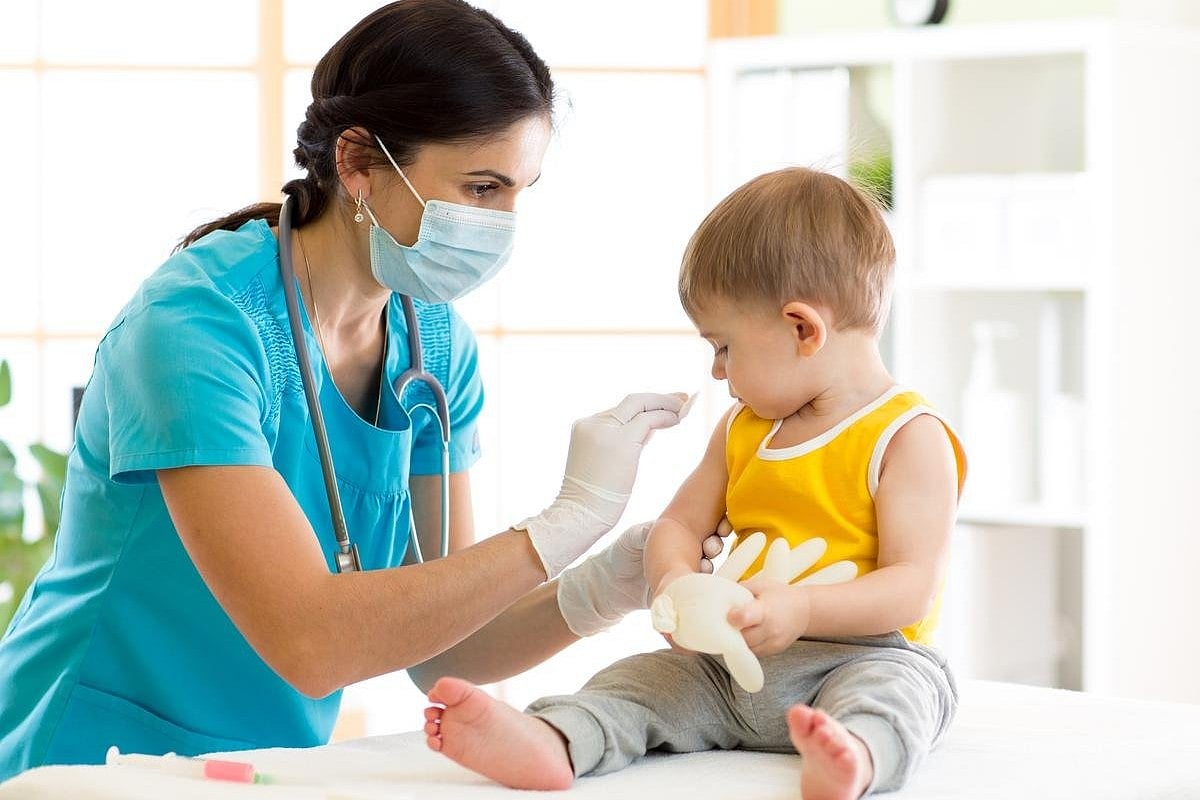
 MONDAY, March 10, 2025 (HealthDay News) — The U.S. Centers for Disease Control and Prevention (CDC) is preparing to study whether vaccines are linked to autism — despite overwhelming scientific […]
MONDAY, March 10, 2025 (HealthDay News) — The U.S. Centers for Disease Control and Prevention (CDC) is preparing to study whether vaccines are linked to autism — despite overwhelming scientific evidence showing no connection.
The study request came from Trump administration officials, according to sources familiar with the plan.
Both President Donald Trump and Health and Human Services Secretary (HHS) Robert F. Kennedy Jr. have repeatedly pushed claims that vaccines contribute to autism, despite decades of research disproving it.
“As President Trump said in his Joint Address to Congress, the rate of autism in American children has skyrocketed. CDC will leave no stone unturned in its mission to figure out what exactly is happening. The American people expect high quality research and transparency and that is what CDC is delivering,” HHS spokesman Andrew Nixon said in a statement.
Autism diagnoses have increased significantly over the years. About 1 in 36 children in the U.S. has an autism diagnosis today, compared to 1 in 150 in 2000, according to CDC data from 11 states.
Experts say greater awareness and changes in how it”s classified by medical professionals explain much of the increase.
But researchers are still investigating genetic and environmental factors that may play a role.
Despite all of the uncertainties, one thing most scientists agree on is that vaccines do not cause autism.
Years of research involving hundreds of thousands of children have found no link.
A 2019 study of a half-million kids in Denmark confirmed that the measles, mumps, and rubella (MMR) vaccine does not increase autism risk, The Washington Post reported.
“Dozens and dozens of studies have been conducted looking at vaccines and autism and they all show the same result: no relationship,” Alison Singer, president of the Autism Science Foundation, a nonprofit organization that funds autism research, told The Post.
The idea that vaccines cause autism stems from a now-retracted 1998 study that falsely linked the MMR vaccine to autism. Its lead author, Dr. Andrew Wakefield, was later barred from practicing medicine after being found guilty of professional misconduct, The Post reported.
Critics say conducting yet another study on this topic is not only unnecessary but irresponsible.
“I know they’re going to find that vaccines have no relationship to autism, but spending taxpayer dollars to study something that has already been exhaustively studied is a waste of taxpayer dollars and a diversion, when we could be spending those dollars to study other reasons autism could be occurring,” said Dr. Georges Benjamin, longtime head of the American Public Health Association.
Dr. Susan Kressly, president of the American Academy of Pediatrics, agreed.
She said the study “does a disservice to individuals with autism and their families by diverting funding that is needed to learn more about autism and how we can strengthen supportive communities.”
 2005 to 2023 Saw More U.S. Women Never Screened for Cervical Cancer
  December 2024 to 2025 Saw Significant Increase in Leucovorin Dispensing
  Study IDs Neurobiological Roots of Sensory Over-Responsivity
  4CMenB Vaccine Confers Modest Protection Against Gonorrhea in Teens
  Digital Behavioral Health Game Reduces Depressive Symptoms in Teens
 .jpeg) Flu Treatment With Oseltamivir Linked to Reduced Risk for Pediatric ICU Admissions, Length of Stay
Flu Treatment With Oseltamivir Linked to Reduced Risk for Pediatric ICU Admissions, Length of Stay  Reinitiating Obesity Meds After Bariatric Surgery Tied to Greater One-Year Weight Loss in Youths
  AAP Releases Influenza Vaccine Recommendations for All Children 6 Months and Older