


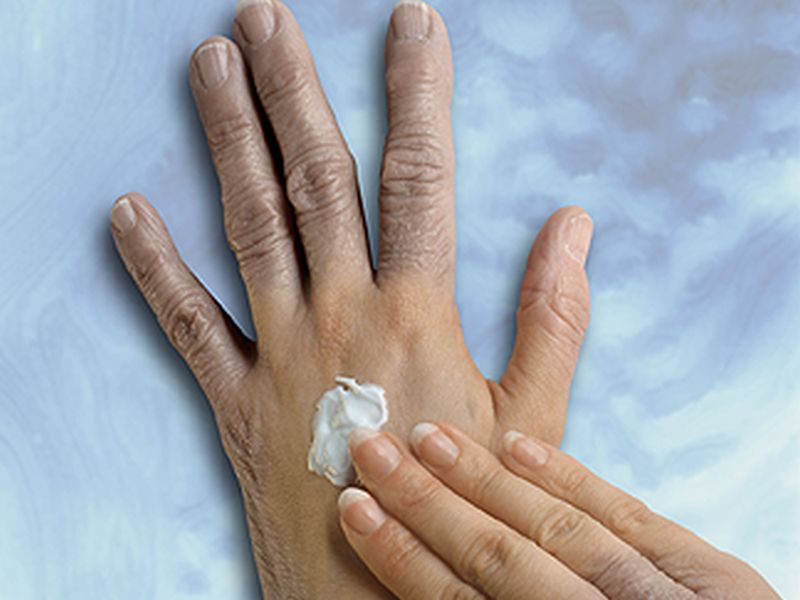
 At one month, no significant difference seen in positive outcomes for treatment vs. control
TUESDAY, Feb. 5, 2019 (HealthDay News) — Compounded topical pain creams are no better than placebo creams for neuropathic pain, nociceptive pain, or mixed pain, according to a study published online Feb. 5 in the Annals of Internal Medicine.
Robert E. Brutcher, Pharm.D., Ph.D., from the Walter Reed National Military Medical Center in Bethesda, Maryland, and colleagues examined the efficacy of compounded creams for chronic pain in a randomized controlled trial. A total of 399 patients with localized pain classified as neuropathic (133 patients), nociceptive (133 patients), or mixed (133 patients) were enrolled; within each pain category, the patients received compounded pain creams or placebo.
The researchers observed no differences in the mean reduction in average pain scores one month after treatment between the treatment and control groups for patients with neuropathic pain, nociceptive pain, or mixed pain (−0.1 points [95 percent confidence interval, −0.8 to 0.5 points], −0.3 points [95 percent confidence interval, −0.9 to 0.2 points], and −0.3 points [95 percent confidence interval, −0.9 to 0.2 points], respectively). There was also no difference between the treatment and control groups for all patients (−0.3 points; 95 percent confidence interval, −0.6 to 0.1 points). Thirty-six and 28 percent of patients in the treatment and control groups, respectively, had a positive outcome at one month (risk difference, 8 percent; 95 percent confidence interval, −1 to 17 percent).
“Future studies should seek to determine whether targeting specific types of pain or adding other agents (such as dimethyl sulfoxide) would lead to better results,” the authors write.
Two authors disclosed financial ties to the pharmaceutical and medical device industries.
Abstract/Full Text (subscription or payment may be required)
 Ultrasound-Guided Hydrodissection Yields Improvements in Carpal Tunnel
  Physical Therapist-Supervised Exercise Improves Outcomes After ACL Reconstruction
  2013 to 2024 Saw Decrease in Benzodiazepine Prescribing
  2016 to 2024 Saw Increase in Patients Using Medical Cannabis
  Financial Incentives Boost Tobacco Abstinence in Underserved Adults
  Nearly 1 in 10 Older Adults Used Cannabis in the Past Year
  Childhood Cancer Survivors Often Have Mental Distress in Adulthood
  Sugar Exposure in Early Life Linked to Anxiety in Adulthood
.jpg)



