


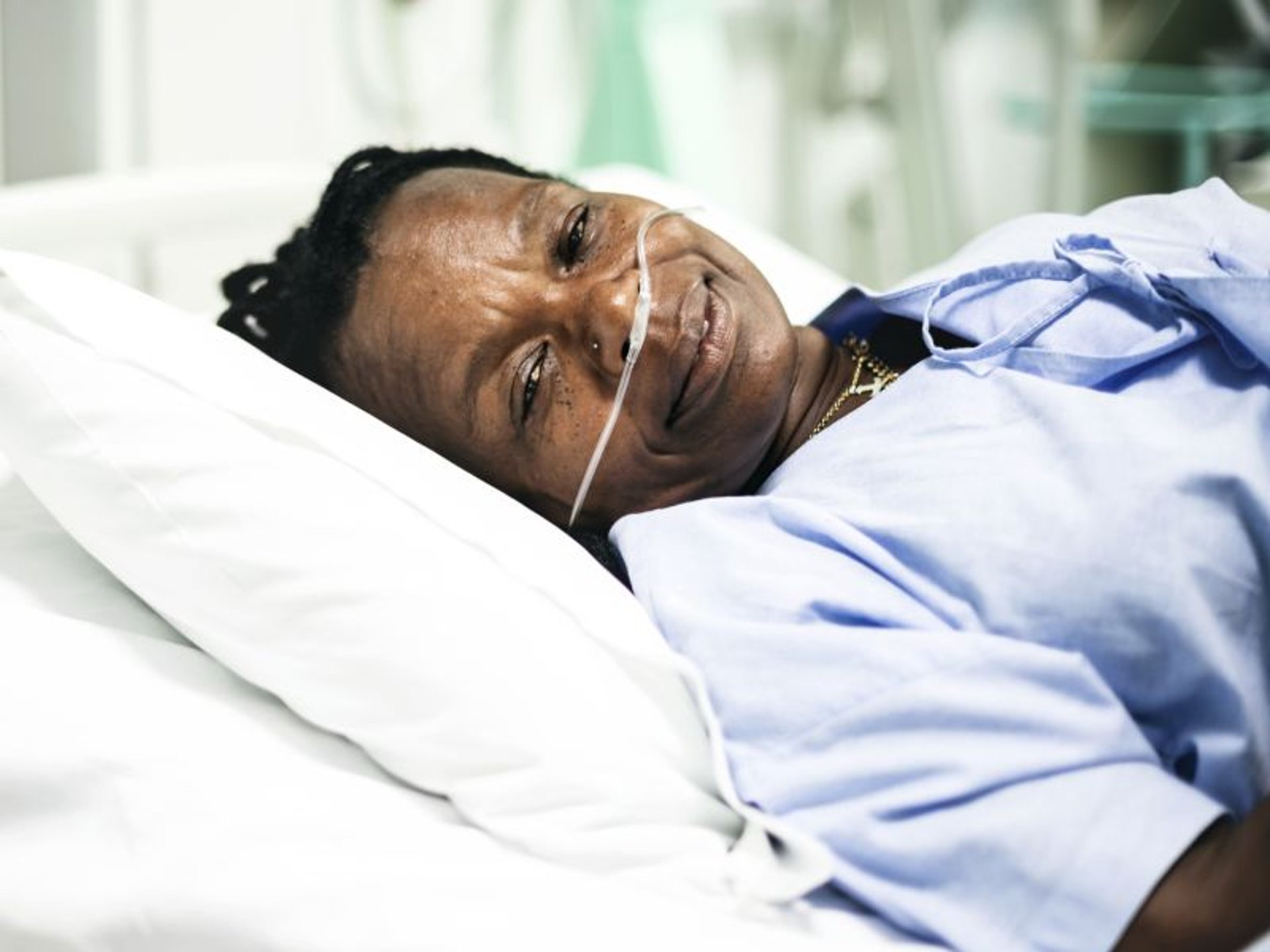
 Increased odds of adverse outcomes seen for Hispanic/Latinos, African-American Blacks versus white patients
WEDNESDAY, Aug. 5, 2020 (HealthDay News) — For patients with multiple myeloma and COVID-19, the case fatality rate is 29 percent among hospitalized patients, with increased odds of adverse outcomes among racial/ethnic minorities, according to a study published online July 30 in Blood Cancer Discovery.
Malin Hultcrantz, M.D., Ph.D., from Memorial Sloan Kettering Cancer Center in New York City, and colleagues reported outcomes and risk factors for serious disease in multiple myeloma patients treated at five centers in New York City in the spring of 2020 during the COVID-19 pandemic. Data were included for 100 multiple myeloma patients diagnosed with COVID-19.
The researchers found that 75 of the patients were admitted; of these, 13 and 22 (17 and 29 percent) were put on invasive mechanical ventilation and expired, respectively. Four of the 25 nonadmitted patients were asymptomatic. Compared with white patients, Hispanic/Latinos and African-American Blacks had an increased risk for adverse outcomes (intensive care unit admission, mechanical ventilation, or death: odds ratios, 4.7 and 3.5, respectively). Overall, higher levels of inflammatory markers and cytokine activation were seen in patients who met the adverse combined end point. No significant associations were seen between other risk factors and adverse outcomes.
“Until there is a vaccine or effective treatment for COVID-19, clinical management and treatment of patients with multiple myeloma has to be carefully considered and adjusted to reduce the risk of exposure and minimize immunosuppression,” the authors write.
One author disclosed financial ties to the pharmaceutical industry.
Abstract/Full Text (subscription or payment may be required)
 Few Meet Major Clinical Response Criteria After Treatment Escalation for Lupus
 Pre-Prostate Biopsy MRI Use Increased From 2017 to 2026
 MHT Initiation May Reduce Cardiovascular Risk in Women With Vasomotor Symptoms
 Residential Context Has Larger Impact on Ovarian Cancer Survival in Black Women
 Early Survivorship Care Linked to Improved Outcomes in Head, Neck Cancer
 Exercise Intervention Linked to Improved Attention, Memory in Breast Cancer
.jpg) Cancer Survivors Have Lower Levels of Physical Activity
 Childhood Cancer Survivors Often Have Mental Distress in Adulthood



.jpg)

