


Increased cancer-specific mortality seen with heat-based thermal ablation versus cryoablation for tumor size 3.1 to 4 cm
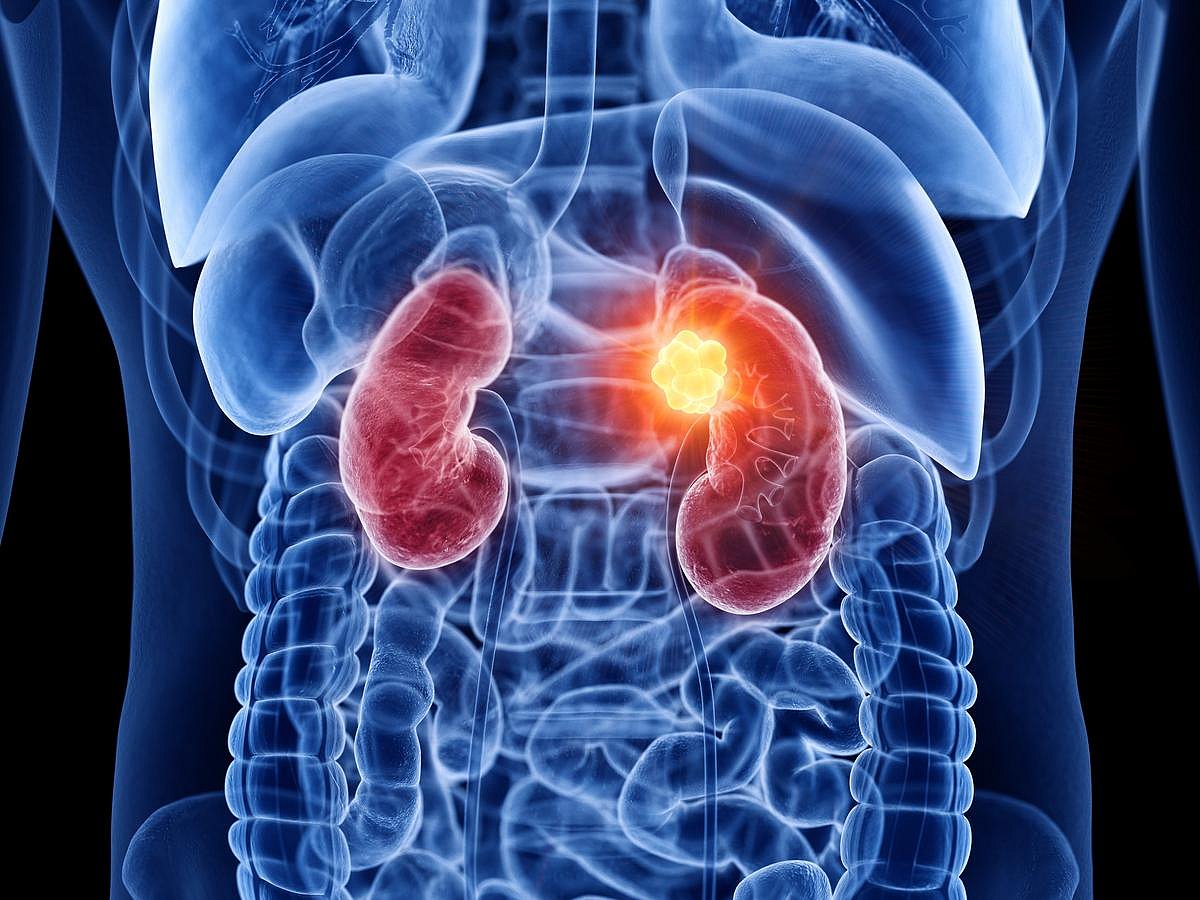
MONDAY, Dec. 5, 2022 (HealthDay News) — For patients with early-stage renal cell carcinoma, heat-based thermal ablation is associated with increased cancer-specific mortality with tumor size 3.1 to 4 cm, while cancer-specific mortality is similar for heat-based thermal ablation and cryoablation with tumor size ≤3 cm, according to a study published online Nov. 28 in The Journal of Urology.
Gabriele Sorce, M.D., from IRCCS San Raffaele Scientific Institute in Milan, Italy, and colleagues compared cancer-specific mortality among patients with clinical T1a stage renal cell carcinoma treated with cryoablation or heat-based thermal ablation. Data were included for 1,080 and 388 patients with tumor size 3.1 to 4 cm; after up to 2:1 propensity score matching, 757 cryoablations and 388 heat-based thermal ablations were included. In addition, 3,354 and 1,114 patients with tumor size ≤3 cm treated with cryoablation and heat-based thermal ablation, respectively, were included; after up to 2:1 propensity score matching, 2,217 and 1,114, respectively, were included.
The researchers found that heat-based thermal ablation was associated with increased cancer-specific mortality compared with cryoablation, after propensity score matching and in multivariable competing risks regression models for patients with tumor size 3.1 to 4 cm (hazard ratio, 2.02; 95 percent confidence interval, 1.29 to 3.17; P < 0.001). Among patients with tumor size ≤3 cm, heat-based thermal ablation was not associated with increased cancer-specific mortality compared with cryoablation (hazard ratio, 1.13; 95 percent confidence interval, 0.80 to 1.58; P = 0.5).
“We believe our findings have important implications for clinical decision-making and informed consent for patients with these small, potentially curable kidney cancers,” Sorce said in a statement.
 Urine Cell-Free RNA Shows Promise as Biomarker for Bladder Cancer
  Pembrolizumab-Belzutifan Tied to Improved Disease-Free Survival in Renal Cell Carcinoma
  Comparable Progression Risk Seen With Ablation Versus Surgery for T1a Renal Cell Carcinoma
  Incidence Rates Increased From 2003 to 2017 for Six Cancer Types in 42 Countries
 .jpg) Most Specialty Oral Anticancer Meds for Blood Cancers Are Initially Rejected by Insurers
Most Specialty Oral Anticancer Meds for Blood Cancers Are Initially Rejected by Insurers  Gap Found Between Awareness of Breast Cancer Risk and Risk-Reducing Behavior
  Personalized Support Boosts Families" Genetic Testing for Hereditary Cancers
  Exercise Intervention Linked to Improved Attention, Memory in Breast Cancer



