


Valuation of debt instruments significantly decreased from May to August 2019, followed by further decrease during COVID-19
WEDNESDAY, March 9, 2022 (HealthDay News) — Debt valuation of dermatology private equity-backed groups (DPEGs) decreased prior to the COVID-19 pandemic and then decreased further during the pandemic, according to a study published online March 9 in JAMA Dermatology.
Rohail Memon, from the Northwestern University Feinberg School of Medicine in Chicago, and colleagues conducted a cross-sectional study from Aug. 1, 2016, to Aug. 31, 2021, and examined public financial statements filed by business development corporations (BDCs) lending to DPEGs before and during the COVID-19 pandemic. Ten BDCs contained data on nine unique DPEGs; overall, there were 15 trackable DPEG debt instruments.
The researchers found that during the study period, the amortized cost of the loans for an individual DPEG varied from $1.7 million to $100 million. For many DPEGs, the valuation of debt instruments was stable until some were discounted starting in May 2018; a significant decrease was seen prior to the COVID-19 pandemic from May to August 2019 (−1.4 percent). During the pandemic, there was another significant decrease from February to June 2020 (−9.0 percent). A modest and significant improvement in debt valuations was seen after pharmaceutical companies announced effective COVID-19 vaccine candidates in November 2020 (2.3 percent), but they remained discounted.
“Dermatologists should be aware of the financial health of DPEGs, and the risks involved when considering selling their practice to or working for a DPEG,” the authors write.
 2013 to 2024 Saw Decrease in Benzodiazepine Prescribing
 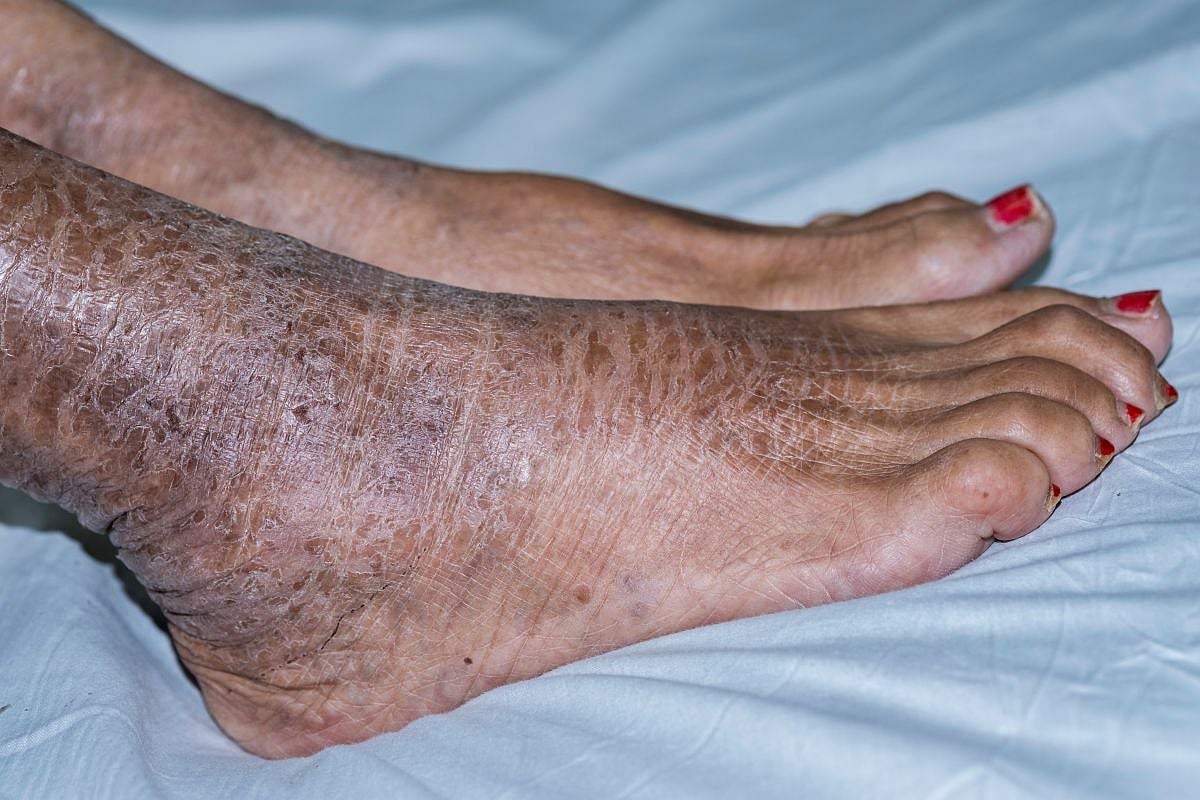 Congenital Ichthyosis Linked to Allergic Disorders
  Pediatricians Report Immigrant Families Avoiding Care for Their Children
  Psychiatrists Only Agree 55 Percent of the Time on Diagnoses
  Childhood Cancer Survivors Often Have Mental Distress in Adulthood
  Nighttime Light Exposure Linked to Sleep Parameters in Schizophrenia
  Air Pollution Tied to Higher Risk for Suicide
  2021 to 2026 Saw Increase in State Funding for Suicide Prevention
 .jpg)




