


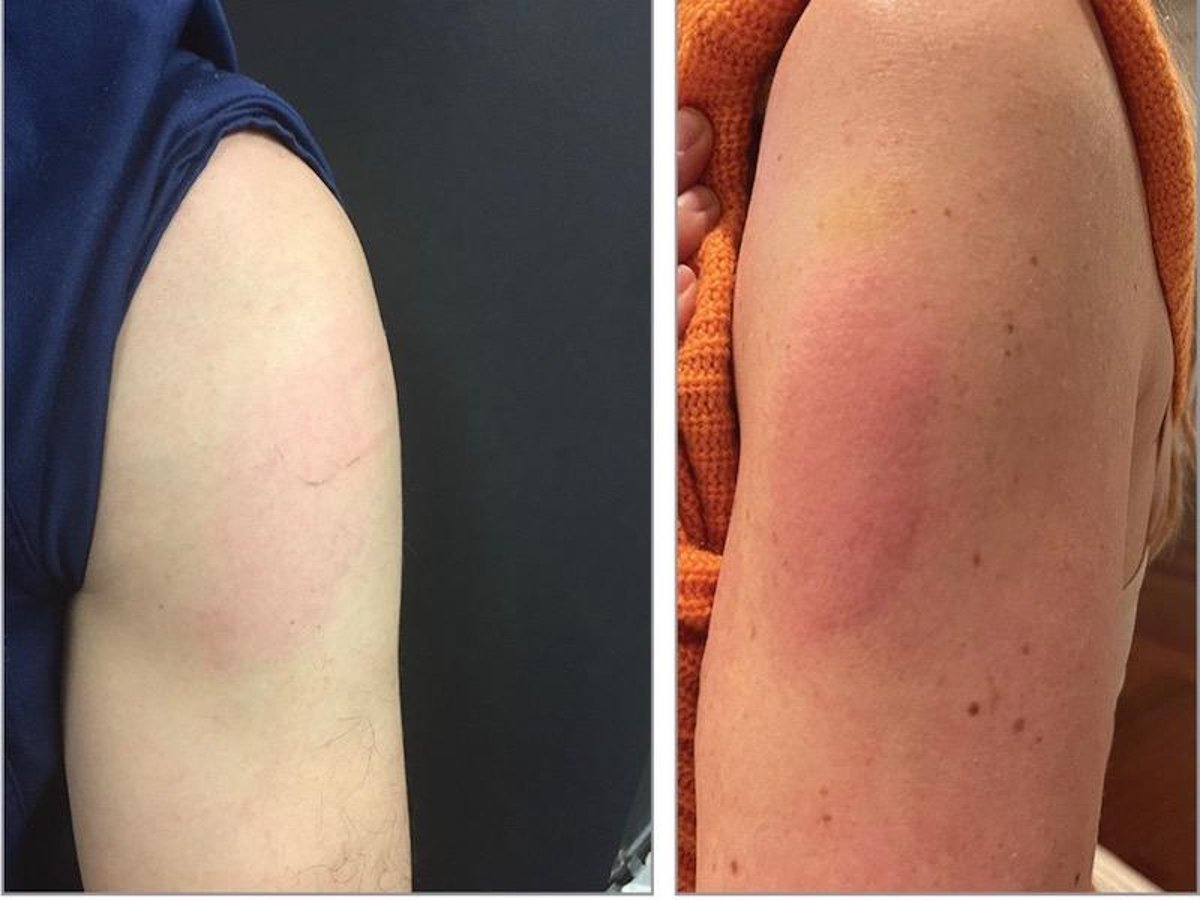
Reaction occurred at or near injection site; reactions were pruritic, painful, and edematous pink plaques
WEDNESDAY, May 12, 2021 (HealthDay News) — Localized injection-site reactions to the Moderna COVID-19 vaccine reported in 16 patients appear to be delayed hypersensitivity reactions, according to a study published online May 12 in JAMA Dermatology.
Margaret S. Johnston, M.D., from the Yale University School of Medicine in New Haven, Connecticut, and colleagues describe the course of localized cutaneous injection-site reactions to the Moderna COVID-19 vaccine in a retrospective case series study. Sixteen patients were referred with localized cutaneous injection-site reactions from Jan. 20 through Feb. 12, 2021.
The researchers found that 14 of the patients self-identified as White and two as Asian. The delayed localized cutaneous reactions developed at a median of seven days after receipt of the Moderna vaccine. These reactions occurred at or near the injection site; they were pruritic, painful, and edematous pink plaques. A mild predominantly perivascular mixed infiltrate with lymphocytes and eosinophils was identified on a skin biopsy specimen, which was consistent with a dermal hypersensitivity reaction. Of the 15 patients who had a reaction to the first vaccine dose, 11 developed a similar reaction to the second vaccine dose; 10 of these patients developed the second reaction sooner than they developed the reaction to the first dose.
“In contrast to immediate hypersensitivity reactions (e.g., anaphylaxis and urticaria) that present within four hours of vaccine administration, these delayed localized hypersensitivity reactions are not a contraindication to subsequent vaccination,” the authors write.
One author disclosed financial ties to Johnson & Johnson.
 Study IDs Real-World Reasons for Lemborexant Discontinuation
 Congenital Ichthyosis Linked to Allergic Disorders
 Nearly 3 in 4 Older Adults Express Interest in Vaccine to Prevent Dementia
 Study IDs Risk Factors for Ketoacidosis in Adults With T2D Receiving SGLT2 Inhibitors
 Weight-Loss Surgery Produces Lasting Diabetes Remission
 Treatment Satisfaction Higher for Patients With RA Choosing Their Own Treatment
.jpg) Most Specialty Oral Anticancer Meds for Blood Cancers Are Initially Rejected by Insurers
 Drug Interactions Reducing Contraceptive Effectiveness Common in Epilepsy



.jpg)

