


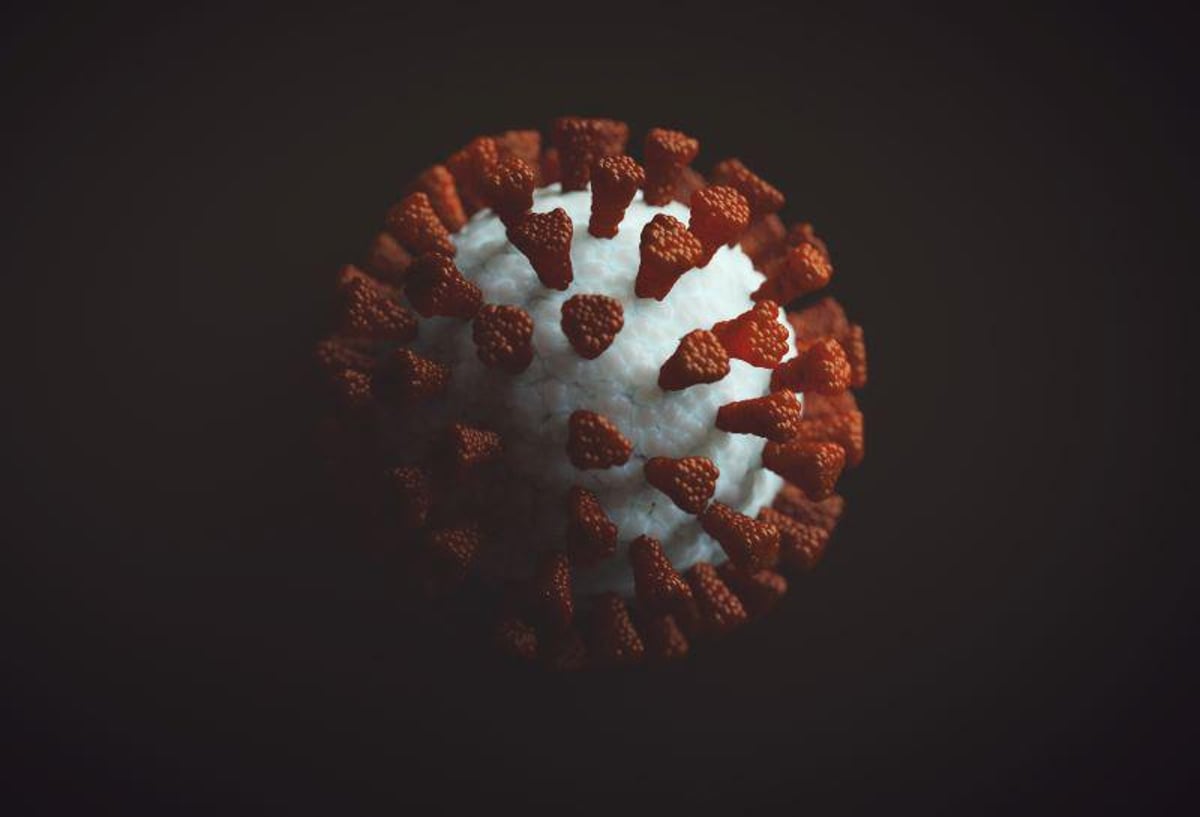
Hybrid is extremely rare and has not yet shown the ability to spread exponentially
MONDAY, March 14, 2022 (HealthDay News) — A recently identified hybrid of the omicron and delta coronavirus variants is unlikely to become a serious threat, scientists say.
The new hybrid, first found in samples collected in France in January, is formally called the AY.4/BA.1 recombinant but has been nicknamed “deltacron” by some. Thirty-three samples of the new variant have been found in France, eight in Denmark, one in Germany, and one in the Netherlands as of March 10, according to an international database of viral sequences. The genetic sequencing company Helix has also identified two cases in the United States.
While a hybrid of the highly contagious delta and omicron variants may sound like cause for alarm, it “is not a novel concern,” Etienne Simon-Loriere, Ph.D., a virologist at the Institut Pasteur in Paris who was involved in confirming the recombinant variant in France, told The New York Times.
Even though it has existed since January, the hybrid is extremely rare and has not yet shown the ability to spread exponentially, Simon-Loriere said. Also, the hybrid’s spike protein comes almost entirely from omicron. The spike protein plays a crucial role in infection and is the main target of antibodies triggered by vaccines and infection. That means that the antibody defenses acquired by people against omicron through vaccines or infections should be just as effective against the hybrid. The rest of the genome is delta.
“The surface of the viruses is super-similar to omicron, so the body will recognize it as well as it recognizes omicron,” Simon-Loriere noted.
Like omicron, the hybrid may also be less likely to cause severe disease than earlier variants. That might be because omicron’s distinctive spike is also partly why it causes less severe disease, scientists suspect. While the omicron variant uses that spike to invade cells in the nose and the upper airway, it does not do so well deep in the lungs. The new variant may do the same.
 ~16 Percent of COVID Cases Develop Postacute Sequelae of SARS-CoV-2
  Parts of the World Seeing New COVID-19 Variant
  HHS, NIH Unveil Vaccine Initiative to Protect Against Future Pandemics
  Hospital-Onset SARS-CoV-2 Infection During Omicron Linked to Morbidity
  Staffing, Scheduling, and Wage Changes Could Reattract Nurses Back to Hospitals
  Skilled Nursing Facility Capacity Declined Between 2019 and 2024
  Physical Design of Critical Care Units Influences Nursing Culture
  Low Capability Pediatric Hospitals More Than Doubled From 2003 to 2022




