Inverse associations seen between higher adherence to three diets with annual rate of total chronic disease accumulation
TUESDAY, Aug. 5, 2025 (HealthDay News) — Diet quality is a potentially modifiable risk factor for multimorbidity progression in older adults, according to a study published online July 28 in Nature Aging.
David Abbad-Gomez, M.D., M.P.H., from Hospital del Mar in Barcelona, Spain, and colleagues examined how four dietary patterns related to 15-year multimorbidity accumulation in 2,473 community-dwelling older adults from a Swedish cohort. Multimorbidity included the total number of chronic diseases, which were grouped into three organ systems: cardiovascular diseases, neuropsychiatric diseases, and musculoskeletal diseases.
The researchers found inverse associations of higher adherence to the Mediterranean-DASH Diet Intervention for Neurodegenerative Delay, the Alternative Healthy Eating Index, and the Alternative Mediterranean Diet with the annual rate of total chronic disease accumulation (β coefficient per one standard deviation increment: −0.049, −0.051, and −0.031, respectively). There was an association seen for higher adherence to the Empirical Dietary Inflammatory Index with a faster rate of accumulation (0.053). For cardiovascular and neuropsychiatric diseases, but not for musculoskeletal diseases, similar associations were observed. There was variation noted by sex and age for some associations.
“The study findings highlight the potential role of diet in the prevention of multimorbidity expansion in older populations, with possible implications for dietary guidelines, other public health strategies and clinical practice,” the authors write.
 Multicomponent Interventions Offer Little Impact on Fall Risk
  Nearly 3 in 4 Older Adults Express Interest in Vaccine to Prevent Dementia
 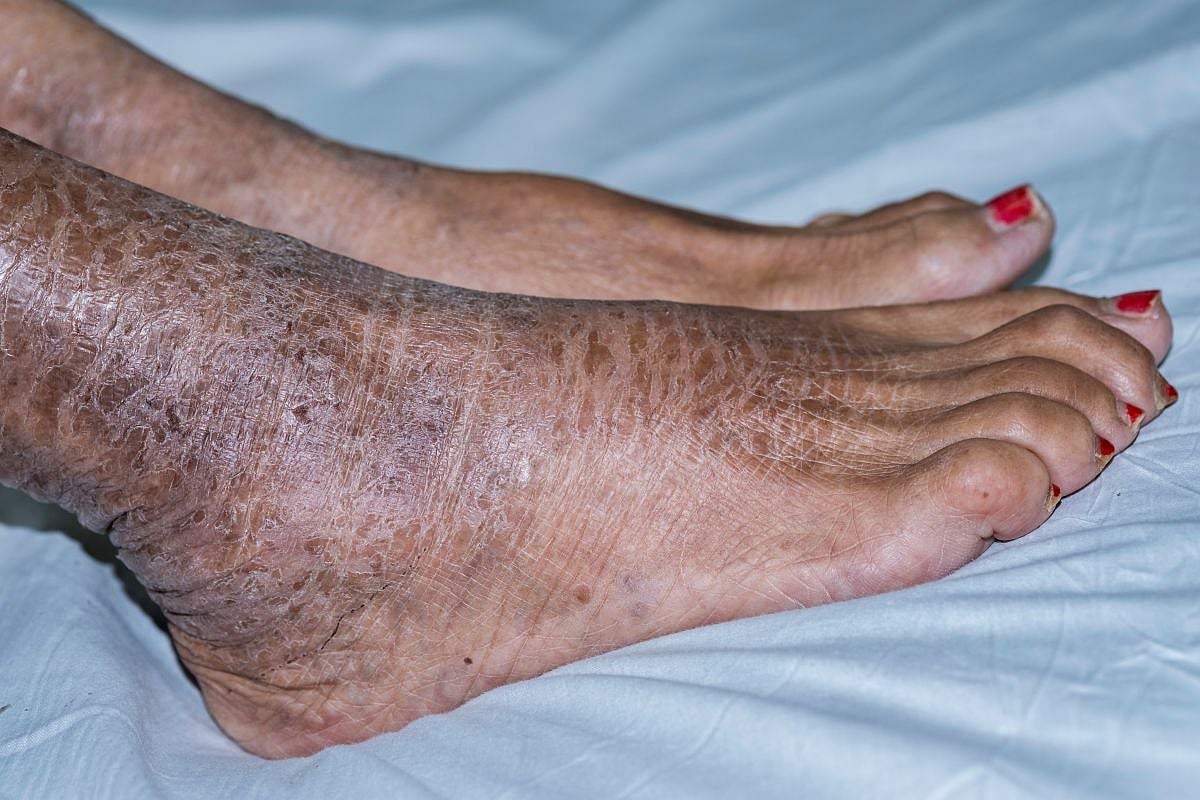 Congenital Ichthyosis Linked to Allergic Disorders
 .jpg) Mortality Lowest at Hemoglobin Concentrations Above WHO Thresholds
Mortality Lowest at Hemoglobin Concentrations Above WHO Thresholds  Mindfulness, Tai Chi May Benefit Cancer Survivors
  Nutritional Deficiencies Seen in Youth Taking GLP-1 Receptor Agonists
  Structured Exercise Should Be Considered as Adjunct Therapy for Cancer
  Oral Vitamin C Active in Clonal Cytopenia of Undetermined Significance