


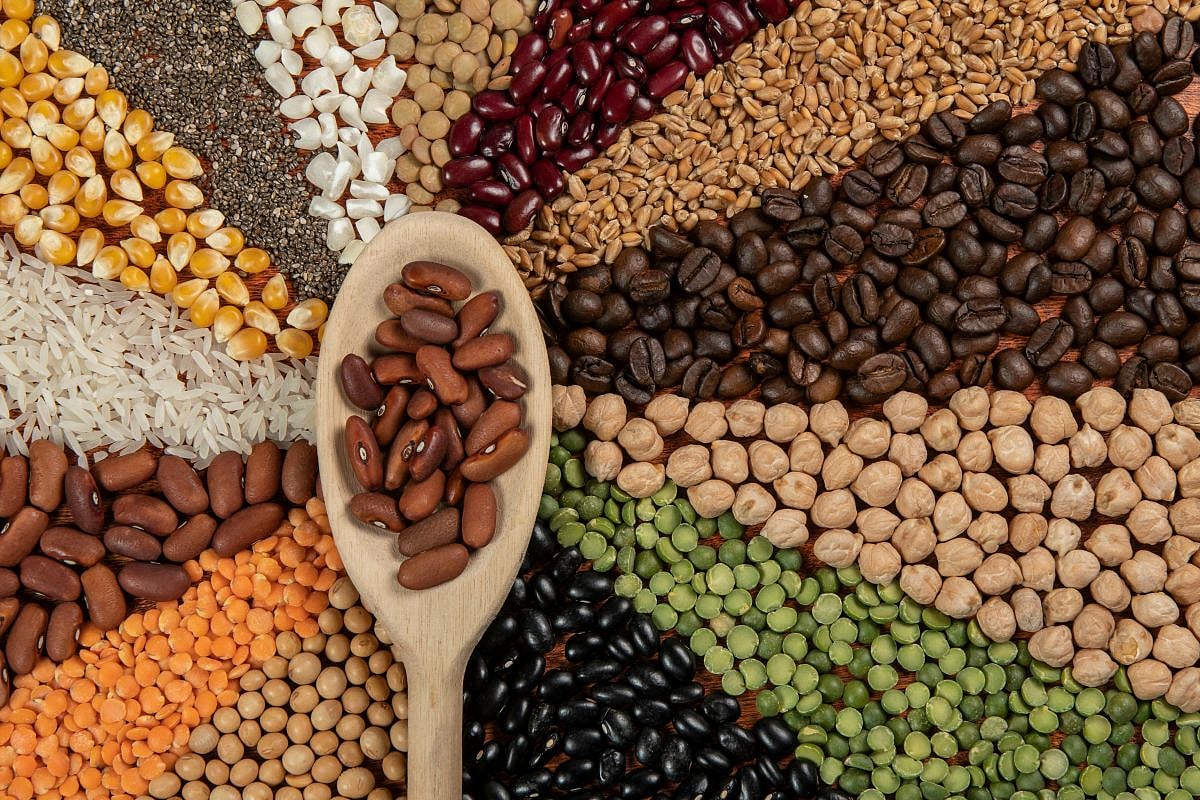
Improvements in body weight, waist circumference, and total cholesterol seen with four to six servings per day
THURSDAY, Sept. 17, 2026 (HealthDay News) — Eating more whole grains each day reduces several major risk factors for cardiovascular disease in a dose-response fashion, according to a review published online Sept. 15 in the European Heart Journal.
Sina Naghshi, from Tabriz University in Iran, and colleagues identified 87 randomized trials (more than 6,500 people) evaluating the effects of whole grains on cardiometabolic risk factors.
The meta-analysis showed that each 48 g/day whole-grain intake was associated with reductions in body weight (mean differences [MD], −0.20 kg; 41 studies), waist circumference (MD, −0.22 cm; 27 studies), total cholesterol (MD, −0.10 mmol/L; 54 studies), and interleukin-6 (MD, −0.12 pg/mL; 12 studies), with high certainty. Moderate-certainty evidence showed an association with low-density lipoprotein cholesterol (MD, −0.07 mmol/L; 52 studies), triglycerides (MD, −0.04 mmol/L; 52 studies), fasting plasma glucose (MD, −0.03 mmol/L; 44 studies), and systolic blood pressure (MD, −0.82 mm Hg; 32 studies). The greatest effects were seen in nonlinear analyses at 60 to 100 g/day (four to six servings/day) for most outcomes, but at higher intakes (up to 180 to 220 g/day) for a few outcomes.
“For clinicians, the message from Naghshi et al. is reassuringly simple: Encouraging patients to replace refined grain foods with minimally processed whole grains is likely to yield modest but meaningful improvements in body weight, waist circumference, and blood lipids,” write the authors of an accompanying editorial.
.jpg) Pregnancy Complications Linked to Subsequent Risk for Cardiometabolic-Renal Conditions
Pregnancy Complications Linked to Subsequent Risk for Cardiometabolic-Renal Conditions  Isometric Exercise Training Three Times a Week Preserves Cardiovascular Benefits
  IBD Not Linked to Risk for Hypertensive Disorders of Pregnancy Overall
  Mortality in Injured Children Linked to Higher SBP Thresholds Than Those That Define Hypotension
  Extreme Heat Linked to 33 Clinically Reportable Diagnoses
  ADHD Poses Additional Concussion Challenges for Athletes
  High-Dose Intravenous Vitamin C May Benefit Trauma Patients
  Low Use of Protective Eyewear Reported Among Pickleball Players




