


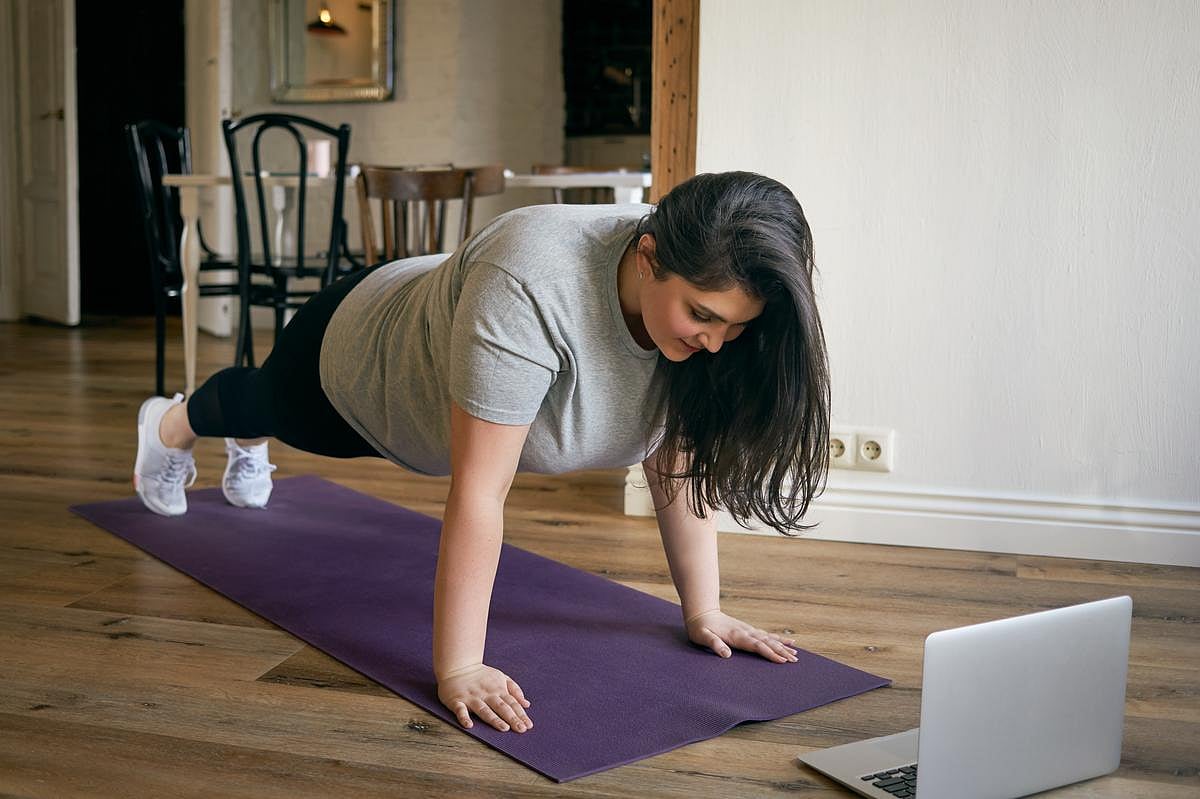
One or two weekly isometric exercise training sessions may maintain lower blood pressure over the short term
THURSDAY, Oct. 1, 2026 (HealthDay News) — While lower-frequency isometric exercise training (IET) may be sufficient to maintain blood pressure (BP) reductions over the short term, higher frequencies are required to preserve the full cardiovascular benefits gained by participating in a program three times per week, according to a study published online Sept. 29 in BMJ Open Sport & Exercise Medicine.
Harry T. Swift, Ph.D., from Canterbury Christ Church University in the United Kingdom, and colleagues examined the dose-response relationship between IET frequency and the maintenance of BP reductions following an initial four-week, three-times-per-week IET period. The analysis included 100 adults with normal to high-normal BP who were randomly assigned to control or IET sessions three times per week, twice per week, once per week, or no IET sessions following an initial IET protocol.
The researchers found that all intervention groups showed significant reductions in systolic BP (−9.45 mm Hg), diastolic BP (−5.47 mm Hg), and mean arterial pressure (MAP; −6.80 mm Hg) after four weeks versus control. At week 8, systolic BP and MAP reductions were maintained in the groups undergoing IET sessions once, twice, and three times per week, although the magnitude of these reductions was significantly greater in the three-times-per-week group. A reversal of BP reductions to levels not significantly different from control were seen in the group participating in the program zero times per week. Improvements in total peripheral resistance, heart rate variability, and baroreceptor reflex sensitivity were only maintained in the three-times-per-week group.
“The study demonstrates that while lower-frequency isometric exercise training may be sufficient to maintain blood pressure reductions over the short term, higher frequencies are required to preserve these benefits and the associated vascular and cardiac autonomic adaptations,” the authors write.
Abstract/Full Text (subscription or payment may be required)
 Physical Activity Linked to Slower Cognitive, Motor Progression in Parkinson Disease
  Air Pollution Does Not Impair Benefits of Walking in Reducing COPD Exacerbation Rate
 .jpg) Pregnancy Complications Linked to Subsequent Risk for Cardiometabolic-Renal Conditions
Pregnancy Complications Linked to Subsequent Risk for Cardiometabolic-Renal Conditions  Exercise Intervention Linked to Improved Attention, Memory in Breast Cancer
 .jpg) Cancer Survivors Have Lower Levels of Physical Activity
Cancer Survivors Have Lower Levels of Physical Activity  Childhood Cancer Survivors Often Have Mental Distress in Adulthood
  Mindfulness, Tai Chi May Benefit Cancer Survivors
  Blinatumomab Improves Event-Free Survival in Children With High-Risk B-Cell ALL
.jpg)



