


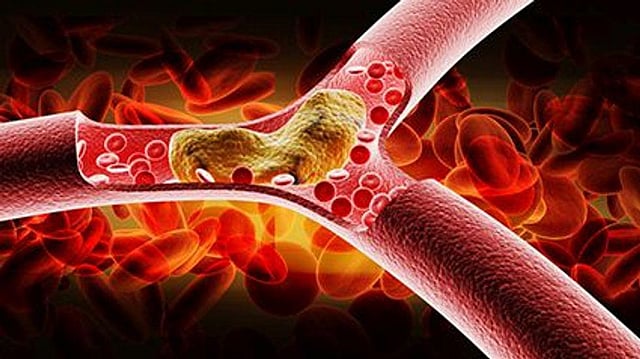
With respect to a favorable functional outcome, no significant difference seen between endovascular therapy and medical therapy
THURSDAY, May 20, 2021 (HealthDay News) — Outcomes do not differ significantly for patients with stroke from basilar-artery occlusion receiving endovascular therapy or standard medical care, according to a study published in the May 20 issue of the New England Journal of Medicine.
Lucianne C.M. Langezaal, M.D., from the Erasmus University Medical Center in Rotterdam, Netherlands, and colleagues randomly assigned 300 patients within six hours after estimated time of onset of stroke due to basilar-artery occlusion to receive endovascular therapy or standard medical care in a 1:1 ratio (154 and 146 patients, respectively).
The researchers found that intravenous thrombolysis was used in 78.6 and 79.5 percent of patients in the endovascular and medical groups, respectively. Initiation of endovascular treatment occurred at a median of 4.4 hours after stroke onset. A favorable functional outcome occurred in 44.2 and 37.7 percent of patients in the endovascular and medical care groups, respectively (risk ratio, 1.18; 95 percent confidence interval, 0.92 to 1.50). Symptomatic intracranial hemorrhage occurred in 4.5 and 0.7 percent of patients after endovascular therapy and medical care, respectively (risk ratio, 6.9; 95 percent confidence interval, 0.9 to 53.0); 90-day mortality was 38.3 and 43.2 percent, respectively (risk ratio, 0.87; 95 percent confidence interval, 0.68 to 1.12).
“In patients with basilar-artery occlusion, endovascular therapy and medical therapy were not significantly different with respect to a favorable functional outcome, but the results of our trial could not exclude a benefit of endovascular intervention,” the authors write.
Several authors disclosed financial ties to the pharmaceutical and medical device industries.
Abstract/Full Text (subscription or payment may be required)
 Lower Cognitive Functioning During 60s Linked to Subsequent Stroke Risk
  Insomnia Linked to Increased Risk for Stroke, Odds of Admission
  Increased Dementia Risk Seen After Transient Ischemic Attack
  UACR, UPCR Provide Indistinguishable Prognostic Information in CKD
  GLP-1 Receptor Agonists, SGLT-2is Slow Renal Function Decline in T2D With Albuminuria
  Exercise-Based Cardiac Rehab Beneficial for Coronary Heart Disease
  Elevated C-Reactive Protein Linked to Increased Risk for Incident Heart Failure, All-Cause Mortality
  Early Complications Common in Older Kidney Transplant Recipients
 .jpg)




