


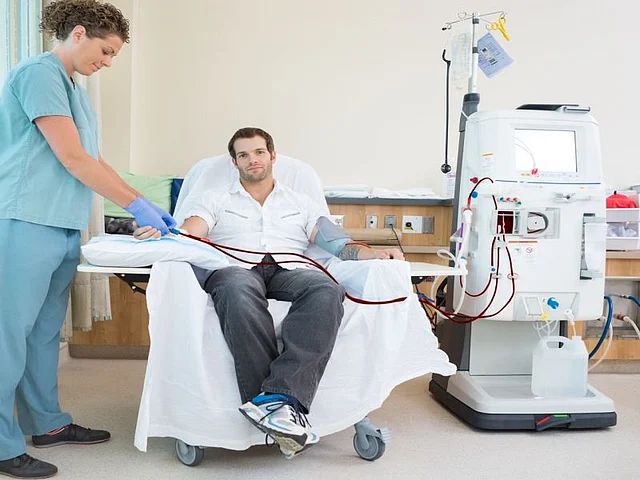
Risk for hip fracture increased with EPO doses of 50 to 149, 150 to 299, and ≥300 versus <50 units/kg/week
WEDNESDAY, May 5, 2021 (HealthDay News) — For patients undergoing hemodialysis, erythropoietin (EPO) is associated with an increased risk for hip fracture, according to a study published online May 5 in the Journal of Bone and Mineral Research.
Sukanya Suresh, from the National Institutes of Health in Bethesda, Maryland, and colleagues analyzed the association between EPO treatment and hip fractures in hemodialysis patients using United States Renal Data System (USRDS) datasets from 1997 to 2013 and Consolidated Renal Operations in a Web-enabled Network (CROWNWeb) datasets for 2013. Fracture risks were compared for patients treated with <50 units of EPO/kg/week and those receiving higher doses.
The researchers observed an increase in hip fracture rates for the 747,832 patients in the USRDS datasets from 12.0 to 18.9 per 1,000 patient-years in 1997 and 2004, followed by a decrease to 13.1 by 2013. The average EPO doses increased from 11,900 to 18,300 units/week in 1997 and 2004 and then decreased to 8,800 by 2013. Compared with EPO doses of <50 units/kg/week, the adjusted hazard ratios for hip fractures were 1.08, 1.22, and 1.41, respectively, with EPO doses of 50 to 149, 150 to 299, and ≥300 units/kg/week during this period. These findings were replicated in multivariable analyses of 128,941 patients in the CROWNWeb datasets.
“Patients with renal failure can benefit from EPO treatment; however, as with all medications, a full understanding of potential drug-associated risks favors the likelihood that a positive risk-benefit balance can be achieved with EPO treatment,” a coauthor said in a statement.
Abstract/Full Text (subscription or payment may be required)
 Myeloma Risk Modestly Increased in Adults With Incidentally Detected Vertebral Fracture
  Socioeconomic Status Linked to Mortality After Acute Hip Fracture Surgery
  Workplace Psychological Stress Linked to Erectile Function in Young Men
  NOACs Linked to Slower Cognitive Decline in Patients With A-Fib, Alzheimer Disease
  Lower Cognitive Functioning During 60s Linked to Subsequent Stroke Risk
  Insomnia Linked to Increased Risk for Stroke, Odds of Admission
  Increased Dementia Risk Seen After Transient Ischemic Attack
  UACR, UPCR Provide Indistinguishable Prognostic Information in CKD



.jpg)
