


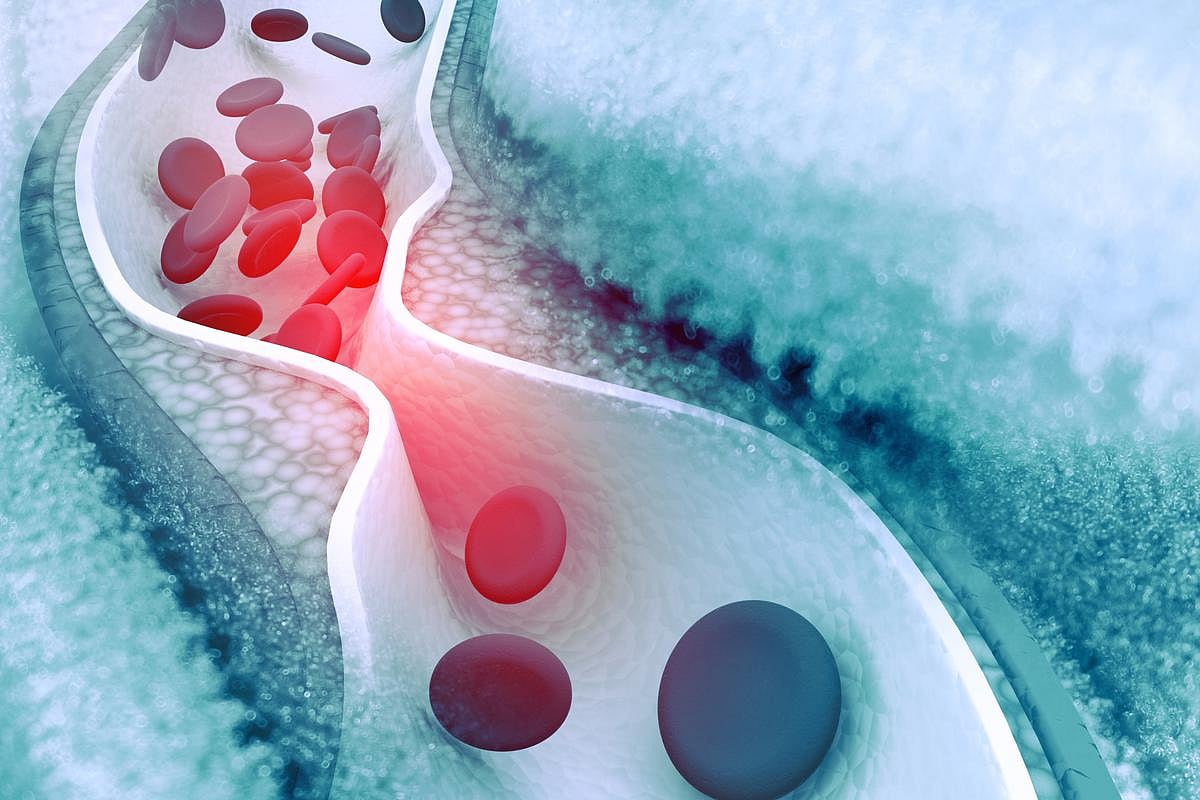
Silent atherosclerosis present in 8.7 and 6.7 percent of men and women aged 18 to 29 years and increases with age
WEDNESDAY, Sept. 2, 2026 (HealthDay News) — Silent atherosclerosis is detectable in early adulthood and increases with age, according to a study published online Aug. 29 in the New England Journal of Medicine to coincide with the annual meeting of the European Society of Cardiology, held from Aug. 28 to 31 in Munich.
Henning Bundgaard, M.D., D.M.Sc., from Copenhagen University Hospital in Denmark, and colleagues conducted a prospective cohort study in Denmark and Spain involving 16,808 adults aged 18 to 70 years without known atherosclerotic cardiovascular disease who were enrolled in five prespecified age strata. Three-dimensional vascular ultrasonography of the carotid and femoral arteries and coronary computed tomographic angiography were used to assess silent atherosclerosis at baseline.
The researchers found that 57.1 percent of participants had silent atherosclerosis. Atherosclerosis was present in 8.7 and 6.7 percent of men and women, respectively, in the youngest age stratum (18 to 29 years); prevalence increased with age and there was a later, steeper midlife increase among women. Atherosclerosis was most often peripheral and confined to a single vascular territory among participants in the younger age strata; plaque volume increased exponentially with increasing age, and the prevalence of multiarterial involvement became more common. In every age stratum, isolated coronary-artery atherosclerosis was uncommon (≤9.3 percent of men and ≤5.0 percent of women).
“These data from multiple locations support the concept of silent atherosclerosis as a systemic, progressive disease process, with men showing an approximately five-to-10-year earlier atherosclerotic trajectory than women,” Bundgaard said in a statement.
Several authors disclosed ties to pharmaceutical companies, including Novo Nordisk; the study was supported by a grant from the Novo Nordisk Foundation. In-kind contributions were provided by Philips Healthcare and Zeiss; two authors disclosed ties to Philips.
Abstract/Full Text (subscription or payment may be required)
 Low Hydroxychloroquine Intake, Blood Levels Linked to ASCVD Risk in Lupus
  PET/MRI Offers Diagnostic, Prognostic Value in Pediatric Epilepsy
  Odds of Imaging Order Higher When Clinicians Self-Interpret
  Report Highlights Substance Use in Young Adults in U.S. in 2025
  Add-On Tirzepatide May Reduce MACE Risk in People With T2D, ASCVD
  Considerable Gaps Identified in LDL Cholesterol Control
  87.5 Million U.S. Adults Now Eligible for Statins Under New Guidelines
  Differences in Cardiovascular Risk Factor Prevalence ID"d for South Asian Adults
.jpg)



