


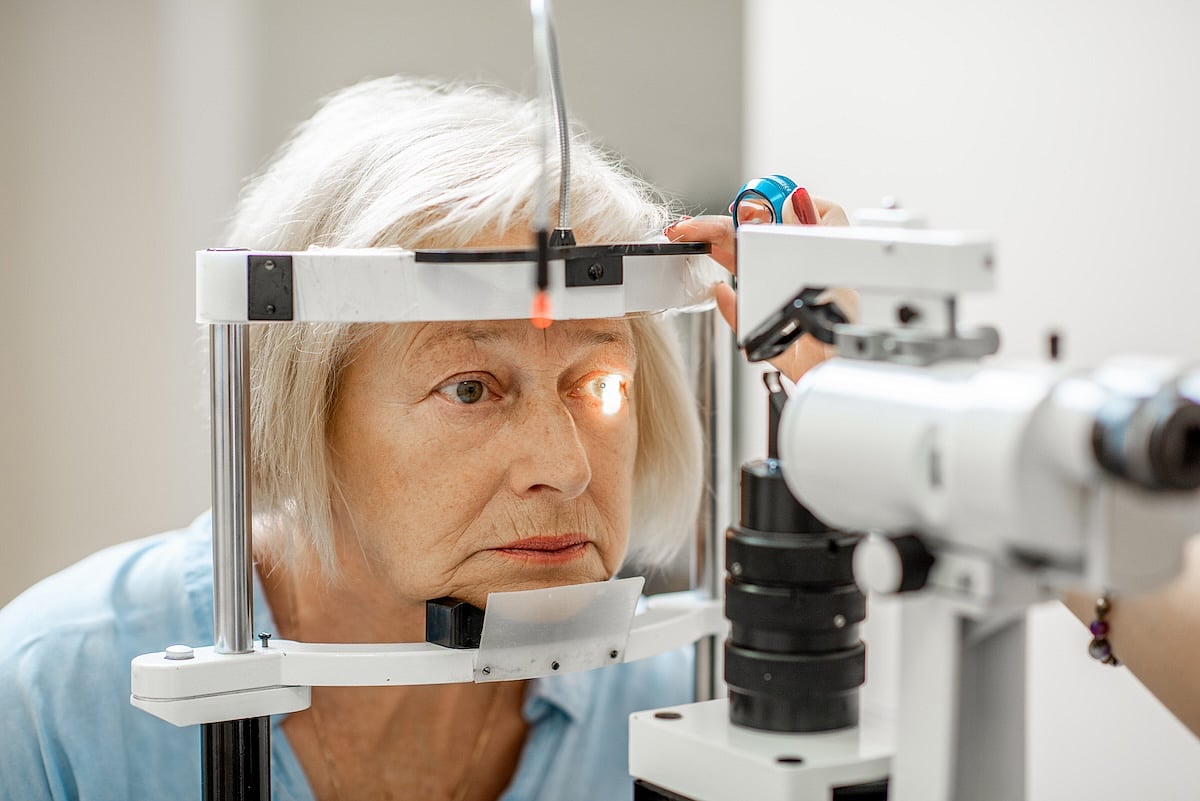
Ozone exposure associated with increased risk for age-related macular degeneration
TUESDAY, Sept. 15, 2026 (HealthDay News) — Ambient fine particulate matter (PM2.5) is consistently associated with an increased risk for glaucoma and cataract, according to research presented at the annual congress of the European Society of Cataract and Refractive Surgeons, held from Sept. 11 to 15 in London.
Ahmed Alnabihi, M.B.B.S., from the King Khaled Eye Specialist Hospital and Research Center in Riyadh, Saudi Arabia, and colleagues examined associations between major ambient air pollutants and age-related ocular diseases in a systematic review. A total of 41 studies met the eligibility criteria and reported quantitative estimates for glaucoma, cataract, or age-related macular degeneration (AMD) in relation to PM2.5 or PM10, nitrogen dioxide (NO2), sulfur dioxide (SO2), ozone (O3), or carbon monoxide (CO).
The researchers found the strongest and most consistent associations for PM2.5. For glaucoma, the pooled odds ratio was 1.08 per interquartile range increase in PM2.5, with high-certainty evidence. There was also an association for PM2.5 with cataract (hazard ratio, 1.04). The highest risk for glaucoma was seen in the highest versus lowest exposure quartiles (odds ratio, 1.70). O3 exposure was associated with an increased risk for AMD (hazard ratio, 1.14), supported by high-certainty evidence. For PM10, NO2, and SO2, associations were not significant.
“Fine particles are thought to cause inflammation and oxidative stress in the body,” Alnabihi said in a statement. “Over years of exposure, these effects may damage the optic nerve, which is relevant to glaucoma, or the lens, which is relevant to cataract.”
Several authors disclosed ties to the biopharmaceutical and medical device industries, including the vision industry.
 Active Smoking Linked to Progression of Sickle Cell Retinopathy
  Air Pollution Does Not Impair Benefits of Walking in Reducing COPD Exacerbation Rate
  Statin Use Linked to Lower Risk for Glaucoma Incidence
  Ambient Temperature Linked to Intraocular Pressure in Glaucoma
  Dexamethasone Eye Drops Can Reduce Progression to ROP Requiring Treatment
 .jpg) Tadalafil Linked to Glaucoma in Men With Lower Urinary Tract Symptoms
Tadalafil Linked to Glaucoma in Men With Lower Urinary Tract Symptoms  Atropine Eye Drops Reduce Myopia Progression in Children
  High Pillow Position Linked to Increased IOP in Glaucoma
.jpg)



