


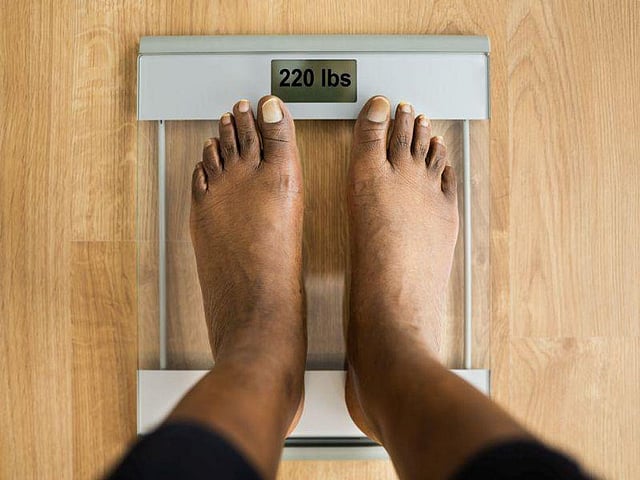
BMI cutoffs equivalent to 30.0 kg/m2 in Whites were 23.9, 28.1, 26.9, and 26.6 kg/m2 for South Asian, Black, Chinese, Arab populations
MONDAY, May 24, 2021 (HealthDay News) — To optimize the prevention, diagnosis, and management of type 2 diabetes, revisions of ethnicity-specific body mass index (BMI) cutoffs for obesity are needed for minority populations, according to a study published online May 11 in The Lancet Diabetes & Endocrinology to coincide with the European Congress on Obesity, held virtually from May 10 to 13.
Rishi Caleyachetty, Ph.D., from the University of Oxford in the United Kingdom, and colleagues conducted a population-based study to prospectively identify ethnicity-specific BMI cutoffs for obesity based on the risk for type 2 diabetes that are risk-equivalent to the cutoff among White populations. Data were included for 1,472,819 people, of whom 90.6, 5.2, 3.4, 0.7, and 0.2 percent were White, South Asian, Black, Chinese, and Arab, respectively.
The researchers found that 6.6 percent of individuals were diagnosed with type 2 diabetes after a median follow-up of 6.5 years. For equivalent age- and sex-adjusted incidence of type 2 diabetes at a BMI of 30.0 kg/m2 in White populations, the BMI cutoffs for South Asian, Black, Chinese, and Arab populations were 23.9, 28.1, 26.9, and 26.6 kg/m2, respectively.
“This far-reaching, extensive study has shed light on a worrying generalization of BMI cutoffs for obesity, which comes at the expense of those from a range of minority ethnic backgrounds,” Caleyachetty said in a statement. “A complete revision of ethnic-specific BMI cutoffs to trigger action to prevent type 2 diabetes are needed.”
.jpg) Pregnancy Complications Linked to Subsequent Risk for Cardiometabolic-Renal Conditions
Pregnancy Complications Linked to Subsequent Risk for Cardiometabolic-Renal Conditions  Pre-Prostate Biopsy MRI Use Increased From 2017 to 2026
  GLP-1 Receptor Agonists, SGLT-2is Slow Renal Function Decline in T2D With Albuminuria
  MHT Initiation May Reduce Cardiovascular Risk in Women With Vasomotor Symptoms
  Oral Menopausal Hormone Therapy Linked to Venous Thromboembolic Risk
  Longer Reproductive Lifespan Tied to Lower Bronchiectasis Risk in Postmenopausal Women
  Midlife Onset of Increasing Pulse Pressure Not Linked to Menopause
  Residential Context Has Larger Impact on Ovarian Cancer Survival in Black Women




.jpg)