Small reduction may be seen in short-term pain intensity for lumbar support + NSAID versus NSAID alone
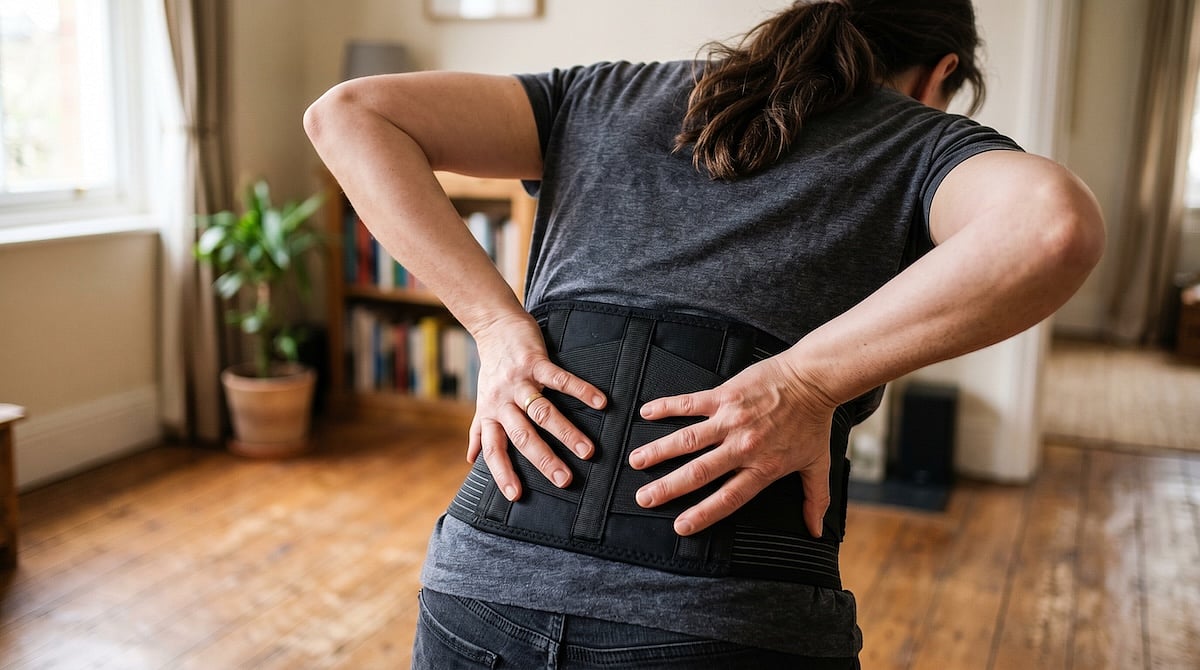
FRIDAY, Sept. 4, 2026 (HealthDay News) — The evidence is insufficient to support routine use of lumbar supports for managing chronic low back pain (CLBP) in adults, according to research published online Sept. 2 in the Cochrane Database of Systematic Reviews.
Chiara Arienti, Ph.D., from Humanitas University in Milan, and colleagues examined the benefits and harms of assistive technologies in adults with CLBP in a review of eight randomized controlled trials involving 501 adults with CLBP.
All eight studies examined the effects of lumbar supports in adults with CLBP. The researchers found that lumbar support plus usual care (nonsteroidal anti-inflammatory drugs [NSAIDs]) may result in a small reduction in short-term pain intensity compared with usual care (NSAIDs) alone, considering a minimum clinically meaningful change on the 0-to-100 pain scale to be 15 points (mean difference, −17.66). A very uncertain effect was seen for lumbar support added to NSAIDs on disability. Lumbar support may result in little to no difference in pain intensity in the intermediate term (three months) or in disability compared with no intervention. For lumbar support plus usual care (education and exercise) versus usual care (education and exercise), the evidence was very uncertain regarding the effect on pain intensity, disability, and health-related quality of life in the short term. Uncertain evidence was also seen for the effect of lumbar support plus usual care (routine physical therapy) versus routine physical therapy alone on pain intensity and disability in the short term.
“Drawing from a very thin research base, we still don”t have enough evidence to make broad recommendations for or against their use,” Arienti said in a statement.
Abstract/Full Text (subscription or payment may be required)
 Air Pollution Does Not Impair Benefits of Walking in Reducing COPD Exacerbation Rate
  Physical Activity Linked to Slower Cognitive, Motor Progression in Parkinson Disease
  Exercise Intervention Linked to Improved Attention, Memory in Breast Cancer
  Physical Therapist-Supervised Exercise Improves Outcomes After ACL Reconstruction
  Implant, Patient Survival Do Not Differ for Robotic and Conventional Total Joint Replacement
  Ultrasound-Guided Hydrodissection Yields Improvements in Carpal Tunnel
  2013 to 2024 Saw Decrease in Benzodiazepine Prescribing
  2016 to 2024 Saw Increase in Patients Using Medical Cannabis

.jpg)