


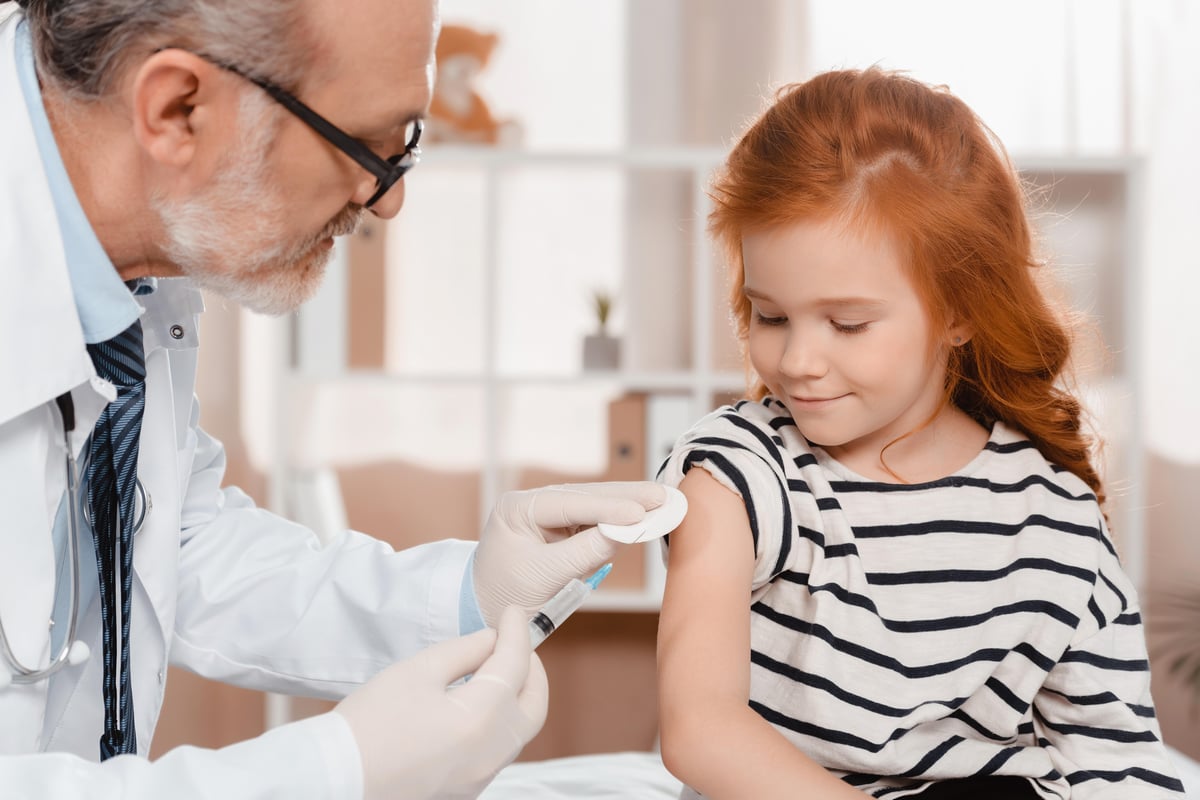
Moderna vaccine is authorized for children down to 6 years old, while Pfizer-BioNTech vaccine is approved for children as young as 5 years
WEDNESDAY, Oct. 12, 2022 (HealthDay News) — The new bivalent COVID-19 booster is now approved for children as young as 5 years old, the U.S. Food and Drug Administration announced Wednesday.
The bivalent booster shot includes one part that protects against the original strain of the COVID-19 coronavirus and another part that targets the highly transmissible omicron strain.
The Moderna bivalent vaccine is authorized for children down to 6 years old, while the Pfizer-BioNTech vaccine is approved for children as young as 5 years. In both cases, the booster shot should be given at least two months after children have either finished the primary series of two shots or have gotten a booster shot.
“While it has largely been the case that COVID-19 tends to be less severe in children than adults, as the various waves of COVID-19 have occurred, more children have gotten sick with the disease and have been hospitalized,” Peter Marks, M.D., director of the FDA Center for Biologics Evaluation and Research, said in an agency news release. “Children may also experience long-term effects, even following initially mild disease. We encourage parents to consider primary vaccination for children and follow-up with an updated booster dose when eligible.”
The FDA authorization is based on immune response and safety data gathered during a clinical trial of the bivalent vaccine in adults, as well as data from trials of earlier COVID-19 vaccines in children, the agency said.
 Nearly 3 in 4 Older Adults Express Interest in Vaccine to Prevent Dementia
  Updated COVID-19 Shot Beneficial for Those With Autoimmune Rheumatic Disease
  AAP Issues Recommendations for Pediatric RSV Vaccination in 2026-2027 Season
  Trends Reported in Vaccination Coverage for Adolescents for 2025
 .jpg) Considerable Gaps Reported in Care for Youth With Opioid Use Disorder
Considerable Gaps Reported in Care for Youth With Opioid Use Disorder  Nutritional Deficiencies Seen in Youth Taking GLP-1 Receptor Agonists
  Youth Suicide Risk Linked to Community Firearm Violence
  Social Media Warnings Could Discourage Use Among Teens, Young Adults


.jpg)

