


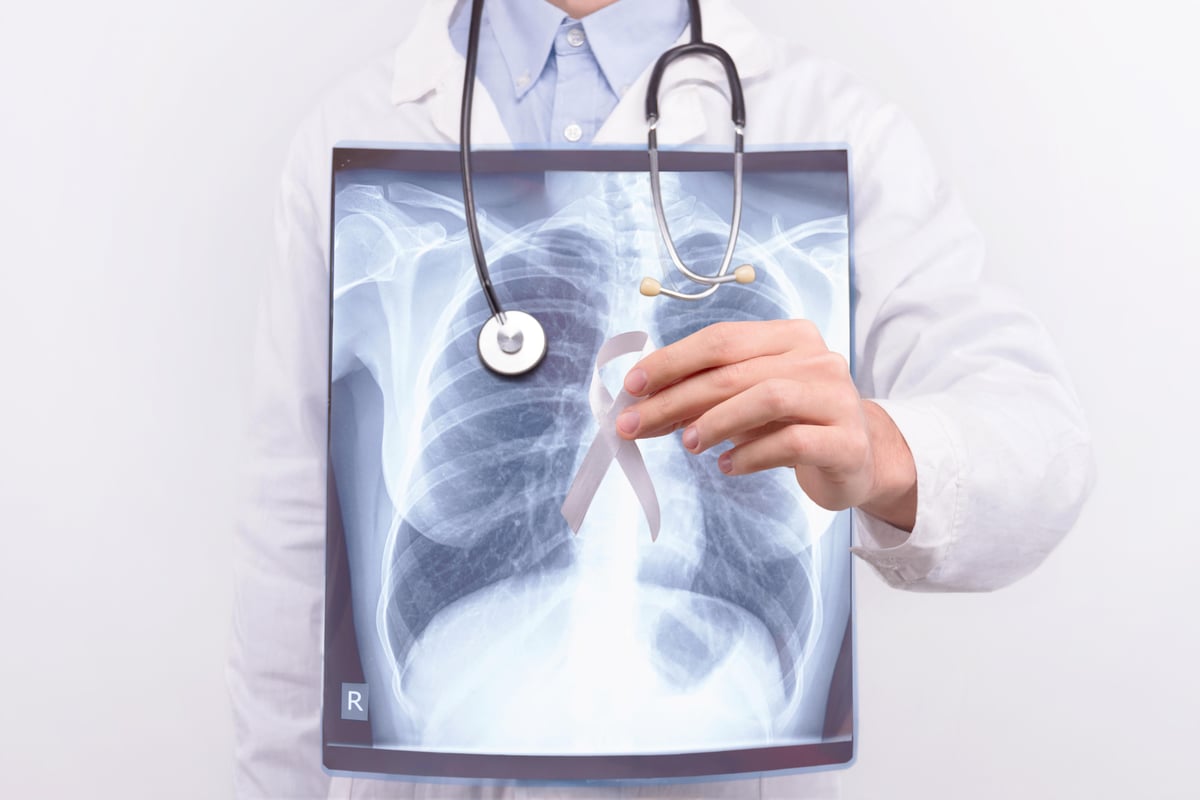
Patients with more severe findings less likely to have prolonged delays; current smokers had more delays than former smokers
FRIDAY, May 20, 2022 (HealthDay News) — Nearly half of lung cancer screening exams with high-risk Lung-RADS findings result in delays in care, according to a study presented at the American Thoracic Society 2022 International Conference, held from May 13 to 18 in San Francisco.
Alwiya Ahmed, M.D., from University of Washington School of Medicine in Seattle, and colleagues examined delays in follow-up after high-risk computed tomography findings that may result in lung cancer diagnosis. The analysis included 397 patients who underwent baseline and annual lung cancer screening (2012 through January 2021) with findings standardized as Lung-RADS 3, 4A, 4B, or 4X.
The researchers found that 464 exams had high-risk findings. Ultimately, 59 patients (15 percent) were diagnosed with lung cancer. In nearly half of high-risk exams (47 percent), there was a delay in follow-up, including 58 percent for Lung-RADS3, 35 percent for Lung-RADS4A, and 37 percent for Lung-RADS4B/4X. For all participants with delayed follow-up, median delay time was 91 days, including 181 days for Lung-RADS3, 68 days for Lung-RADS4A, and 32 days for Lung-RADS4B/4X. Current smoking was associated with higher levels of delay overall, independent of Lung-RADS.
“It is disconcerting to see that among those screened who have abnormal findings, there is a significant delay in recommended follow-up,” Ahmed said in a statement. “Interventions are needed at both the provider and patient levels to ensure that high-risk patients receive adequate follow-up.”
 Urine Cell-Free RNA Shows Promise as Biomarker for Bladder Cancer
  Age-, Joint-Specific Ultrasound Reference Values Set for Healthy Joints
  Gene Mutation Identified That Increases Lung Cancer Risk
  Retinal Imaging Can ID Atrial Fibrillation Years Before Diagnosis
  U.S. Adults May Not Understand Their Risk for Vascular Disease
  NOACs Linked to Slower Cognitive Decline in Patients With A-Fib, Alzheimer Disease
  Machine Learning Model IDs Heart Failure With Reduced Ejection Fraction Using Routine Lab Indicators
  Addition of CAC to PREVENT-ASCVD Equations May Improve Predictive Utility in Certain Patients



.jpg)