Cases with foot/ankle OA or forefoot/ankle surgery after retirement had more foot/ankle injury and injections
MONDAY, Oct. 27, 2025 (HealthDay News) — For retired U.K. male footballers, a foot/ankle injury during a football career is associated with an increased risk for foot/ankle osteoarthritis (OA), according to a study published online Oct. 22 in Rheumatology.
Ahmed Ali Thanoon, from the University of Nottingham in the United Kingdom, and colleagues conducted a case-control study involving retired U.K. male footballers. Cases reported general practitioner-diagnosed foot/ankle OA or forefoot/ankle surgery after retirement, while controls reported neither (63 and 361, respectively). The contribution of foot/ankle injury and injection, defined as injection of corticosteroid or other agents into the foot/ankle joint, to the risk for foot/ankle OA was examined.
The researchers found that cases had more foot/ankle injury and injections than controls (73.3 versus 42.5 percent and 75.0 versus 48.4 percent, respectively), with adjusted odds ratios of 4.23 and 2.62, respectively. The area under the curve was 0.69, 0.74, and 0.78 for injury, injury and injection, and all risk factors, respectively. In footballers with ankle OA only, the results were similar.
“Our findings clearly show that a significant foot or ankle injury during a player”s career is a major, modifiable risk factor of osteoarthritis late in life,” co-author Weiya Zhang, from the University of Nottingham, said in a statement.
One author disclosed ties to the biopharmaceutical industry.
Abstract/Full Text (subscription or payment may be required)
 Disparities Identified in Home Health Care After Hip, Knee Replacement
 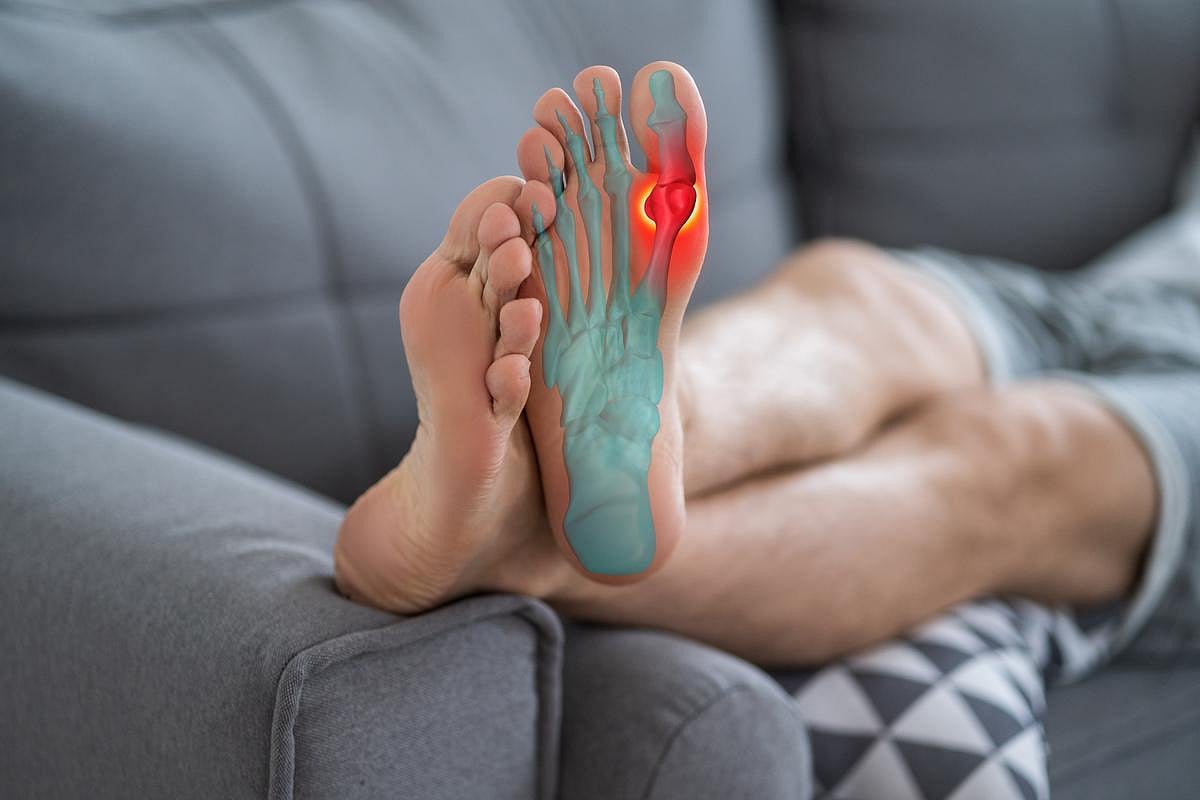 First Metatarsophalangeal Joint Arthrodesis Eases Painful Hallux Rigidus
  2005 to 2023 Saw Decrease in DXA Testing for Osteoporosis Screening
  Review Reveals Limited Effects of Exercise on Hip Osteoarthritis
  Spinal Cord Stimulation Cuts Pain, Improves Sensation With Diabetic Nerve Damage
  Combo of Step Count and Step Pace Tied to Lower Risk for Early Death
  Aerobic Training, Behavioral Interventions Both Clinically Improve Asthma Control
  Smartwatches Significantly Overestimate How Many Calories Are Burned