 Guided self-help approach to graded exercise program safe, reduces fatigue
FRIDAY, June 23, 2017 (HealthDay News) — An expert-guided, self-help exercise program may help patients with chronic fatigue syndrome, according to a study published online June 22 in The Lancet.
Two hundred eleven chronic fatigue syndrome patients did workouts for 12 weeks with phone or online video support from a physical therapist. The program slowly increased physical activity (such as a few minutes walking) once participants had established a daily routine.
“We found that a self-help approach to a graded exercise program, guided by a therapist, was safe and also helped to reduce fatigue for some people with chronic fatigue syndrome,” lead author Lucy Clark, Ph.D., a research fellow at Queen Mary University of London, said in a journal news release. Clark noted that graded exercise is designed to improve patterns of activity and may require some patients to be less active at the beginning.
Daniel Clauw, M.D., director of the Chronic Pain and Fatigue Research Center at the University of Michigan in Ann Arbor, praised the study in an accompanying journal editorial. “The finding that graded exercise therapy is effective even when exercise is not being witnessed and directly guided by a physiotherapist is a substantial advance, since many patients with chronic fatigue syndrome and other functional impairment have difficulty getting to physiotherapy or do not have access to appropriately trained physiotherapists,” he writes.
 Air Pollution Does Not Impair Benefits of Walking in Reducing COPD Exacerbation Rate
  Physical Activity Linked to Slower Cognitive, Motor Progression in Parkinson Disease
  Exercise Intervention Linked to Improved Attention, Memory in Breast Cancer
  Physical Therapist-Supervised Exercise Improves Outcomes After ACL Reconstruction
  Implant, Patient Survival Do Not Differ for Robotic and Conventional Total Joint Replacement
 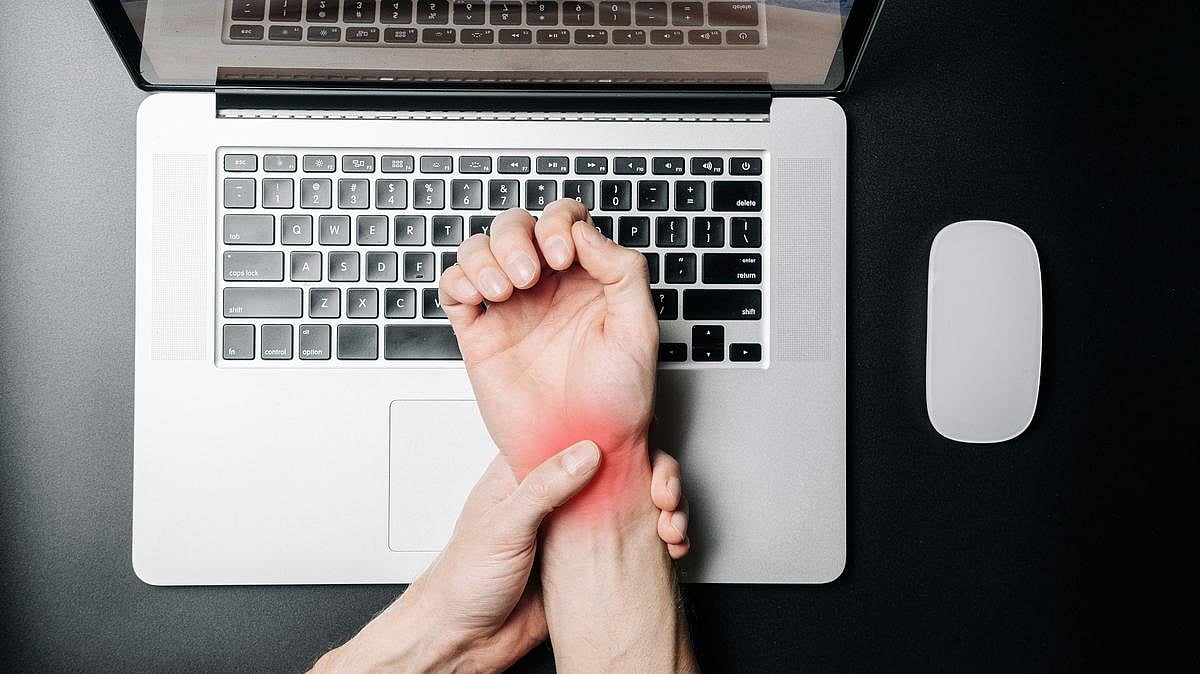 Ultrasound-Guided Hydrodissection Yields Improvements in Carpal Tunnel
  2013 to 2024 Saw Decrease in Benzodiazepine Prescribing
  2016 to 2024 Saw Increase in Patients Using Medical Cannabis

.jpg)