


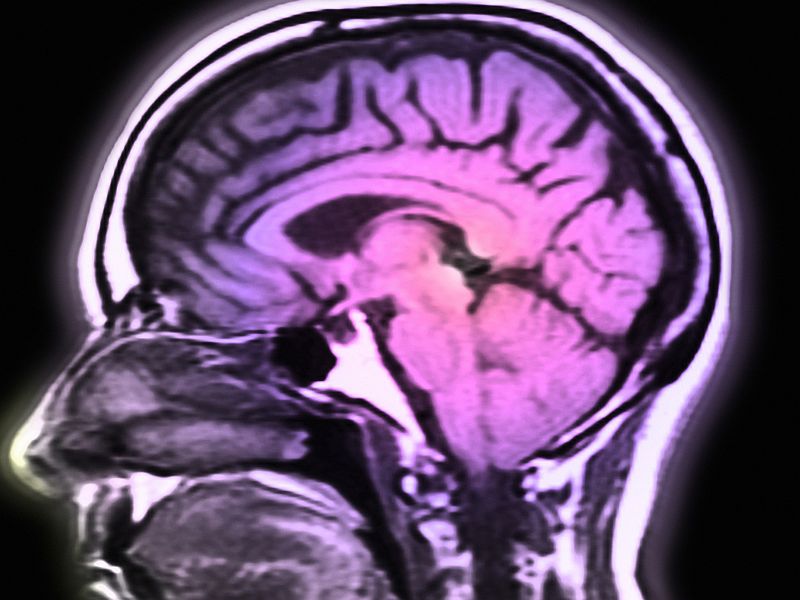
 Findings for patients in chronic phase of left hemisphere stroke with aphasia
FRIDAY, April 1, 2016 (HealthDay News) — For patients in the chronic phase of left hemisphere stroke with aphasia, right hemisphere white matter integrity predicts speech fluency, according to a study published online March 30 in Neurology.
Ethan Pani, from the Beth Israel Deaconess Medical Center in Boston, and colleagues conducted a cross-sectional study to examine the contribution of the right hemisphere’s speech-relevant white matter regions and interhemispheric connectivity to speech fluency in patients with left hemisphere stroke with aphasia. The authors correlated fractional anisotropy (FA) of white matter regions underlying the right middle temporal gyrus (MTG), precentral gyrus (PreCG), pars opercularis (IFGop) and triangularis (IFGtri) of the inferior frontal gyrus, and the corpus callosum (CC) with measures of speech fluency.
The researchers found that speech fluency was significantly predicted by FA values for the right MTG, PreCG, and IFGop, but not by IFGtri and superior parietal lobule. The best model for predicting speech fluency was combining FA of the significant right hemisphere lesions with the lesion load of the left arcuate fasciculus. Speech fluency was also associated with FA of CC fibers connecting left and right supplementary motor areas (SMA). Patients had significantly higher FA of the right IFGop and PreCG and lower FA of a whole CC region of interest (ROI) and the CC-SMA ROI versus controls.
“This may indicate premorbid anatomical variability beneficial for recovery or be the result of post-stroke remodeling,” the authors write.
Abstract
Full Text (subscription or payment may be required)
Editorial (subscription or payment may be required)
 Lower Cognitive Functioning During 60s Linked to Subsequent Stroke Risk
  Insomnia Linked to Increased Risk for Stroke, Odds of Admission
  Lower Vertebral Bone Mineral Density Linked to Cognitive Decline
  Increased Dementia Risk Seen After Transient Ischemic Attack
  Incidence of Stroke Increasing Among Young Adults
  Nearly 3 in 4 Older Adults Express Interest in Vaccine to Prevent Dementia
  Voice Disorders Linked to Elevated Risk for Incident Cognitive Decline
  Risk for Ischemic Stroke Increased After Cancer Diagnosis
 .jpg)




