


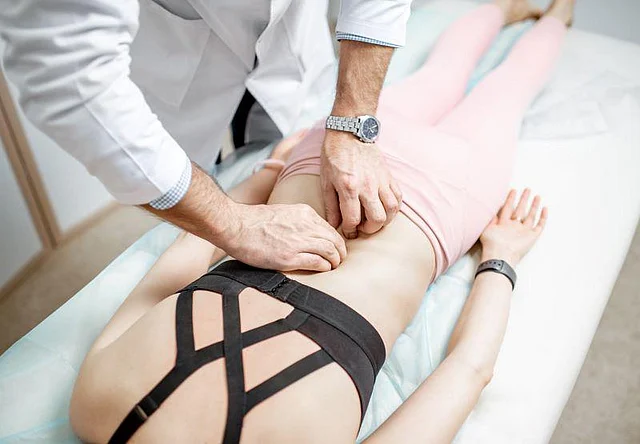
Combination improved pain management for teens undergoing spinal fusion for scoliosis
TUESDAY, Jan. 11, 2022 (HealthDay News) — Combining intrathecal morphine (ITM) and oral gabapentin (GABA) improves pain management in teens undergoing spinal fusion for scoliosis, according to a study recently published in the Journal of Orthopaedic Surgery and Research.
Ying Li, M.D., from C.S. Mott Children’s Hospital in Ann Arbor, Michigan, and colleagues evaluated whether perioperative GABA and ITM provide more effective pain control than ITM alone after posterior spinal fusion for adolescent idiopathic scoliosis. The analysis included 50 matched patients (aged 11 to 18 years).
The researchers found that the ITM+GABA group had significantly lower mean total oxycodone consumption during hospitalization (0.798 versus 1.036 mg/kg). Pain scores were significantly more consistent throughout the postoperative period in the ITM+GABA group, although the ITM group had a lower mean pain score between midnight and 8 am on postoperative day 1. Furthermore, less nausea/vomiting (52 versus 84 percent) and pruritus (44 versus 72 percent) were experienced by the ITM+GABA group versus the ITM group. Groups were similar for time to physical therapy discharge and length of hospital stay.
“Reducing the number of opioids consumed by adding non-narcotic medications, which is termed ‘multimodal pain management,’ makes for a much better experience for adolescents undergoing this procedure for scoliosis,” Li said in a statement.
 Drug Interactions Reducing Contraceptive Effectiveness Common in Epilepsy
 Implant, Patient Survival Do Not Differ for Robotic and Conventional Total Joint Replacement
.jpg) Most Specialty Oral Anticancer Meds for Blood Cancers Are Initially Rejected by Insurers
 Ultrasound-Guided Hydrodissection Yields Improvements in Carpal Tunnel
 Physical Therapist-Supervised Exercise Improves Outcomes After ACL Reconstruction
 2013 to 2024 Saw Decrease in Benzodiazepine Prescribing
 2016 to 2024 Saw Increase in Patients Using Medical Cannabis
 Mindfulness, Tai Chi May Benefit Cancer Survivors





