


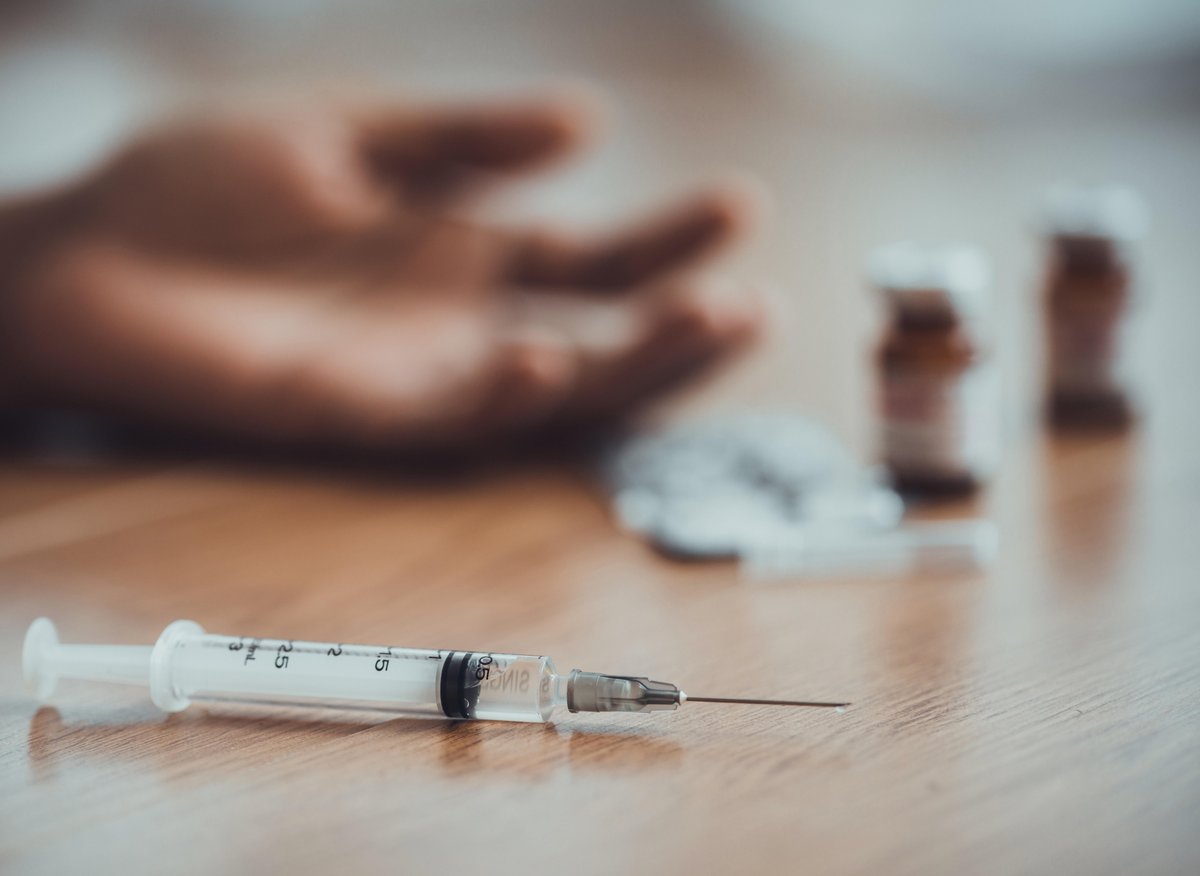
Money will be used in efforts to reverse the damage of the opioid crisis
MONDAY, Feb. 28, 2022 (HealthDay News) — Settlements totaling $26 billion have been finalized between drugmaker Johnson & Johnson plus three major pharmaceutical distributors and state and local governments over the companies’ role in America’s opioid crisis.
The settlement plan — involving Johnson & Johnson, AmerisourceBergen, Cardinal Health, and McKesson — was first announced last year and is the largest to date among numerous opioid-related lawsuits in the United States. However, finalization only came last Friday after a large enough number of state and local governments was confirmed, the Associated Press reported.
Johnson & Johnson has nine years to pay its $5 billion share, while the distributors agreed to pay their combined $21 billion over 18 years, the AP reported. To reach the maximum amounts, states have to get local governments to sign on.
Even so, the settlement money can only do so much to stem the tide of opioid overdoses. “We’re never going to have enough money to immediately cure this problem,” Joe Rice, one of the lead lawyers who represented local governments in the litigation that led to the settlement, told the AP. “What we’re trying to do is give a lot of small communities a chance to try to change some of their problems.”
The money could start flowing by April to nearly every state and local government nationwide, but none will go directly to victims of opioid addiction or their survivors. Instead, the money will be used in efforts to reverse the damage of the opioid crisis.
The four companies are not admitting wrongdoing and continue to deny that they helped cause the opioid crisis. Johnson & Johnson has stopped selling opioids and agreed not to resume, and the three distribution companies agreed to provide data to a clearinghouse meant to help detect when prescription drugs are diverted to the black market.
 Withdrawal From Medetomidine Increasingly Seen in ICUs
 .jpg) Considerable Gaps Reported in Care for Youth With Opioid Use Disorder
Considerable Gaps Reported in Care for Youth With Opioid Use Disorder  Study Looks at Patient Experiences With Sedative Contaminating Fentanyl
  Distinct Characteristics ID"d for Patients With Rheumatoid Conditions, Opioid Use Disorder
  Holding DMARDs at Time of COVID-19 Vaccine Not Warranted in Those With Inflammatory Arthritis
  1 in 3 With Lupus Take Supplements, Medications With Potential for Interactions
  Low Hydroxychloroquine Intake, Blood Levels Linked to ASCVD Risk in Lupus
  Rheumatic Immune-Related AEs With Immune Checkpoint Inhibitors More Severe Than Previously Reported




.jpg)