


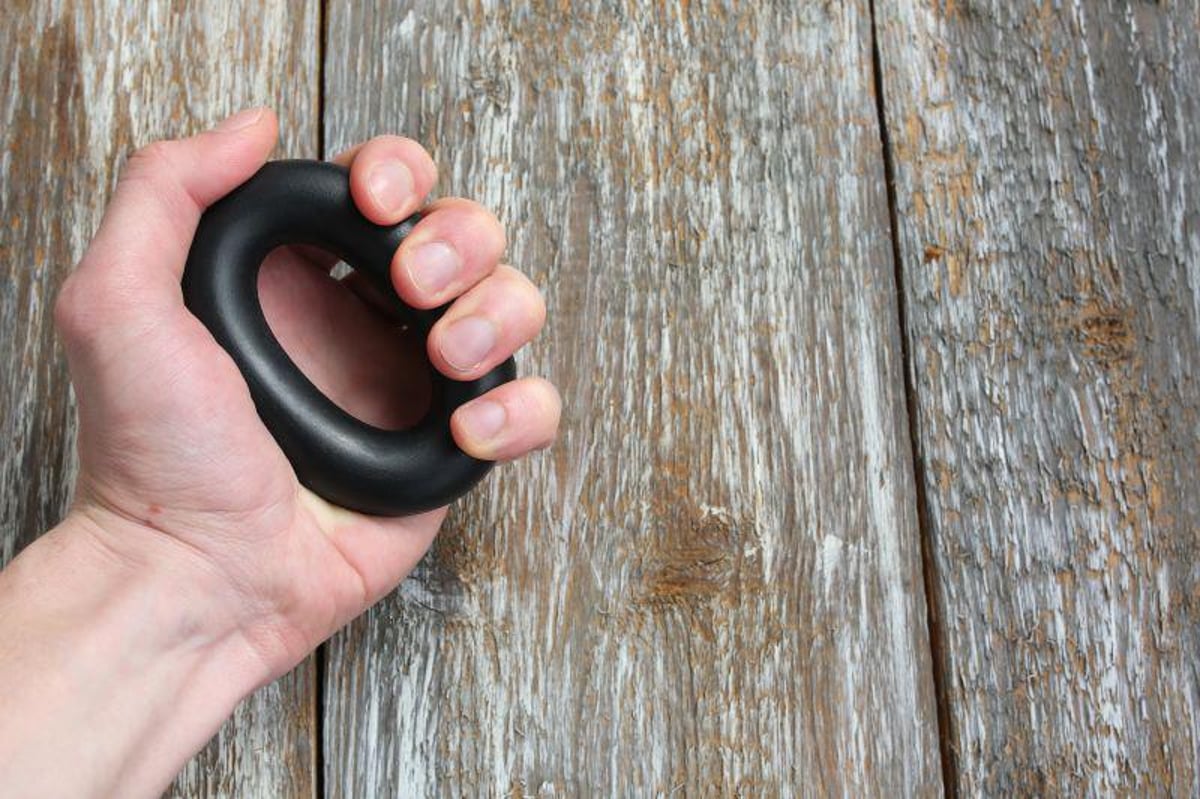
Findings for both 25-hydroxyvitamin D deficiency and insufficiency
THURSDAY, Dec. 22, 2022 (HealthDay News) — Low levels of serum 25-hydroxyvitamin D (25[OH]D) are associated with increased risk of loss of muscle strength in adults ≥50 years, according to a study recently published in Calcified Tissue International.
Maicon LuÃs Bicigo Delinocente, from the Federal University of São Carlos in Brazil, and colleagues assessed whether serum 25(OH)D deficiency and insufficiency are risk factors for the incidence of dynapenia (measured by grip strength) among 3,205 individuals ≥50 years followed for four years.
The researchers found that being serum 25(OH)D deficient was a risk factor for the incidence of dynapenia (incidence rate ratio, 1.70). Both serum 25(OH)D deficiency (incidence rate ratio, 1.78) and insufficiency (incidence rate ratio, 1.77) were risk factors for the incidence of dynapenia among individuals without osteoporosis and those who did not use vitamin D supplementation.
“So we concluded that older adults with serum 25(OH)D levels <30 nmol/L are at greater risk of the incidence of dynapenia than those with serum levels ≥30 nmol/L. However, when we excluded individuals with osteoporosis and those who were taking vitamin D supplementation, the risk threshold for the incidence of dynapenia was higher (≤50 nmol/L),” the authors write. “Clinical trials that combine resistance exercises and vitamin D supplementation in individuals with dynapenia and 25(OH)D insufficiency or deficiency should be developed to investigate whether this combined therapy increases muscle strength in individuals aged 50 or older.”
 Exercise Intervention Linked to Improved Attention, Memory in Breast Cancer
  Functional Decline Precedes Cardiovascular Disease Events by Many Years
  Serum 25(OH)D May Serve as Biomarker of Disease Activity in IBD
  Midlife Employment Instability Linked to Later Cognitive Deficits
  Older Adults Limit Movements With Rising Temperatures
  Socioeconomic Inequalities Tied to Functional Aging
  Ultra-Endurance Running Accelerates Red Blood Cell Aging
  Shingles Vaccination May Promote Healthy Aging
.jpg)



