


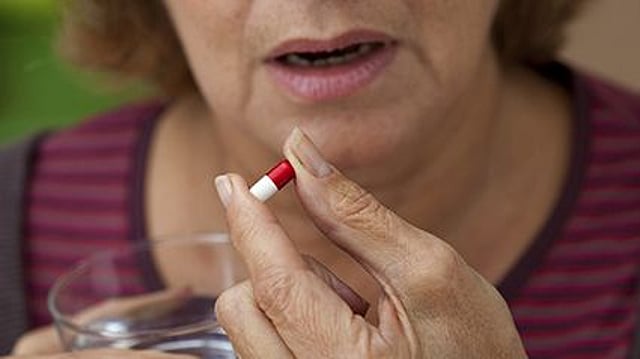
Authors say further education is needed on appropriate uses of antibiotics
FRIDAY, Feb. 26, 2021 (HealthDay News) — A sizable minority of older adults have used antibiotics for a nonintended purpose, according to research published online Feb. 5 in Infection Control & Hospital Epidemiology.
Preeti Malani, M.D., from University of Michigan in Ann Arbor, and colleagues analyzed data from a 2019 University of Michigan National Poll on Healthy Aging to assess use and perceptions of antibiotics among 2,256 U.S. adults (ages 50 to 80 years).
The researchers found that 47.7 percent of respondents reported an antibiotic prescription in the previous two years, most often for respiratory (49.7 percent), dental (17.6 percent), urinary tract (16.6 percent), and skin (11.7 percent) infections. Among those who filled a prescription, 12.7 percent had leftover medication, 65.0 percent of whom kept them and 20.0 percent of whom threw them away or flushed them down the toilet. Among all respondents, 16.8 percent took their own leftover medication and 3.4 percent took medication belonging to someone else. Four in 10 respondents (41.3 percent) said that if they had a cold or flu that lasted long enough to cause them to see a doctor, they would expect to receive a prescription for an antibiotic.
“In addition to counseling patients to take all antibiotics as prescribed, prescribers should consider the number of pills dispensed and follow guidance supporting shorter treatment durations for common infections,” the authors write.
Abstract/Full Text (subscription or payment may be required)
 Lower Cognitive Functioning During 60s Linked to Subsequent Stroke Risk
  Polypharmacy of Prescription Medications Increased for U.S. Older Adults
  Nearly 1 in 10 Older Adults Used Cannabis in the Past Year
  Pharmacist-Led Med Review Improves Medication Quality in Older Patients With Cancer
 .jpg) Most Specialty Oral Anticancer Meds for Blood Cancers Are Initially Rejected by Insurers
Most Specialty Oral Anticancer Meds for Blood Cancers Are Initially Rejected by Insurers  Personalized Support Boosts Families" Genetic Testing for Hereditary Cancers
 .jpg) Cancer Survivors Have Lower Levels of Physical Activity
Cancer Survivors Have Lower Levels of Physical Activity  Lower Vertebral Bone Mineral Density Linked to Cognitive Decline



