


Variables in the model include age at onset, duration, nail involvement, erythematous lunula, onychorrhexis, oil drop, subungual hyperkeratosis
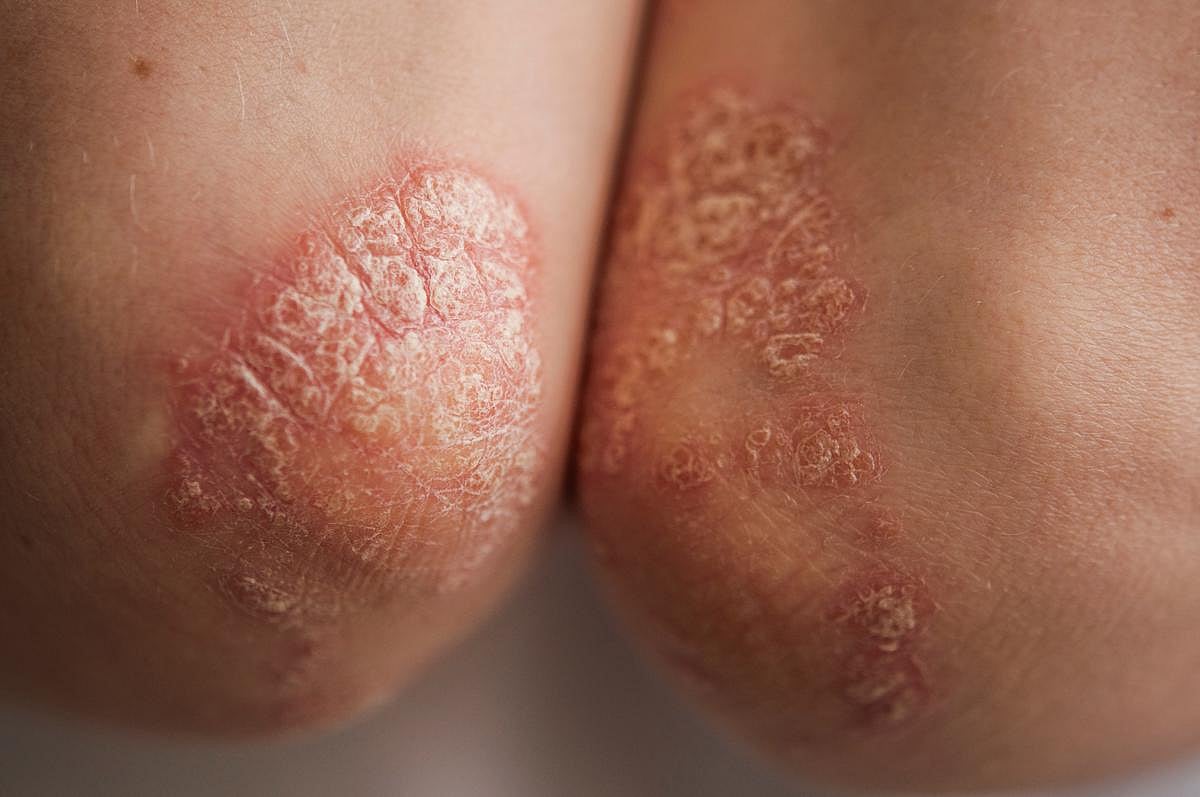
THURSDAY, Feb. 17, 2022 (HealthDay News) — A new nomogram may assess the risk for psoriatic arthritis (PsA) in patients with plaque psoriasis, according to a study published online Jan. 20 in the Frontiers of Immunology.
Panpan Liu, from Central South University in Changsha, China, and colleagues recruited patients with plaque psoriasis or PsA and collected data on characteristics, skin lesions, and nail clinical manifestations. Features were selected and used to build a model to predict risk of PsA. Calibration, discrimination, and clinical utility of the model were evaluated. The model was validated externally in two separate cohorts.
The researchers included age at onset, duration, nail involvement, erythematous lunula, onychorrhexis, oil drop, and subungual hyperkeratosis as predictors for the nomogram. The predictive model had a C-index of 0.759, indicating good calibration and discrimination. The prediction model had an area under the curve of 0.7578092. In the internal and external cohort validation, excellent performances were seen for the C-index (0.741, 0.844, and 0.845, respectively). The PsA nomogram had good effect in guiding clinical practice as indicated by the decision curve.
“The assessment of the risk of PsA in plaque psoriasis patients can help physicians guide patients’ lifestyles and make an individualized treatment plan,” the authors write.
 Holding DMARDs at Time of COVID-19 Vaccine Not Warranted in Those With Inflammatory Arthritis
  Age-, Joint-Specific Ultrasound Reference Values Set for Healthy Joints
  Mortality, Comorbidity Risk Increased With Generalized Pustular Psoriasis
  Drug Retention in Spondyloarthritis Varies With Socioeconomic Status
  1 in 3 With Lupus Take Supplements, Medications With Potential for Interactions
  Low Hydroxychloroquine Intake, Blood Levels Linked to ASCVD Risk in Lupus
  Anifrolumab Tied to Lower Hospitalization, Infection Risk in Lupus
  Timing of JAK Initiation, Shingles Vaccine Administration Can Affect Outcomes in RA




.jpg)