


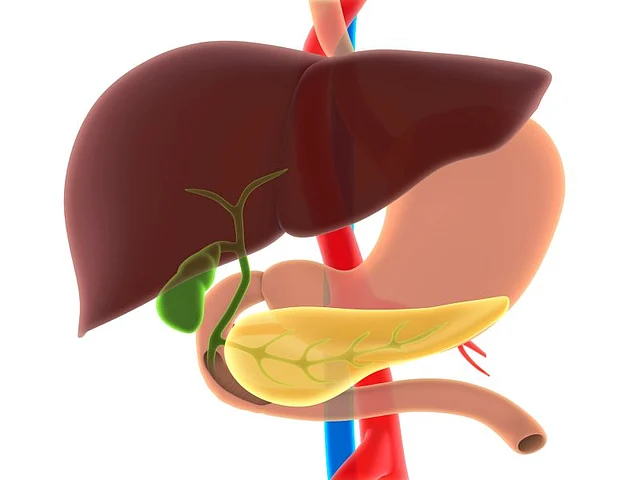
 Responders had increase in pancreas volume, normalization of irregular pancreas borders
WEDNESDAY, Sept. 30, 2020 (HealthDay News) — Pancreas size and shape can be restored with remission of type 2 diabetes, according to a study presented at the annual meeting of the European Association for the Study of Diabetes, held virtually from Sept. 21 to 25.
Roy Taylor, M.B., Ch.B., M.D., from Newcastle University in the United Kingdom, and colleagues studied 64 participants in the Diabetes Remission Clinical Trial and compared them to 64 matched controls without diabetes over two years. Responders were classified as participants who achieved hemoglobin A1c <6.5 percent and fasting blood glucose <7.0 mmol/L when off all antidiabetes medications. Pancreas volume, intrapancreatic fat content, and pancreas border irregularity were quantified.
The researchers found that pancreas volume was 63.8 ± 1.8 versus 79.8 ± 2.9 cm³ at baseline in participants with diabetes versus controls. Irrespective of remission, there was no change seen in pancreas volume from baseline at five months after weight loss. At 24 months, responders had an increase in volume compared with nonresponders (12.6 ± 1.5 versus 4.5 ± 1.3 cm³). Compared with controls without diabetes, those with diabetes had more irregular pancreas borders at baseline; in responders, these borders normalized at 24 months. Compared with nonresponders, responders lost more intrapancreatic fat (1.56 ± 0.3 versus 0.51 ± 0.4 percent).
“Our findings provide proof of the link between the main tissue of the pancreas which makes digestive juices and the much smaller tissue which makes insulin, and open up possibilities of being able to predict future onset of type 2 diabetes by scanning the pancreas,” Taylor said in a statement.
One author disclosed financial ties to the pharmaceutical and health care industries.
.jpg) Most Specialty Oral Anticancer Meds for Blood Cancers Are Initially Rejected by Insurers
Most Specialty Oral Anticancer Meds for Blood Cancers Are Initially Rejected by Insurers  Gap Found Between Awareness of Breast Cancer Risk and Risk-Reducing Behavior
  Personalized Support Boosts Families" Genetic Testing for Hereditary Cancers
  Urine Cell-Free RNA Shows Promise as Biomarker for Bladder Cancer
  Pre-Prostate Biopsy MRI Use Increased From 2017 to 2026
  ASTRO Issues Guidance for Use of Radiation Therapy in Bladder Cancer
 .jpeg) Higher Intake of Saturated, Animal Fats May Increase Mortality in Prostate Cancer
Higher Intake of Saturated, Animal Fats May Increase Mortality in Prostate Cancer  Adverse Pathological Features Do Not Predict Benefit of Hormone Therapy in Prostate Cancer




