


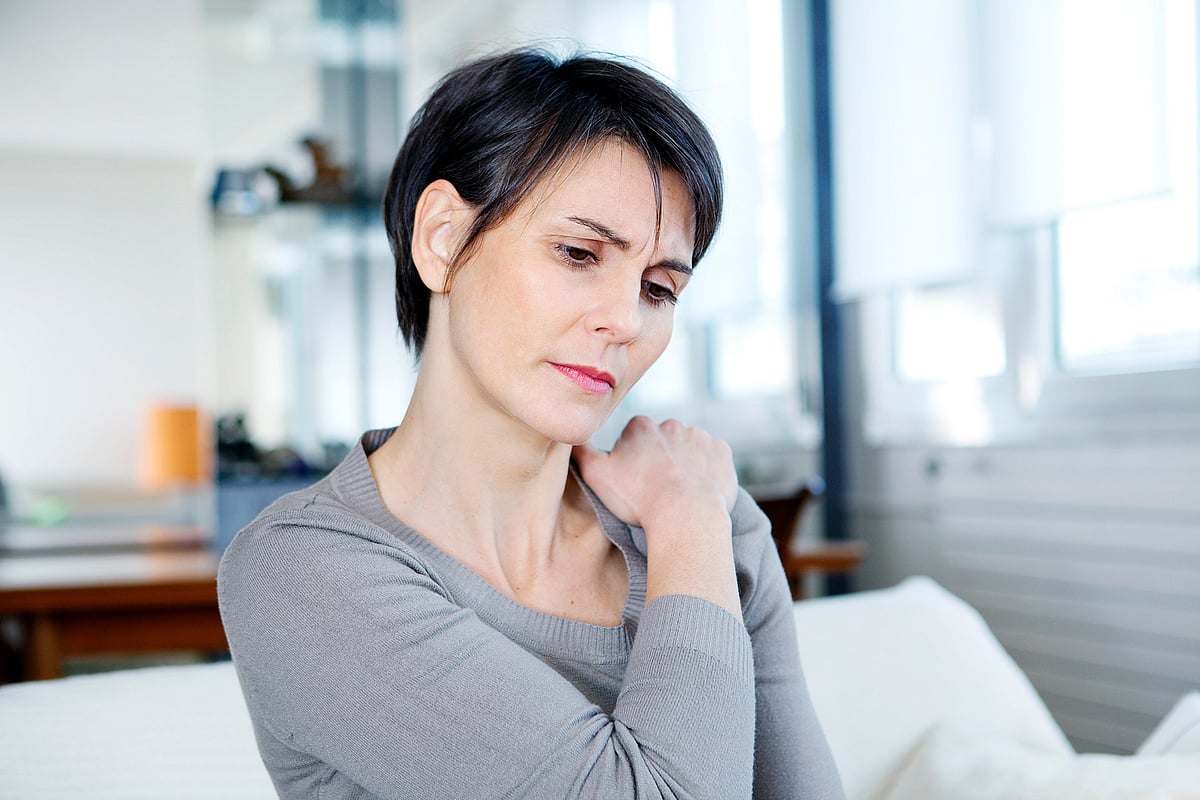
Persistent somatic symptoms could be attributed to COVID-19 in an estimated 12.7 percent of patients at 90 to 150 days after COVID-19
FRIDAY, Aug. 5, 2022 (HealthDay News) — Persistent symptoms at 90 to 150 days after COVID-19 can be attributed to COVID-19 in 12.7 percent of patients, according to a study published in the Aug. 6 issue of The Lancet.
Aranka V. Ballering, from the University Medical Center Groningen in the Netherlands, and colleagues collected data from a multidisciplinary, prospective, population-based, observational cohort study examining the health and health-related behaviors of people living in the north of the Netherlands to assess the nature, prevalence, and severity of long-term symptoms related to COVID-19. Longitudinal dynamics of 23 somatic symptoms surrounding COVID-19 diagnoses were assessed between March 31, 2020, and Aug. 2, 2021; 76,422 participants completed 883,973 questionnaires. Of these, 4,231 participants with COVID-19 were matched to 8,462 controls.
The researchers found persistent symptoms, including chest pain, difficulties with breathing, pain when breathing, painful muscles, ageusia or anosmia, tingling extremities, lump in throat, feeling hot and cold alternately, heavy arms or legs, and general tiredness, in COVID-19-positive participants at 90 to 150 days after COVID-19 compared with before COVID-19 and compared with matched controls. These symptoms could be attributed to COVID-19 in 12.7 percent of patients, because 21.4 and 8.7 percent of COVID-19-positive patients and COVID-19-negative controls, respectively, had at least one of these symptoms, which increased to at least moderate severity at 90 to 150 days after COVID-19 diagnosis or a matched time point.
“We found that about one in every eight patients are affected by persistent symptoms after COVID-19. This finding shows that post-COVID-19 condition is an urgent problem with a mounting human toll,” the authors write.
 ~16 Percent of COVID Cases Develop Postacute Sequelae of SARS-CoV-2
  Parts of the World Seeing New COVID-19 Variant
  HHS, NIH Unveil Vaccine Initiative to Protect Against Future Pandemics
  Hospital-Onset SARS-CoV-2 Infection During Omicron Linked to Morbidity
  Staffing, Scheduling, and Wage Changes Could Reattract Nurses Back to Hospitals
  Skilled Nursing Facility Capacity Declined Between 2019 and 2024
  Physical Design of Critical Care Units Influences Nursing Culture
  Low Capability Pediatric Hospitals More Than Doubled From 2003 to 2022




