


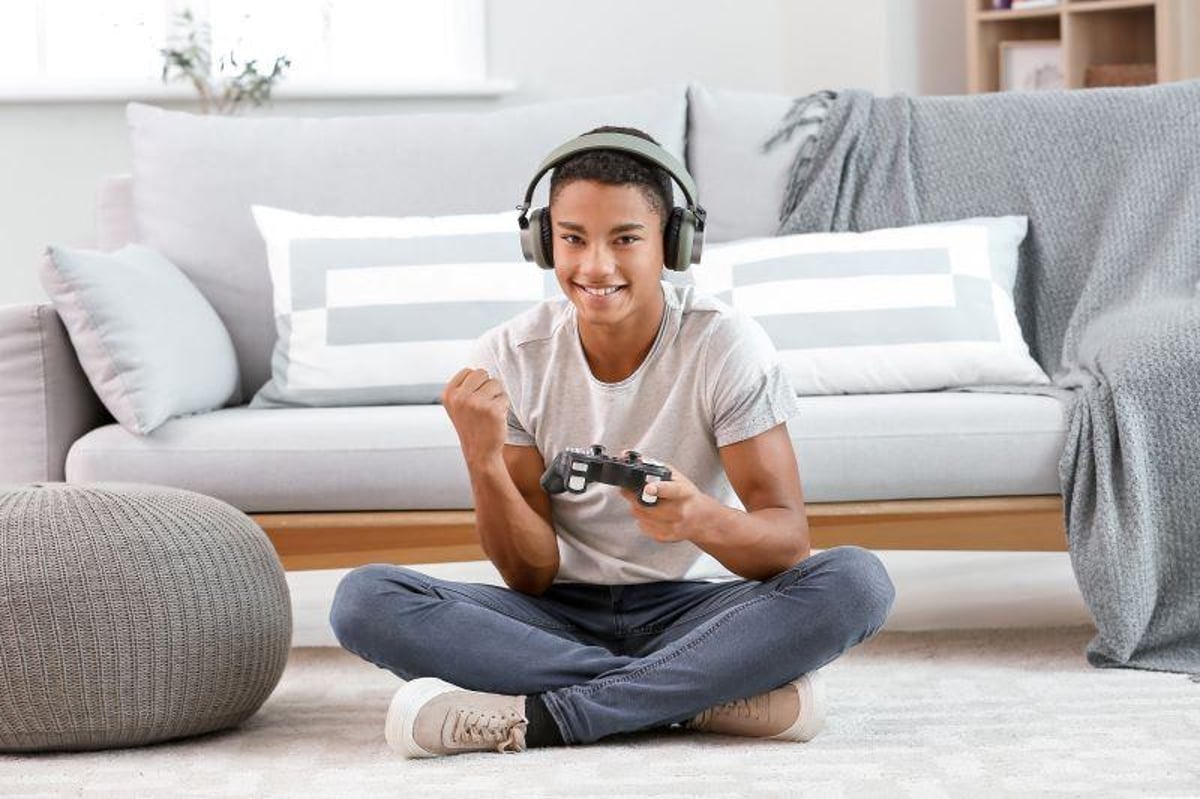
Findings show better response inhibition and working memory with alterations in underlying cortical pathways
FRIDAY, Oct. 28, 2022 (HealthDay News) — Children who play video games show better cognitive performance involving response inhibition and working memory than children who did not play video games, according to a study published online Oct. 24 in JAMA Network Open.
Bader Chaarani, Ph.D., from the University of Vermont in Burlington, and colleagues examined the association between video gaming and cognition in children using data from the Adolescent Brain Cognitive Development study (2,217 children).
The researchers found that video gamers performed better on both functional magnetic resonance imaging (MRI) tasks (response inhibition and working memory) compared with the participants who did not play video games. A greater blood oxygen level-dependent (BOLD) signal on functional MRI was detected in video gamers in the precuneus during inhibitory control. A smaller BOLD signal was observed in video gamers in parts of the occipital cortex and calcarine sulcus and a larger BOLD signal was observed in the cingulate, middle, and frontal gyri and the precuneus during working memory tasks.
“Although the Child Behavior Checklist scores were elevated in children who play video games for three or more hours a day, the results raise the intriguing possibility that video gaming may provide a cognitive training experience with measurable neurocognitive effects,” the authors write.
 Digital Behavioral Health Game Reduces Depressive Symptoms in Teens
  Individualized, Goal-Oriented Cognitive Rehab Beneficial for Long COVID
  Fluoxetine, CBT, and Combination Beneficial for Youths With Anxiety Disorders
  Moderate Screen Use Linked to Faster Recovery Among Youth After Concussion
  Withdrawal From Medetomidine Increasingly Seen in ICUs
 .jpg) Considerable Gaps Reported in Care for Youth With Opioid Use Disorder
Considerable Gaps Reported in Care for Youth With Opioid Use Disorder  Nutritional Deficiencies Seen in Youth Taking GLP-1 Receptor Agonists
  Multicomponent Interventions Offer Little Impact on Fall Risk


.jpg)

