


Older adults in most versus least resilient group had increases in mean gait speed and walking distance after 16 weeks
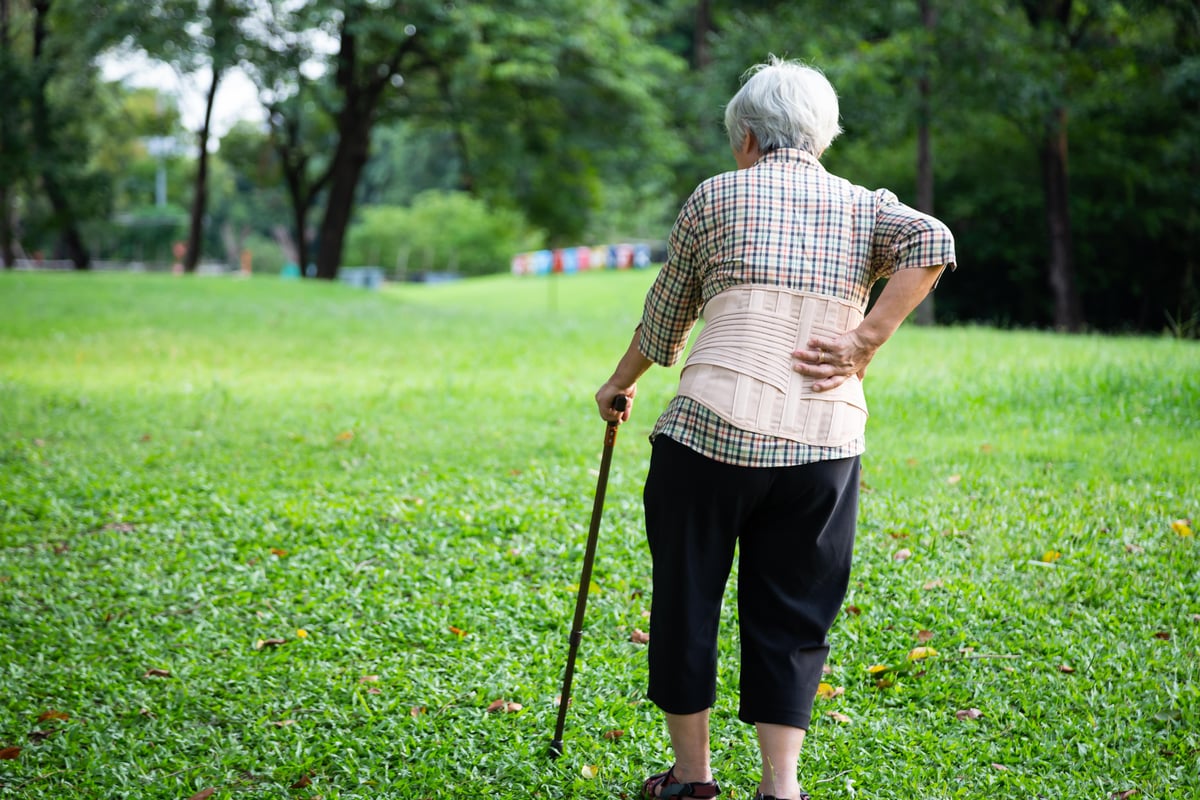
WEDNESDAY, July 20, 2022 (HealthDay News) — For older adults with hip fracture, higher levels of psychological resilience are associated with greater walking speed and distance 16 weeks later, according to a study published online July 20 in the Journal of the American Geriatrics Society.
Germine Soliman, M.D., from St. Mary’s Hospital in Waterbury, Connecticut, and colleagues examined the effects of psychological resilience on observed walking capacity measures in older adults following hip fracture. Data were included for 210 community-dwelling adults aged 60 years and older who experienced a minimal trauma hip fracture and were randomly assigned to one of two 16-week physical therapy-guided interventions. The six-item Brief Resilience Scale (BRS) was used to measure psychological resilience at study baseline.
The researchers found that compared with the least resilient BRS group, patients in the most resilient BRS group had increases between baseline and 16 weeks later in mean gait speed in meters/second and walking distance in meters in the 4-Meter Gait Speed, 50-Foot Walk Test, and 6-Minute Walk Distance (0.06 m/s, 0.11 m/s, and 25.5 m, respectively).
“Findings suggest that psychological resilience should be assessed before starting post hip-fracture rehabilitation, and that interventions to address community-dwelling older adults’ psychological resilience should be developed and tested with the aim of improving walking measures following hip fracture, leading to greater capacity for independent living,” the authors write.
 Lower Cognitive Functioning During 60s Linked to Subsequent Stroke Risk
  Nearly 1 in 10 Older Adults Used Cannabis in the Past Year
  Polypharmacy of Prescription Medications Increased for U.S. Older Adults
  Lower Vertebral Bone Mineral Density Linked to Cognitive Decline
  Age-, Joint-Specific Ultrasound Reference Values Set for Healthy Joints
  Pharmacist-Led Med Review Improves Medication Quality in Older Patients With Cancer
  Myeloma Risk Modestly Increased in Adults With Incidentally Detected Vertebral Fracture
  Nearly 3 in 4 Older Adults Express Interest in Vaccine to Prevent Dementia
 .jpg)




