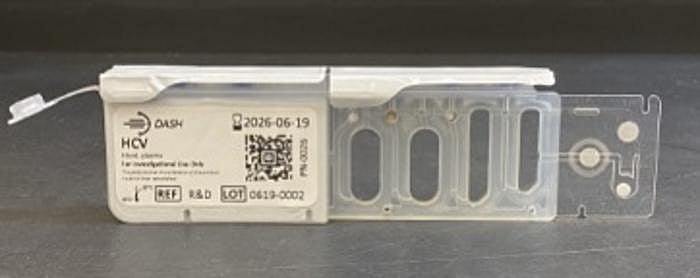
Assay demonstrated 100 percent positive percent agreement and negative percent agreement compared with commercial platforms
TUESDAY, Dec. 16, 2025 (HealthDay News) — A rapid, highly accurate test has been developed for diagnosing hepatitis C virus (HCV), according to a study published online Dec. 10 in the Journal of Infectious Diseases.
Jennifer L. Reed, M.D., from the Northwestern University Feinberg School of Medicine in Chicago, and colleagues describe the development and preliminary clinical validation of a rapid, user-friendly, sensitive molecular test for point-of-care HCV testing. The study evaluated the analytical performance of a 15-minute time-to-result qualitative molecular test for HCV; a small clinical validation study was independently conducted using retrospectively collected specimens.
The researchers found that the Research Use Only DASH HCV assay had a wide dynamic range, was able to detect HCV genotypes 1 to 6, and demonstrated a detection limit of 200 IU/mL with the addition of 100 µL of specimen volume. The assay demonstrated 100 percent positive percent agreement and 100 percent negative percent agreement when compared with commercial platforms in a preliminary study of 97 plasma specimens.
“This test could revolutionize HCV care in the U.S. and globally by dramatically improving diagnosis, accelerating treatment uptake, and enabling more people to be cured faster,” coauthor Claudia A. Hawkins, M.D., M.P.H., also from the Feinberg School of Medicine, said in a statement.
Two authors disclosed ties to Nuclein, the manufacturer of the DASH polymerase chain reaction system.
Abstract/Full Text (subscription or payment may be required)
 Retinal Imaging Can ID Atrial Fibrillation Years Before Diagnosis
  U.S. Adults May Not Understand Their Risk for Vascular Disease
  Screening + Online Cognitive Behavioral Therapy Program Aids Nurses" Mental Health
  Autism Spectrum Disorder Diagnoses Increased for Females Since 2020
  People With Autism Have Shorter Life Expectancy
  Virtual Reality-Based Digital Defocus Vision Training May Aid Myopia in Children
  Paternal Exposure to Valproate Not Linked to Offspring Neurodevelopmental Disorders
  Internet-Based Cognitive-Behavioral Therapy Aids Children"s Anxiety Symptoms