


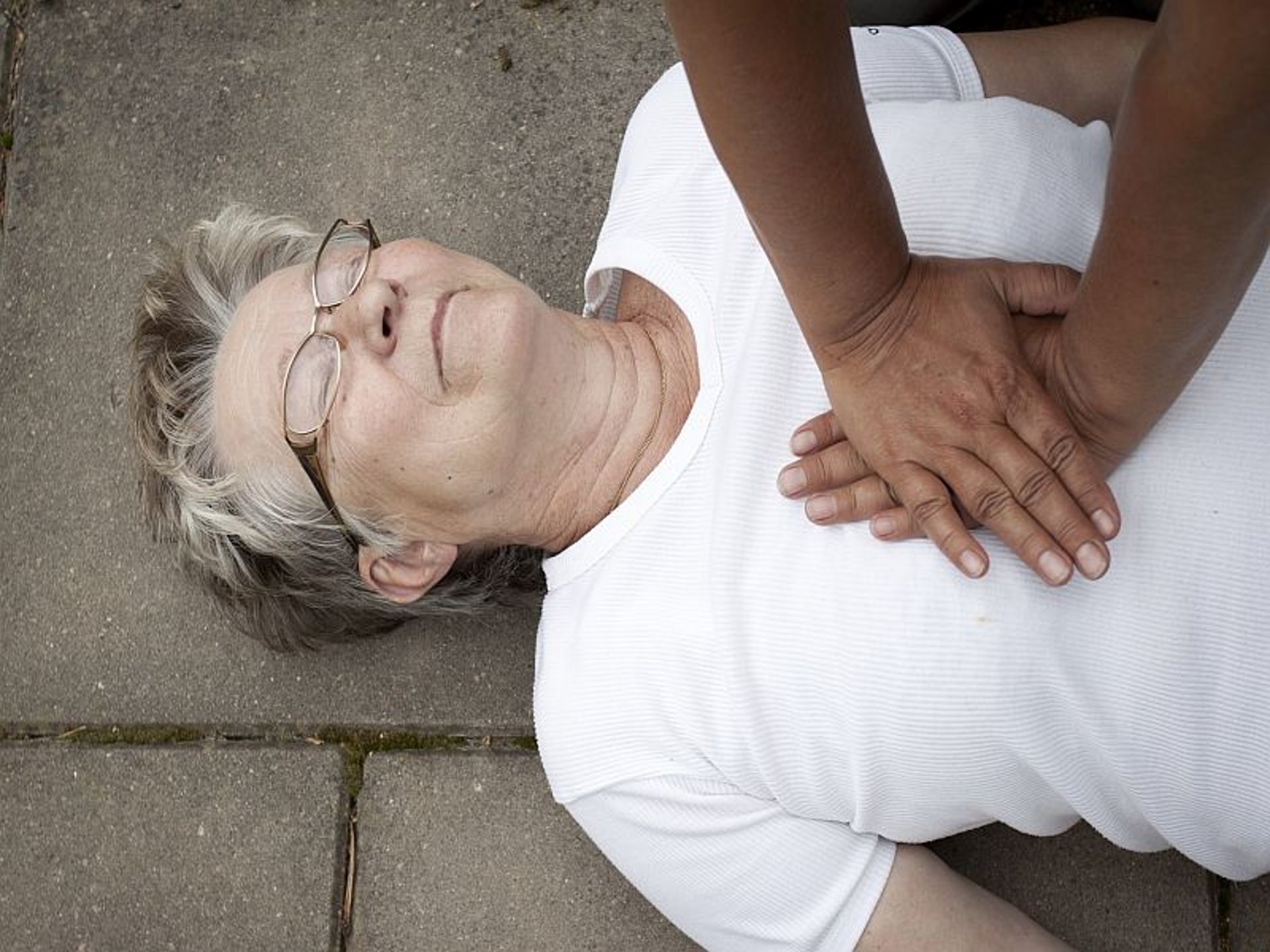
 COVID-19 diagnosed in less than 10 percent of out-of-hospital cardiac arrests in the Seattle area
FRIDAY, June 12, 2020 (HealthDay News) — Bystander cardiopulmonary resuscitation (CPR) remains a vital, lifesaving endeavor for out-of-hospital cardiac arrest (OHCA), even during the COVID-19 pandemic, according to a study published online June 4 in Circulation.
Michael R. Sayre, M.D., from the University of Washington in Seattle, and colleagues estimated the frequency of COVID-19 among the total OHCA population using data from emergency medical services (EMS) in Seattle and King County, Washington, from Jan. 1 to April 15, 2020 (1,067 OHCAs).
The researchers report that COVID-19 was laboratory-confirmed in 2.2 percent and classified as COVID-19-like illness in 1.2 percent of cases. From Feb. 26 to April 15 (defined as the active period of COVID-19), EMS responded to 537 OHCAs, and during this period, COVID-19 was laboratory-confirmed or suspected in 3.7 percent of patients dead on EMS arrival and 6.5 percent of EMS-treated patients. During the active period of COVID-19, OHCAs in homes accounted for 5 percent and OHCAs in nursing homes accounted for 11 percent of cases. Bystander CPR was provided in 57 percent of cases. Assuming a 1 percent mortality for COVID-19, approximately one rescuer might die in 10,000 bystander CPR events.
“Delaying bystander CPR to implement personal protective equipment should only be considered when the prevalence of COVID-19 is substantially increased,” the authors write.
Abstract/Full Text (subscription or payment may be required)
 ~16 Percent of COVID Cases Develop Postacute Sequelae of SARS-CoV-2
  TV Programs Mischaracterize Who Likely Needs CPR and Where
  Guidance Updated for CPR and Emergency Cardiovascular Care
  Prevention of "Tongue Swallowing" in Resuscitation of Athletes Associated With Poor Prognosis
  Multicomponent Interventions Offer Little Impact on Fall Risk
  ED Visits for Gambling Disorder Spike After Canada Liberalizes Online Gambling
  Nearly 2 in 3 Poison Exposures in Young Children May Not Need the ED
  About 1 in 20 Hospitalized U.S. Adults With Firearm Injuries Develop Bacterial Infections


.jpg)

