


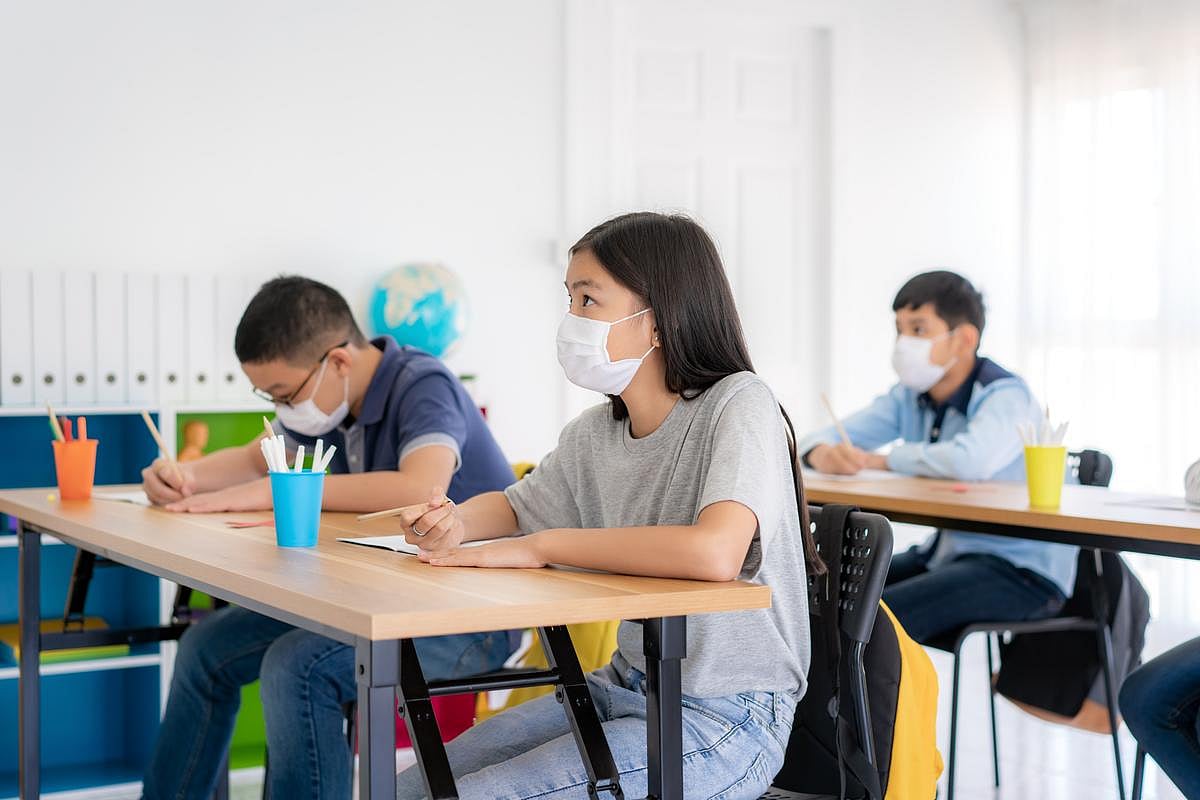
School reopening was associated with a 1.2 percentage-point drop in monthly prevalence of mental health diagnoses
FRIDAY, Dec. 12, 2025 (HealthDay News) — In-person learning appears to be important for children”s mental health, according to a study published online Dec. 8 in Epidemiology.
Pelin Ozluk, Ph.D., from Elevance Health, Inc., in Indianapolis, and colleagues examined the impacts of pandemic-era school reopenings on children”s mental health and health care expenditures in a difference-in-differences analysis across 24 California counties. Data were obtained from medical claims for 185,735 participants.
The researchers found a 1.2 percentage-point drop in monthly prevalence of mental health diagnoses in association with school reopening and a 10.6 percent decrease in related health care spending. Anxiety and depression were the mental health conditions that saw the largest differential between in-person and remote school districts. Among girls, the effects were strongest.
“As we consider future public health emergencies, this study suggests we need to prioritize safe school reopenings and ensure children have access to the social and emotional resources that schools provide,” senior author Rita Hamad, M.D., Ph.D., from the Harvard School of Public Health in Boston, said in a statement. “Policies should focus not only on infection control, but also on the mental well-being of children, recognizing that schools are a critical part of their support system.”
Abstract/Full Text (subscription or payment may be required)
 Low Levels of Placental Growth Factor in Pregnancy Linked to Subsequent ADHD in Offspring
  Better Youth Fitness May Lower Risk for Depression in Adulthood
  2013 to 2024 Saw Decrease in Benzodiazepine Prescribing
  Childhood Cancer Survivors Often Have Mental Distress in Adulthood
  Exercise Intervention Linked to Improved Attention, Memory in Breast Cancer
 .jpg) Cancer Survivors Have Lower Levels of Physical Activity
Cancer Survivors Have Lower Levels of Physical Activity  2016 to 2024 Saw Increase in Patients Using Medical Cannabis
  Insomnia Linked to Increased Risk for Stroke, Odds of Admission



.jpg)
