


Findings independent of individual-level risk factors
MONDAY, June 27, 2022 (HealthDay News) — Several environmental factors demonstrate associations with mortality when adjusting for individual risk factors, according to a study published online June 24 in PLOS ONE.
Michael B. Hadley, M.D., from the Icahn School of Medicine at Mount Sinai in New York City, and colleagues developed a spatial survival model to estimate associations between environmental exposures (ambient fine particulate matter air pollution; household fuel use and ventilation; proximity to traffic; distance to percutaneous coronary intervention center; socioeconomic environment; population density; local land use; and nighttime light exposure) and all-cause and cardiovascular mortality among 50,045 individuals living in a low-income region in Iran.
The researchers found that ambient fine particulate matter air pollution predicted all-cause mortality (hazard ratio [HR], 1.20; 95 percent confidence interval [CI], 1.07 to 1.36) and cardiovascular mortality (HR, 1.17; 95 percent CI, 0.98 to 1.39). Similarly, biomass fuel use without chimney predicted all-cause mortality (HR, 1.23; 95 percent CI, 0.99 to 1.53) and cardiovascular mortality (HR, 1.36; 95 percent CI, 0.99 to 1.87), as did kerosene fuel use without chimney (all-cause mortality: HR, 1.09; 95 percent CI, 0.97 to 1.23; cardiovascular mortality: HR, 1.19; 95 percent CI, 1.01 to 1.41). The multivariable model effectively predicted both all-cause mortality (area under curve, 0.76) and cardiovascular mortality (area under curve, 0.81) in a validation cohort.
“Mortality attributable to environmental factors represents a critical opportunity for targeted policies and programs,” the authors write.
 High Indoor Radon Levels Tied to Higher Risk for Heart Failure
 Air Pollution Does Not Impair Benefits of Walking in Reducing COPD Exacerbation Rate
 Air Pollution Tied to Higher Risk for Suicide
 Freshwater Swimming Tied to Stomach Bugs, Skin Conditions
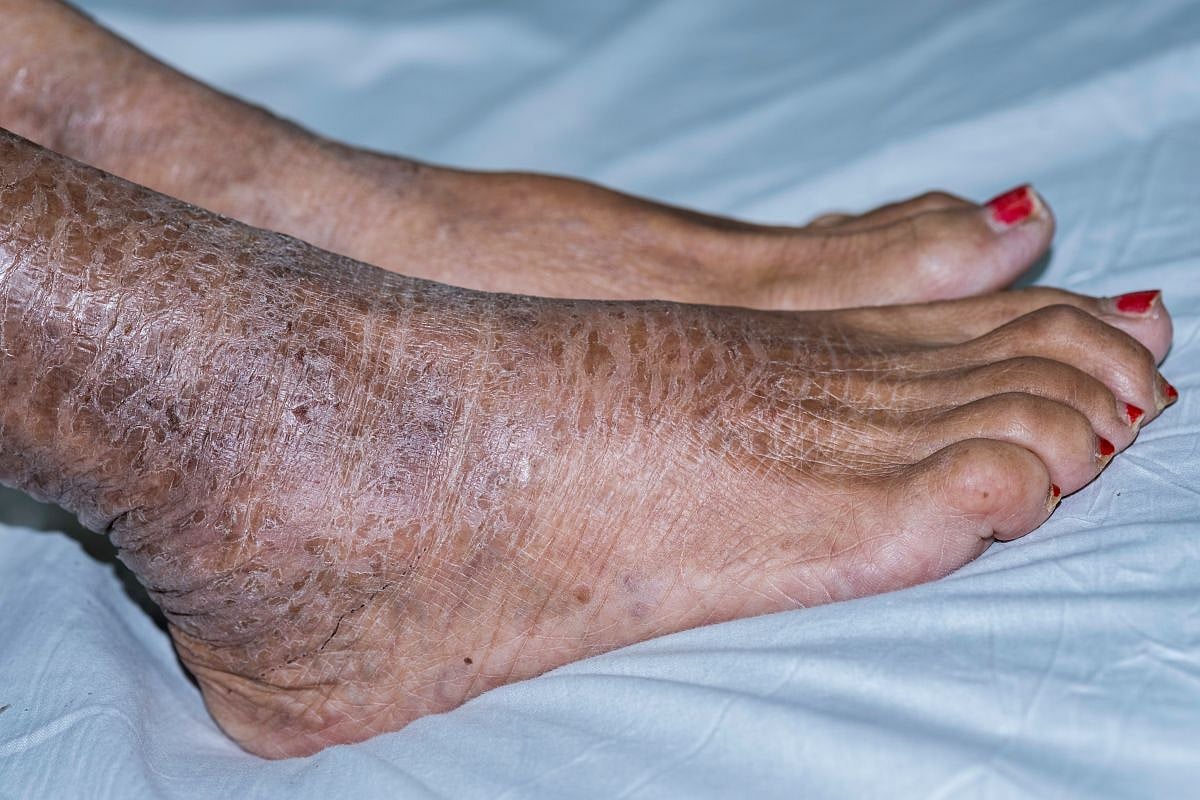 Congenital Ichthyosis Linked to Allergic Disorders
 Distinct Skin Microbiome Features Emerge Before Atopic Disease Onset in Infants
 H. Pylori Exposure May Contribute to Global Burden of Colorectal Cancer
 About 1 in 20 Hospitalized U.S. Adults With Firearm Injuries Develop Bacterial Infections
.jpg)




