


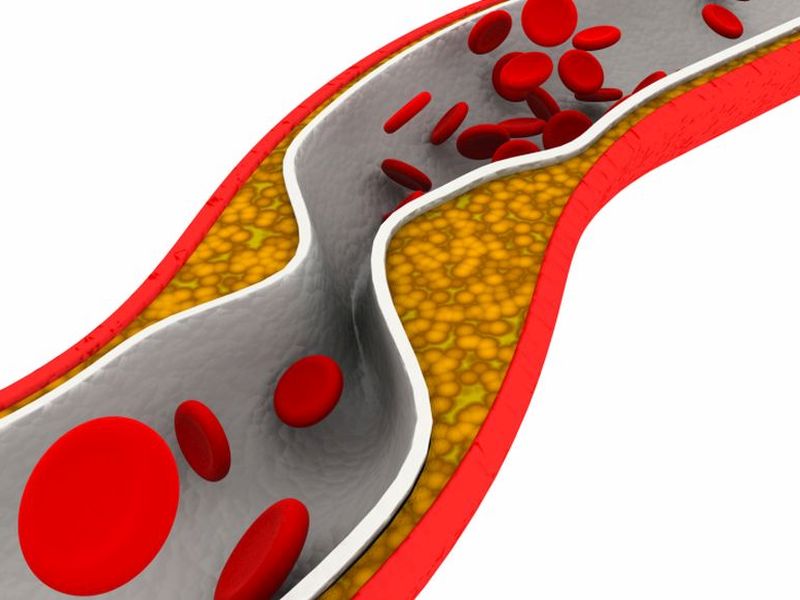
 Tool identifies who will derive additional benefit from addition of ezetimibe to statin therapy after ACS
THURSDAY, Feb. 23, 2017 (HealthDay News) — For patients stabilized after acute coronary syndrome (ACS), a nine-point risk stratification tool can identify patients who will derive benefit from the addition of ezetimibe to statin therapy, according to a study published in the Feb. 28 issue of the Journal of the American College of Cardiology.
Erin A. Bohula, M.D., D.Phil., from the Brigham and Women’s Hospital in Boston, and colleagues prospectively applied the nine-point Thrombolysis In Myocardial Infarction Risk Score for Secondary Prevention (TRS 2°P) stratification tool to 17,717 post-ACS patients randomized to ezetimibe and simvastatin or placebo and simvastatin in the Improved Reduction of Outcomes: Vytorin Efficacy International Trial (IMPROVE-IT).
For the integer-based scheme, the researchers observed a strong graded correlation between the rate of cardiovascular (CV) death/myocardial infarction (MI)/ischemic cerebrovascular accident (iCVA), the trial composite end points, and the individual components (P trend < 0.0001 for each). At seven years, the absolute risk reduction in CV death/MI/iCVA was 6.3 percent for high-risk patients (defined by at least three risk indicators) taking ezetimibe/simvastatin, translating to a number-needed-to-treat of 16. The absolute risk reduction was 2.2 percent for intermediate-risk patients (two risk indicators). There was no benefit from addition of ezetimibe for low-risk patients (zero or one indicator).
“Atherothrombotic risk stratification using the TRS 2°P identifies high-risk patients who derive greatest benefit from the addition of ezetimibe to statin therapy for secondary prevention after ACS,” the authors write.
Several authors disclosed financial ties to pharmaceutical companies, including Merck, which funded IMPROVE-IT.
 Exercise-Based Cardiac Rehab Beneficial for Coronary Heart Disease
  Addition of CAC to PREVENT-ASCVD Equations May Improve Predictive Utility in Certain Patients
 .jpg) Warning Symptoms, Clinical History Can Predict Sudden Cardiac Arrest
Warning Symptoms, Clinical History Can Predict Sudden Cardiac Arrest .jpg) Micro-, Nanoplastics Detected More Often in Patients With STEMI
Micro-, Nanoplastics Detected More Often in Patients With STEMI  UACR, UPCR Provide Indistinguishable Prognostic Information in CKD
  Use of SAMA, SABA Linked to Cardiovascular Events, Mortality in Asthma, COPD
  Digital Telemonitoring Aids Hypertension Outcomes
  Subtype-Specific CVD Associations Identified With Alzheimer Disease
 .jpg)




