


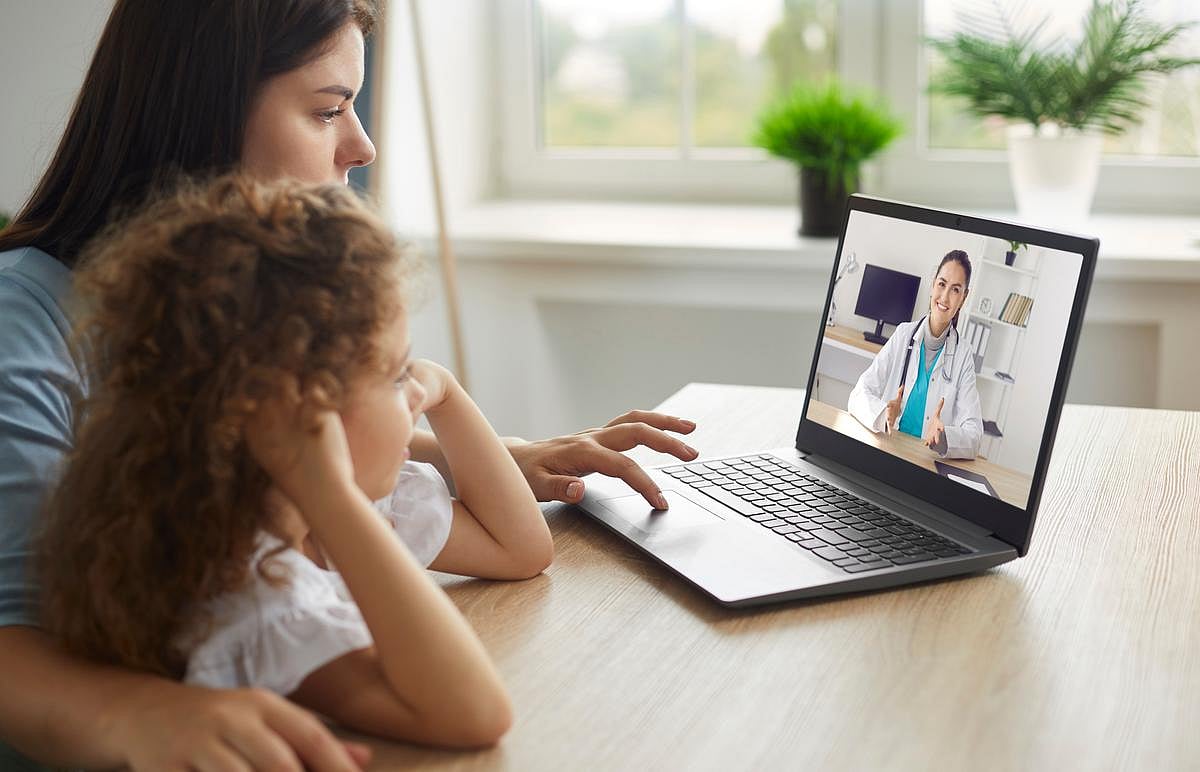
Postpandemic study reveals fewer 30-day follow-up visits after telemedicine visits than in-person visits
THURSDAY, March 5, 2026 (HealthDay News) — Telemedicine visits may cost less than in-person care without increasing subsequent short-term health care use, according to a study published online Feb. 9 in JAMA Network Open.
Bingyu Zhang, from the University of Pennsylvania in Philadelphia, and colleagues examined whether charges and subsequent visits differ between ambulatory telemedicine and in-person visits in the postpandemic period. The analysis included 163,308 visits from Jan. 1 to April 30, 2024.
The researchers found that after propensity score matching, the mean 30-day episode charge was $96.60 for telemedicine encounters and $509.21 for in-person encounters. Telemedicine visits also were associated with fewer follow-up visits per 30-day episode versus in-person visits (mean, 3.44 versus 4.44 visits; comparative reduction, 23 percent). Three categories of mental and behavioral disorders showed comparable episode charges for telemedicine and in-person encounters: depressive disorders (−$69.47), anxiety and fear-related disorders ($38.06), and neurodevelopmental disorders (−$28.88).
“Before we did this study, there was a common concern that telemedicine might serve only as an easy source of “first aid,” just delaying in-person care and increasing costs overall,” co-senior author David Asch, M.D., also from the University of Pennsylvania, said in a statement. “But we found that wasn’t true, and our work suggests that for many patients, telemedicine can be a complete solution, not just a temporary Band-Aid.”
One author disclosed financial ties to the biopharmaceutical industry.
 Better Youth Fitness May Lower Risk for Depression in Adulthood
 .jpg) Pregnancy Complications Linked to Subsequent Risk for Cardiometabolic-Renal Conditions
Pregnancy Complications Linked to Subsequent Risk for Cardiometabolic-Renal Conditions  2013 to 2024 Saw Decrease in Benzodiazepine Prescribing
  2016 to 2024 Saw Increase in Patients Using Medical Cannabis
  Ultrasound-Guided Hydrodissection Yields Improvements in Carpal Tunnel
  Financial Incentives Boost Tobacco Abstinence in Underserved Adults
  Physical Therapist-Supervised Exercise Improves Outcomes After ACL Reconstruction
  Nearly 1 in 10 Older Adults Used Cannabis in the Past Year
.jpg)



