


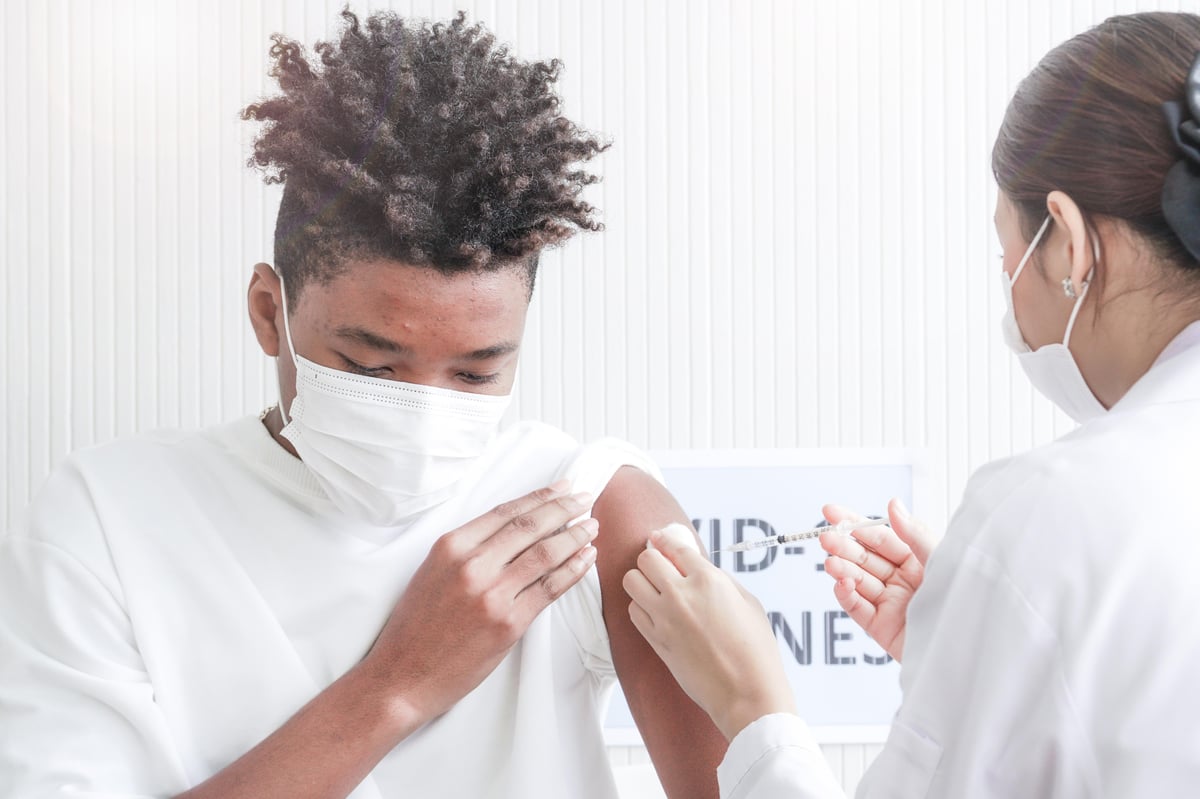
Vaccine effectiveness was 87.8 and 89.1 percent against documented and symptomatic infection, respectively
MONDAY, March 7, 2022 (HealthDay News) — Vaccinations reduce the incidence of severe acute respiratory syndrome coronavirus 2 (SARS-CoV-2) among adolescents, according to a research brief published online Feb. 22 in Pediatrics.
Pavan V. Thakkar, from the Duke Clinical Research Institute in Durham, North Carolina, and colleagues examined the impact of COVID-19 vaccination on SARS-CoV-2 incidence and within-school transmission among sixth- to 12th-grade students in a prospective cohort study of 1,128 students from Aug. 1 to Nov. 12, 2021.
The researchers found that as of November 2021, 73.5 and 26.5 percent of students were vaccinated and unvaccinated, respectively. During the study period, 20 (6.7 percent) unvaccinated students reported an infection (80 percent symptomatic) compared with seven (0.8 percent) vaccinated students (71 percent symptomatic). Only two of the 27 infections were classified as within-school transmissions; both of these infections resulted from unmasked exposures to unvaccinated index cases. The incidence rates of documented infection and symptomatic infection were increased 8.2- and 9.2-fold for unvaccinated versus vaccinated students. The unadjusted vaccine effectiveness was 87.8 and 89.1 percent against documented and symptomatic infection, respectively.
“In this real-world prospective cohort study of 1,128 students, vaccinations substantially reduced SARS-CoV-2 incidence among adolescents and, along with other mitigation measures, kept students safely in school during a variant-driven community surge,” the authors write.
Two authors disclosed financial ties to the pharmaceutical industry.
.jpg) Considerable Gaps Reported in Care for Youth With Opioid Use Disorder
Considerable Gaps Reported in Care for Youth With Opioid Use Disorder  Nutritional Deficiencies Seen in Youth Taking GLP-1 Receptor Agonists
  Nearly 3 in 4 Older Adults Express Interest in Vaccine to Prevent Dementia
  Youth Suicide Risk Linked to Community Firearm Violence
  Childhood Cancer Survivors Often Have Mental Distress in Adulthood
  Insomnia Linked to Increased Risk for Stroke, Odds of Admission
  Reducing Ultraprocessed Food May Alleviate Symptoms of Depression
  Age-Adjusted Suicide Rate Increased From 2014 to 2017 and Then Plateaued




.jpg)