


By Nancy Wurtzel
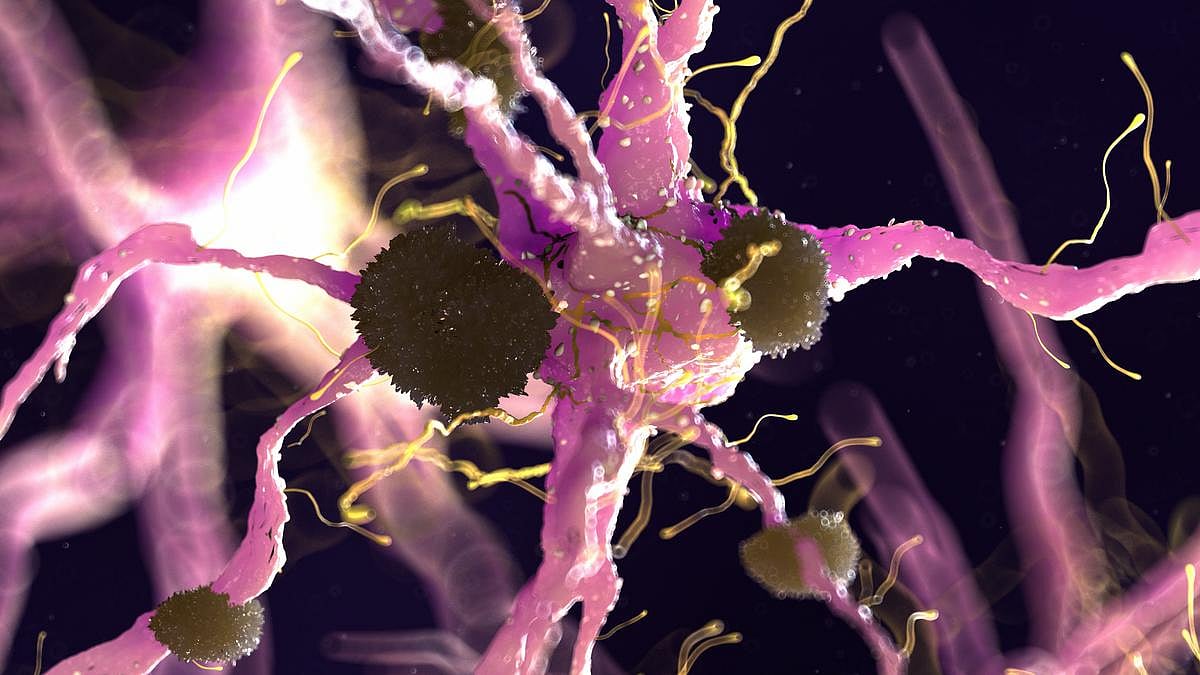
Billions of dollars have been spent searching for a cure or effective treatment for Alzheimer’s and related degenerative brain diseases. Sticky protein plaques formed by beta amyloid in the brain have long been considered the Alzheimer’s culprit, and most research focused on eradicating amyloid production.
Over the past three decades, many amyloid studies initially indicated promise, however 190 drugs ultimately failed in human trials, according to Bernard Munos, a senior fellow at FasterCures, a health nonprofit. Consequently, there has been no real progress in finding a cure or effective treatment that stops the disease progression.
Now the scientific community is actively pursuing theories that turn old assumptions upside down. In fact, some researchers are taking a second look at amyloid and determining it may not be the cause of the disease, but instead a byproduct.
One such study, funded by the National Institutes of Health and the Cure Alzheimer’s Fund, and led by Harvard researchers Robert Moir and Rudy Tanzi, was published in the May 2016 issue of Science Translational Medicine.
Moir and Tanzi’s work hypothesize that the production of amyloid is the body’s normal immune response to bacteria, viruses, and other pathogens entering the brain. Amyloid, which Tanzi describes as “beneficial”, actually takes on the role of the brain’s natural antibiotic, trapping and then cleaning up the offending pathogens, thereby protecting the brain’s neurons.
Testing their theory, Moir and Tanzi injected harmful bacteria into the brains of mice, worms and fruit flies. In every case, amyloid was created to protect against damage. Conversely, when no amyloid was allowed to produce, the brain infection continued unabated.
Next, study researchers tried their model on human brain cells in a petri dish. By adding different pathogens, including fungi, viruses, and bacteria, researchers found these brain cells also developed amyloid that swallowed up these foreign invaders and blocked their potential damage. However, if amyloid was not allowed to occur, the brain cells could not fight the infection.
The study results suggest amyloid production is a natural reaction and its power to destroy inflammation and infections is indeed beneficial.
Moir and Tanzi postulate that often these brain infections may be so mild that there are no outward symptoms. Additionally, many infected brains are effective at cleaning up remnants after the infection has been stopped, thereby avoiding serious damage.
However, researchers caution that for some individuals the amyloid protective response can go haywire, multiplying too quickly. This frenzied reaction spirals out of control and essentially overwhelms the brain, eventually leaving it riddled with damaging debris and damage that cannot be reversed.
Scientists believe younger brains are innately protected from infection because of the blood barrier, which allows little to pass into the brain from the bloodstream. This protection diminishes and weakens with age as the blood barrier thins, making it more vulnerable to pathogens. This could be a reason why Alzheimer’s is most often a disease of the elderly.
The Takeaway: Moir and Tanzi’s infection theory reveals amyloid may not the cause of Alzheimer’s and eliminating its production may cause more harm. Instead, a more effective immune system may yield better results, along with identifying the body’s responses.
What Comes Next: Launching soon is a study to learn what microbes live in plaques found in the human brain. Scientists must also identify which pathogens are the most detrimental to the brain. Human studies may test Moir and Tanzi’s theory in a future phase.
Eventual Outcomes: Treatments, such as brain immunizations, may be developed which could reduce the chances of infection in the brain and stimulate the immune system. Another possible outcome would be controlling the production of amyloid before it does more harm than good.
What’s at Stake: A cure or effective treatments of Alzheimer’s disease is critical. In the U.S., Alzheimer’s is the sixth-leading cause of death and 5.4 million people are currently living with the disease. By 2050, this number could nearly triple to 14 million. Nearly one in every five Medicare dollars is now spent on people with Alzheimer’s and other dementias. This could increase to one in three in a little more than three decades.
 NOACs Linked to Slower Cognitive Decline in Patients With A-Fib, Alzheimer Disease
  Cortical Atrophy in Early-Onset Alzheimer Disease Signature Can Predict Progression to Dementia
  Exercise Link to Dementia Varies by Physical Activity Domain
  Real-World ARIA Incidence With Lecanemab Aligns With Clinical Trial Findings
  Drug Interactions Reducing Contraceptive Effectiveness Common in Epilepsy
  Frequent Cannabis Use Linked to Epilepsy Severity
  PET/MRI Offers Diagnostic, Prognostic Value in Pediatric Epilepsy
  Gene Mutation Identified That Increases Lung Cancer Risk


.jpg)
