


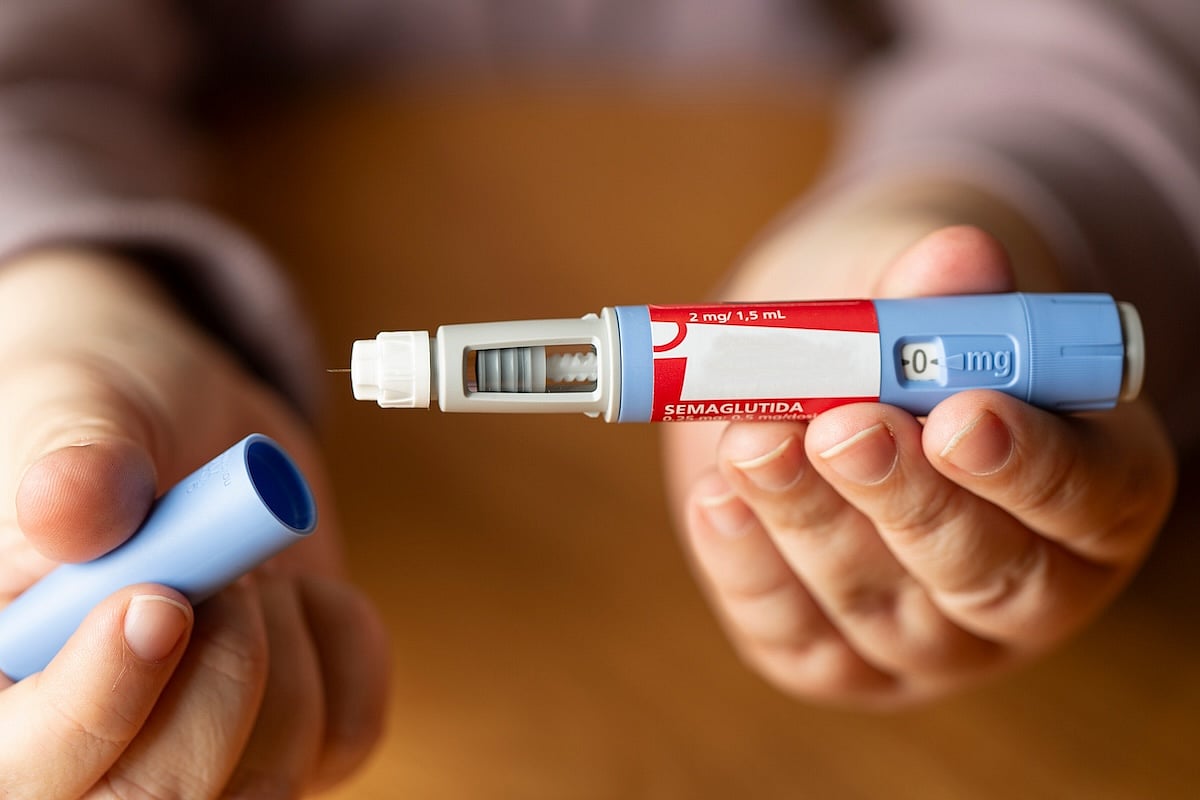
All dimension-specific scores showed improvement from baseline with semaglutide versus placebo except anxiety/depression
TUESDAY, June 9, 2026 (HealthDay News) — For adults with type 2 diabetes and chronic kidney disease, two years of semaglutide treatment improves health-related quality of life (QoL) versus placebo, according to a study presented at the annual congress of the European Renal Association, held from June 3 to 6 in Glasgow.
Johannes F.E. Mann, M.D., from the KfH Kidney Center in Munich, and colleagues reported prespecified analyses of treatment effects on patient-reported QoL measured using the five-level EuroQoL-5-dimension (EQ-5D-5L) questionnaire at week 104 in the FLOW trial, which examined the effects of once-weekly semaglutide in adults with type 2 diabetes and chronic kidney disease. A total of 3,533 individuals were randomly assigned: 1,767 to semaglutide 1 mg once weekly and 1,766 to placebo.
The researchers found that health utility scores, based on five-dimension specific items (mobility, self-care, usual activities, pain/discomfort, and anxiety/depression) stabilized with semaglutide and worsened with placebo at week 104, with an estimated treatment difference of 0.021 ± 0.005; this was equivalent to eight additional days spent in full health per year with semaglutide. At week 104, all dimension-specific scores showed improvement from baseline with semaglutide versus placebo (estimated treatment difference range, −0.134 to −0.066), except for anxiety/depression. Visual analog scale scores had improved more from baseline with semaglutide than placebo at week 104, with an estimated treatment difference of 2.15 ± 0.51.
“Our findings reinforce the importance of a broader, patient-centered approach to treatment goals,” Mann said in a statement. “They suggest that, overall, well-being may improve with semaglutide despite gastrointestinal side effects, complementing previously reported reductions in kidney and mortality risks.”
Several authors disclosed ties to Novo Nordisk, which manufactures semaglutide.
.jpg) Pregnancy Complications Linked to Subsequent Risk for Cardiometabolic-Renal Conditions
Pregnancy Complications Linked to Subsequent Risk for Cardiometabolic-Renal Conditions  GLP-1 Receptor Agonists, SGLT-2is Slow Renal Function Decline in T2D With Albuminuria
  Early Complications Common in Older Kidney Transplant Recipients
 .jpeg) 1997 to 2022 Saw Increase in Pediatric Hospitalizations With AKI
1997 to 2022 Saw Increase in Pediatric Hospitalizations With AKI  Frailty Linked to Incident Cognitive Decline in Men With CKD
  UACR, UPCR Provide Indistinguishable Prognostic Information in CKD
 .jpg) Recommendations Updated for Management of Anemia in CKD
Recommendations Updated for Management of Anemia in CKD  More Advanced CKM Syndrome Linked to Worse Cardiovascular Health


.jpg)

