


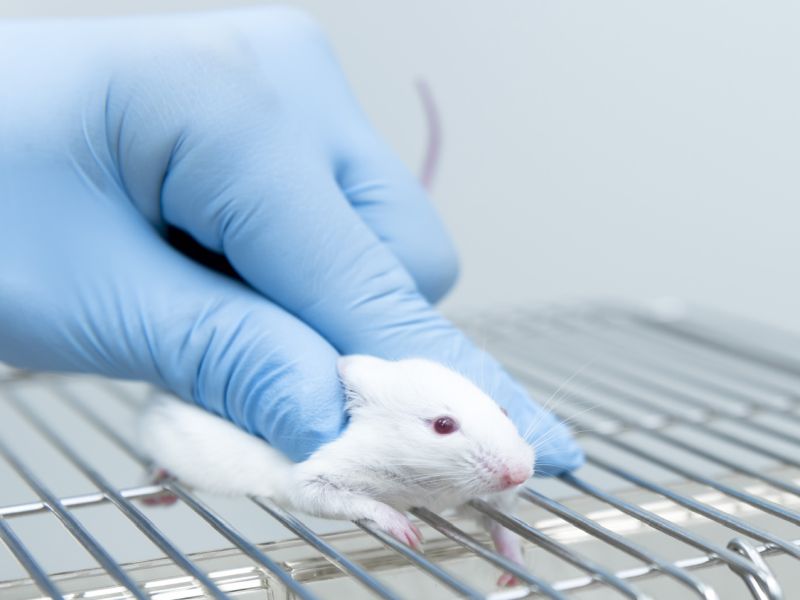
 Combination of EE, magnesium-L-threonate more effective than either treatment alone in mouse model
THURSDAY, Nov. 30, 2017 (HealthDay News) — The combination of environmental enrichment (EE) and magnesium-L-threonate (MgT) is more effective than either treatment alone for improving cognition and spatial memory in a mouse model of Alzheimer’s disease (AD), according to a study published online Nov. 10 in CNS Neuroscience & Therapeutics.
Ying Huang, from Tsinghua University in Beijing, and colleagues treated APP/PS1 mice with EE, MgT, or the combination of EE and MgT (EM), and compared the effect on memory function.
The researchers found that, compared with either treatment alone, EM was more effective in improving cognition and spatial memory in long-term (12 months; started at age 3 months, before disease manifestation) and short-term (three months; started at age 6 months, after manifestation of disease) treatment. The behavioral improvement corresponded with synaptic contact rescue in the AD mouse brain hippocampal region. EM rescued the activity reduction in two downstream molecules in the N-methyl-D-aspartate receptor (NMDAR) pathway (CaMKII and CREB), but neither single treatment did.
“Environmental enrichment and MgT may synergistically improve recognition and spatial memory by reducing synaptic loss and restoring the NMDAR signaling pathway in AD mice, which suggests that combination of EE and MgT may be a novel therapeutic strategy for AD,” the authors write.
 NOACs Linked to Slower Cognitive Decline in Patients With A-Fib, Alzheimer Disease
  Estrogen Hormone Treatment May Be Beneficial for Brain Fog Symptoms in Menopausal Women
  Cortical Atrophy in Early-Onset Alzheimer Disease Signature Can Predict Progression to Dementia
  Exercise Link to Dementia Varies by Physical Activity Domain
  Insomnia Linked to Increased Risk for Stroke, Odds of Admission
  Increased Dementia Risk Seen After Transient Ischemic Attack
  Nearly 3 in 4 Older Adults Express Interest in Vaccine to Prevent Dementia
  Voice Disorders Linked to Elevated Risk for Incident Cognitive Decline


.jpg)

