


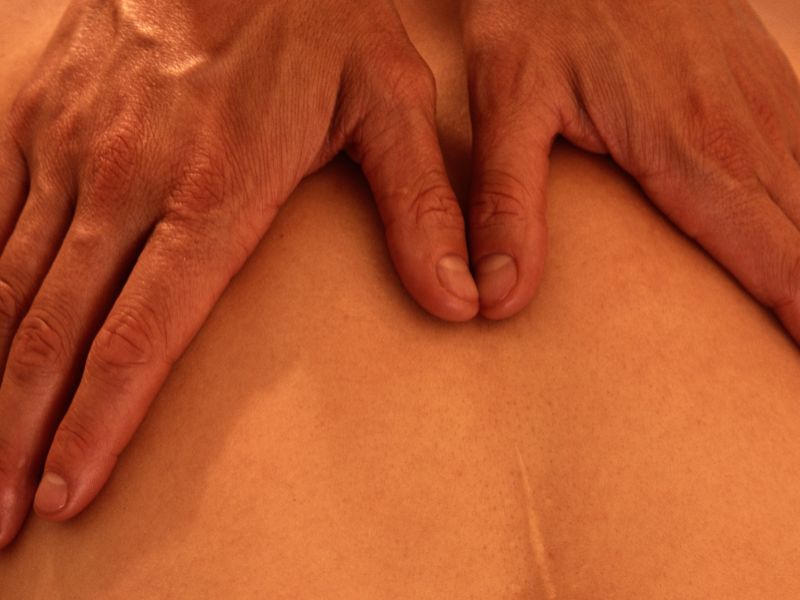
 For breast cancer survivors, larger drop in fatigue scores with Swedish massage than light touch
TUESDAY, Oct. 24, 2017 (HealthDay News) — Swedish massage therapy (SMT) is associated with clinically significant relief from cancer-related fatigue (CRF) in breast cancer survivors, according to a study published online Oct. 17 in Cancer.
Becky Kinkead, Ph.D., from Emory University in Atlanta, and colleagues evaluated the efficacy of weekly SMT compared with an active control condition (light touch [LT]) and waitlist control (WLC) in an early-phase, randomized, single-masked, six-week investigation. They enrolled 66 female stage 0-III breast cancer survivors (age range, 32-72 years) who had received surgery plus radiation and/or chemotherapy/chemoprevention with CRF (Brief Fatigue Inventory >25).
The researchers found that SMT resulted in a mean six-week reduction in Multidimensional Fatigue Inventory total scores of -16.5 versus -8.06 for LT and an increase of 5.88 points for WLC. The mean reduction in PROMIS Fatigue scores was -5.49 points for SMT versus -3.24 points for LT and -0.06 points for WLC. These results were not accounted for by the higher credibility, expectancy, and preference for SMT versus LT.
“This finding suggests that 6 weeks of a safe, widely accepted manual intervention causes a significant reduction in fatigue, a debilitating sequela for cancer survivors,” conclude the authors.
Several co-authors are employed by the Atlanta School of Massage, and others disclosed financial ties to medical device and pharmaceutical companies.
.jpg) Most Specialty Oral Anticancer Meds for Blood Cancers Are Initially Rejected by Insurers
Most Specialty Oral Anticancer Meds for Blood Cancers Are Initially Rejected by Insurers  Personalized Support Boosts Families" Genetic Testing for Hereditary Cancers
  Gap Found Between Awareness of Breast Cancer Risk and Risk-Reducing Behavior
  Exercise Intervention Linked to Improved Attention, Memory in Breast Cancer
 .jpg) Cancer Survivors Have Lower Levels of Physical Activity
Cancer Survivors Have Lower Levels of Physical Activity  Childhood Cancer Survivors Often Have Mental Distress in Adulthood
  Mindfulness, Tai Chi May Benefit Cancer Survivors
  Blinatumomab Improves Event-Free Survival in Children With High-Risk B-Cell ALL




