


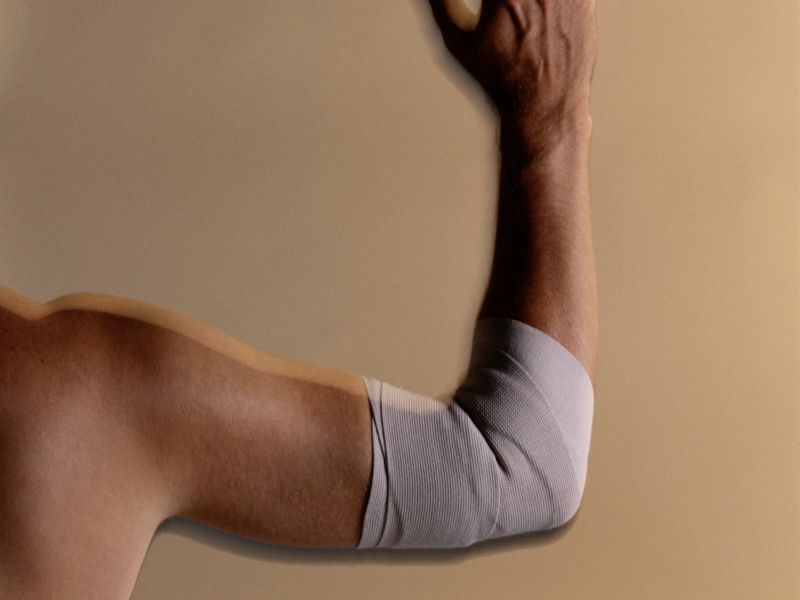
 Improved specificity, sensitivity, and accuracy for diagnosing ulnar collateral ligament tears
WEDNESDAY, May 25, 2016 (HealthDay News) — For medial elbow pain, the combination of stress ultrasound (US) and magnetic resonance (MR) arthrography is associated with improved specificity, sensitivity, and diagnostic accuracy compared with either modality alone, according to a study published in the June issue of Radiology.
Johannes B. Roedl, M.D., Ph.D., from Jefferson Medical College in Philadelphia, and colleagues assessed a combined imaging approach with both US and MR arthrography in baseball players with medial elbow pain.
Data were included for 144 baseball players with 191 findings of medial elbow pain, including 53 ulnar collateral ligament (UCL) tears. The researchers found that for diagnosing UCL tears, joint gapping at the injured elbow greater than 1.0 mm compared with the contralateral elbow yielded sensitivity, specificity, and accuracy of 96, 81, and 87 percent, respectively, with stress US. The sensitivity, specificity, and accuracy for UCL tears were 81, 91, and 88 percent, respectively, with MR arthrography, and these increased to 96, 99, and 98 percent, respectively, when combined with US for a dual modality approach (P = 0.13, P = 0.23, and P < 0.001). For 31 patients with ulnar neuritis, sensitivity, specificity, and accuracy improved for MR arthrography combined with US versus MR arthrography alone.
“The combined approach with both MR arthrography and US shows higher accuracy than each modality alone for the assessment of medial elbow pain,” the authors write.
 PET/MRI Offers Diagnostic, Prognostic Value in Pediatric Epilepsy
  Odds of Imaging Order Higher When Clinicians Self-Interpret
  Catheter-Based OCT May Help ID Early Endometrial Cancer
  Wearable Ultrasound Patch Provides Continuous Fetal Monitoring
  Low Levels of Placental Growth Factor in Pregnancy Linked to Subsequent ADHD in Offspring
  Recommendations Issued for Use of Incretin-Based Meds in Pregnancy
 .jpg) Pregnancy Complications Linked to Subsequent Risk for Cardiometabolic-Renal Conditions
Pregnancy Complications Linked to Subsequent Risk for Cardiometabolic-Renal Conditions  Isometric Exercise Training Three Times a Week Preserves Cardiovascular Benefits



