


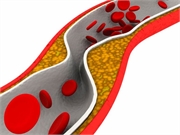
 Subsequent risk for CV events lower among patients with ischemic stroke, TIA, evidence of atherosclerosis
TUESDAY, Nov. 19, 2019 (HealthDay News) — For patients with ischemic stroke or transient ischemic attack (TIA) with evidence of atherosclerosis, those with a target low-density lipoprotein (LDL) cholesterol level of less than 70 mg/dL have a lower risk for cardiovascular events, according to a study published online Nov. 18 in the New England Journal of Medicine. The research was published to coincide with the annual meeting of the American Heart Association, held from Nov. 16 to 18 in Philadelphia.
Pierre Amarenco, M.D., from the Assistance Publique-Hôpitaux de Paris, and colleagues randomly assigned 2,860 patients with ischemic stroke in the previous three months or a TIA within the previous 15 days to either a target LDL cholesterol level of less than 70 mg/dL (lower-target group) or a target range of 90 to 110 mg/dL (higher-target group). Patients received a statin, ezetimibe, or both, and all had evidence of cerebrovascular or coronary artery atherosclerosis.
After 277 of an anticipated 385 end-point events had occurred, the trial was stopped for administrative reasons. The researchers found that the composite primary end point (major cardiovascular events: ischemic stroke, myocardial infarction, new symptoms leading to urgent coronary or carotid revascularization, or death from cardiovascular causes) occurred in 8.5 and 10.9 percent of patients in the lower-target and the higher-target groups, respectively (adjusted hazard ratio, 0.78).
“Despite the limitations of this trial, the results could help to guide clinicians in the use of statins in patients with cardiovascular disease who have had strokes,” write the authors of an accompanying editorial.
The study was partially funded by AstraZeneca and Pfizer.
Abstract/Full Text (subscription or payment may be required)
Editorial (subscription or payment may be required)
More Information
 Lower Cognitive Functioning During 60s Linked to Subsequent Stroke Risk
  Insomnia Linked to Increased Risk for Stroke, Odds of Admission
  Increased Dementia Risk Seen After Transient Ischemic Attack
  UACR, UPCR Provide Indistinguishable Prognostic Information in CKD
  GLP-1 Receptor Agonists, SGLT-2is Slow Renal Function Decline in T2D With Albuminuria
  Exercise-Based Cardiac Rehab Beneficial for Coronary Heart Disease
  Elevated C-Reactive Protein Linked to Increased Risk for Incident Heart Failure, All-Cause Mortality
  Early Complications Common in Older Kidney Transplant Recipients
 .jpg)




