


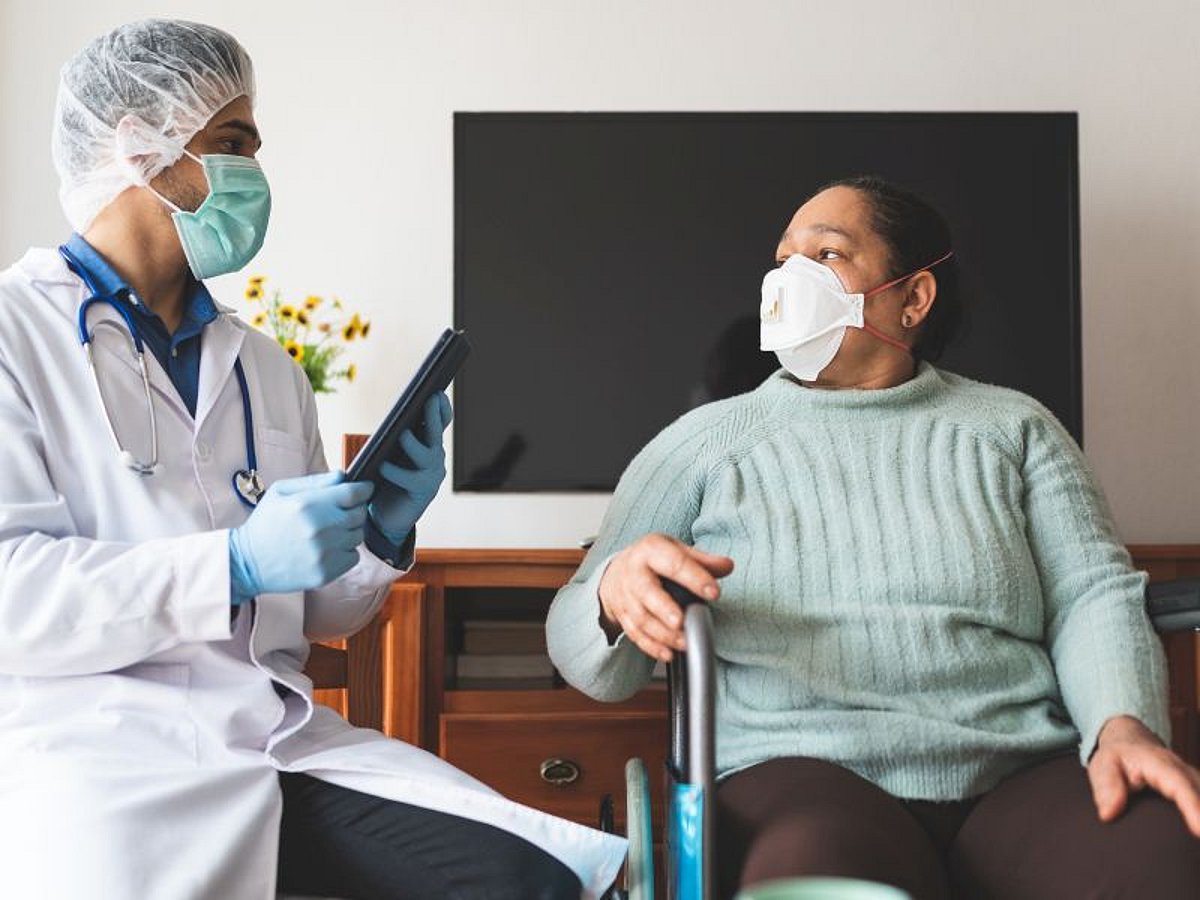
However, once hospitalized, Black patients are less likely than Whites to have severe illness, and to die or be discharged to hospice
MONDAY, Dec. 14, 2020 (HealthDay News) — Black and Hispanic patients are more likely than white patients to test positive for severe acute respiratory syndrome coronavirus 2 (SARS-CoV-2), but are not more likely to be hospitalized, according to a study published online Dec. 4 in JAMA Network Open.
Gbenga Ogedegbe, M.D., M.P.H., from NYU Grossman School of Medicine in New York City, and colleagues compared COVID-19 outcomes based on race and ethnicity and examined the correlation of disparities with comorbidity and neighborhood characteristics in a retrospective cohort study. Data were included for 9,722 patients who were tested for SARS-CoV-2 between March 1, 2020, and April 8, 2020.
The researchers found that Black patients and Hispanic patients were more likely than White patients to test positive in fully adjusted models (odds ratios, 1.3 and 1.5, respectively). The odds of hospitalization were similar for White, Hispanic, and Black patients among those who tested positive, but were higher for Asian and multiracial patients compared with White patients (odds ratios, 1.6 and 1.4, respectively). Among hospitalized patients, compared with Whites, Black patients were less likely to have severe illness (odds ratio, 0.6) and to die or be discharged to hospice (hazard ratio, 0.7).
“Our findings support the notion that Black and Hispanic populations are not inherently more susceptible to having poor COVID-19 outcomes than other groups and, more importantly, that if they make it to the hospital they fare as well as or better than their white counterparts,” the authors write.
 Pre-Prostate Biopsy MRI Use Increased From 2017 to 2026
 Less Intraoperative Crystalloid Fluid Not Tied to Worse Surgical Outcomes
 MHT Initiation May Reduce Cardiovascular Risk in Women With Vasomotor Symptoms
 Residential Context Has Larger Impact on Ovarian Cancer Survival in Black Women
 Exercise Intervention Linked to Improved Attention, Memory in Breast Cancer
.jpg) Cancer Survivors Have Lower Levels of Physical Activity
 Childhood Cancer Survivors Often Have Mental Distress in Adulthood
 Blinatumomab Improves Event-Free Survival in Children With High-Risk B-Cell ALL





