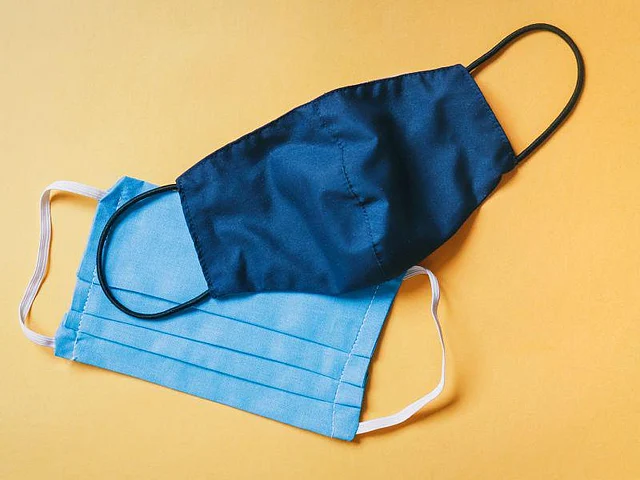
Receiver’s exposure maximally reduced (>95 percent) when source and receiver were fitted with modified medical procedure masks
THURSDAY, Feb. 11, 2021 (HealthDay News) — Good fit is important for maximizing mask performance to reduce exposure to severe acute respiratory syndrome coronavirus 2 (SARS-CoV-2) respiratory droplet particles, according to research published in the Feb. 10 early-release issue of the U.S. Centers for Disease Control and Prevention Morbidity and Mortality Weekly Report.
John T. Brooks, M.D., from the CDC COVID-19 Emergency Response Team, and colleagues conducted experimental simulations using pliable elastomeric source and receiver headforms to assess the extent to which two modifications could improve the fit of medical procedure masks and reduce the receiver’s exposure to an aerosol of simulated respiratory droplet particle of the size considered most important for SARS-CoV-2 transmission. The modifications were wearing a cloth mask over a medical procedure mask and knotting the ears of a medical procedure mask, then tucking in and flattening the extra material close to the face.
The researchers found that the cumulative exposure of the unmasked receiver was reduced by 82.2 and 62.9 percent, respectively, by adding a cloth mask over the source headform’s medical procedure mask or knotting and tucking the medical procedure mask. The reductions were 83.0 and 64.5 percent, respectively, when the source was unmasked and receiver fitted with a double mask or the knotted and tucked medical procedure mask, and 96.4 and 95.9 percent, respectively, when the source and the receiver were both fitted with double masks or knotted and tucked masks.
“Continued innovative efforts to improve the fit of cloth and medical procedure masks to enhance their performance merit attention,” the authors write
 ~16 Percent of COVID Cases Develop Postacute Sequelae of SARS-CoV-2
  Parts of the World Seeing New COVID-19 Variant
  HHS, NIH Unveil Vaccine Initiative to Protect Against Future Pandemics
  Hospital-Onset SARS-CoV-2 Infection During Omicron Linked to Morbidity
  Staffing, Scheduling, and Wage Changes Could Reattract Nurses Back to Hospitals
  Skilled Nursing Facility Capacity Declined Between 2019 and 2024
  Physical Design of Critical Care Units Influences Nursing Culture
  Low Capability Pediatric Hospitals More Than Doubled From 2003 to 2022