


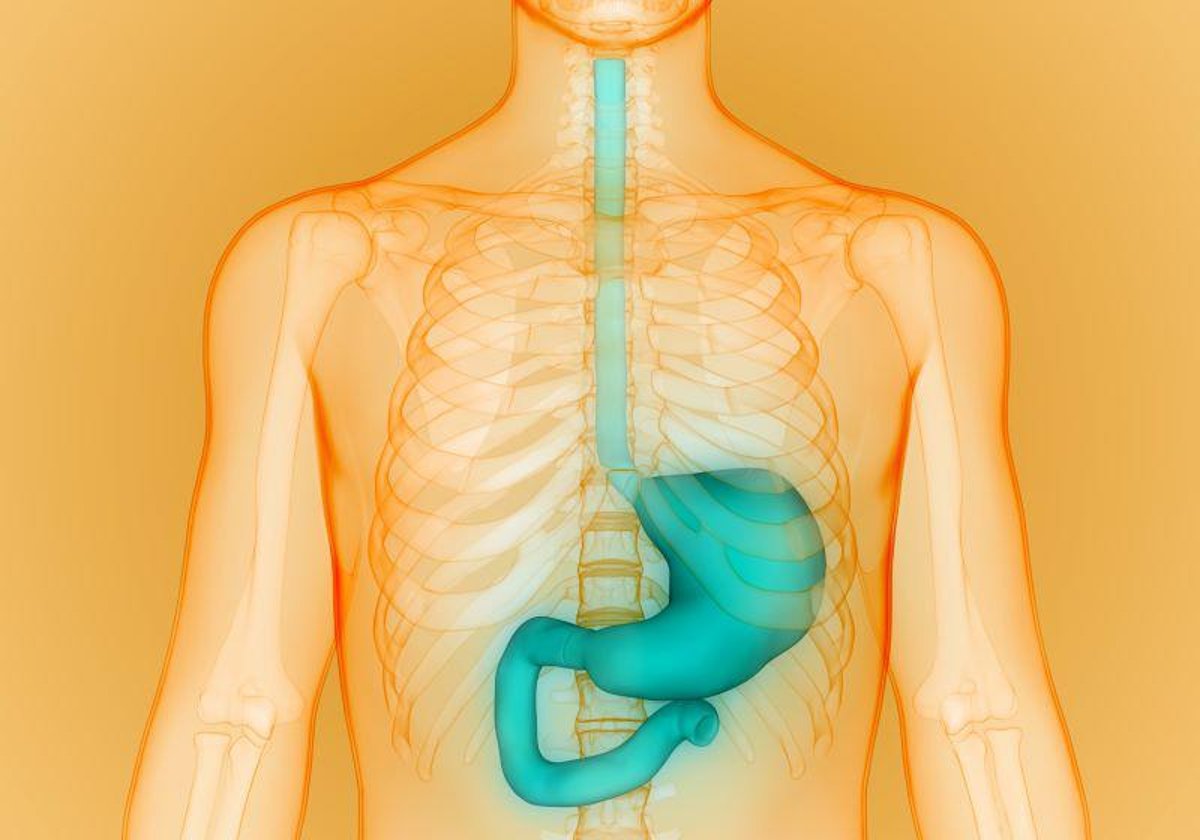
For patients with stage II/III esophageal cancer, five-year survival is improved with early versus delayed esophagectomy
MONDAY, May 23, 2022 (HealthDay News) — Survival is similar with early versus delayed surgery in stage I esophageal cancer, while for stage II/III cancer, five-year survival is improved with early surgery, according to a study published online May 12 in the Journal of the American College of Surgeons.
Simar S. Bajaj, from Massachusetts General Hospital in Boston, and colleagues examined survival of patients with stage I and II/III esophageal cancer. Survival was compared for early (zero to four weeks after diagnosis) versus delayed (12 to 16 weeks after diagnosis) esophagectomy among patients with stage I esophageal cancer (226 and 316 patients, respectively), and for early (nine to 17 weeks after diagnosis) versus delayed (21 to 29 weeks after diagnosis) esophagectomy among patients with stage II/III esophageal cancer who received timely chemoradiation (zero to four weeks after diagnosis; 1,236 and 200 patients, respectively).
The researchers found that in propensity score-matched analyses involving two groups of 134 patients with stage I esophageal cancer, five-year survival was comparable for early versus delayed esophagectomy (65.0 versus 65.1 percent). For the patients with stage II/III esophageal cancer, in a propensity score-matched analysis involving two groups of 130 patients, five-year survival was improved in the early versus the delayed esophagectomy group (41.6 versus 22.9 percent).
“As we continue to move out of the COVID pandemic, surgeons are trying to address the backlog of patients with esophageal cancer,” Bajaj said in a statement. “The point of this study is to consider how we should reintegrate services in such a way that it prioritizes patients that are most at risk.”
 Local Recurrence Rate Low After R0 Resection of Soft Tissue Sarcoma Tumors
 Postoperative Complications Elevated for Patients With Systemic Lupus Erythematosus
 Implant, Patient Survival Do Not Differ for Robotic and Conventional Total Joint Replacement
 Physical Therapist-Supervised Exercise Improves Outcomes After ACL Reconstruction
 Ultrasound-Guided Hydrodissection Yields Improvements in Carpal Tunnel
 2013 to 2024 Saw Decrease in Benzodiazepine Prescribing
 2016 to 2024 Saw Increase in Patients Using Medical Cannabis
 Early Complications Common in Older Kidney Transplant Recipients





