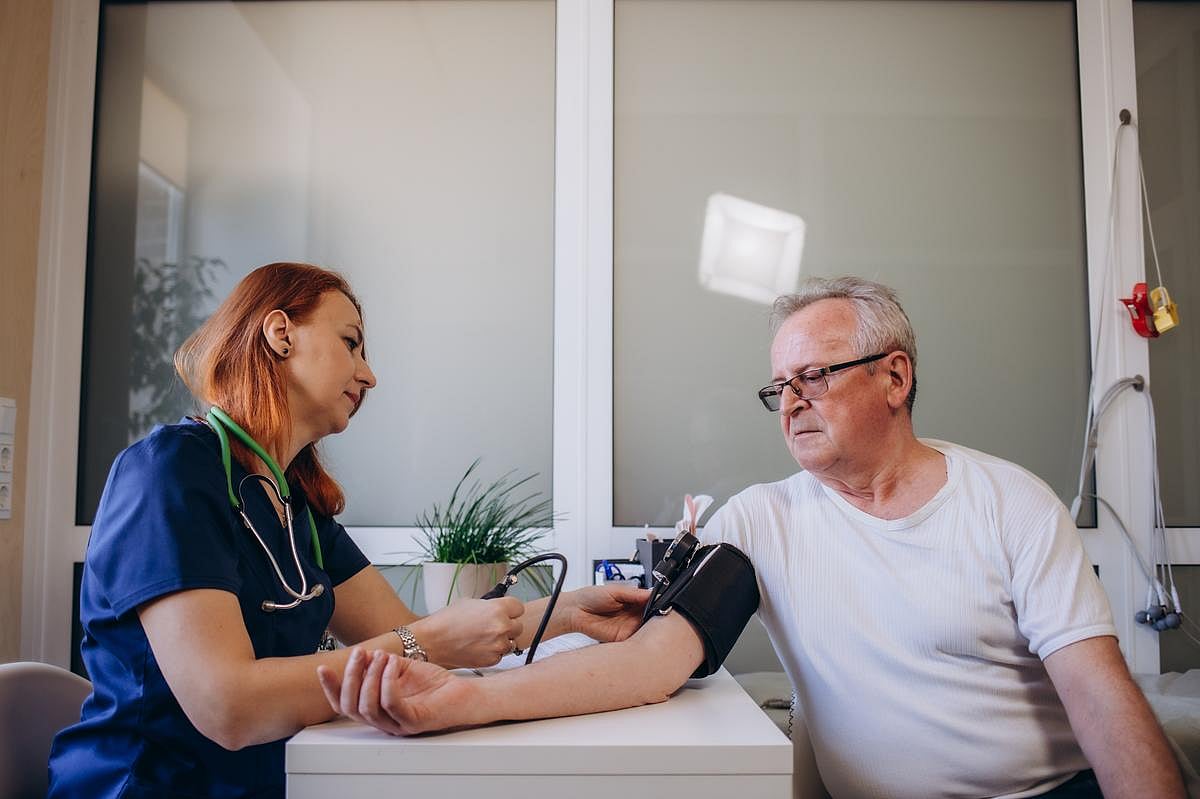
Standing BP performs better alone or in combo with seated BP than seated BP alone
FRIDAY, Nov. 17, 2023 (HealthDay News) — Standing blood pressure (BP), alone or in combination with seated BP, outperformed seated BP alone in diagnosing hypertension in adults, according to a study recently published in Scientific Reports.
John M. Giacona, from the University of Texas (UT) Southwestern Medical Center in Dallas, and colleagues examined the utility of standing BP. For standing BP, sensitivity and specificity were determined using cutoffs derived from Youden”s Index, while for seated BP, sensitivity and specificity were determined using the cutoff of 130/80 mm Hg and 140/90 mm Hg, respectively. The analysis included 125 participants (mean age, 49 years).
The researchers found that sensitivity and specificity of seated systolic BP were 43 and 92 percent, respectively. For standing systolic BP/diastolic BP, cutoffs selected by Youden’s index were 124/81 mm Hg according to the 2017 American College of Cardiology/American Heart Association hypertension guidelines and 123.5/83.5 mm Hg according to the 2023 European Society of Hypertension guidelines. For standing systolic BP, sensitivity and specificity were 71 and 67 percent, respectively. For standing systolic BP, the area under the receiver operating curve was 0.81, significantly higher than seated systolic BP (0.70), when hypertension was defined as average 24-hour systolic BP ≥125 mm Hg. Hypertension detection was improved with the addition of standing to seated systolic BP (0.80) versus seated systolic BP.
“Our study shows that measuring blood pressure in the standing position may offer a more accurate way to determine if someone has hypertension, which requires assessment of a 24-hour ambulatory blood pressure monitor or home monitoring,” lead author Wanpen Vongpatanasin, M.D., also from UT Southwestern Medical Center, said in a statement.
 IBD Not Linked to Risk for Hypertensive Disorders of Pregnancy Overall
  Mortality in Injured Children Linked to Higher SBP Thresholds Than Those That Define Hypotension
  Eating More Whole Grains Daily Linked to Cardiometabolic Benefits
  Midlife Onset of Increasing Pulse Pressure Not Linked to Menopause
  MHT Initiation May Reduce Cardiovascular Risk in Women With Vasomotor Symptoms
  Longer Reproductive Lifespan Tied to Lower Bronchiectasis Risk in Postmenopausal Women
  Intensive BP Lowering Reduces Recurrent Stroke After Intracerebral Hemorrhage
  Estrogen Hormone Treatment May Be Beneficial for Brain Fog Symptoms in Menopausal Women