


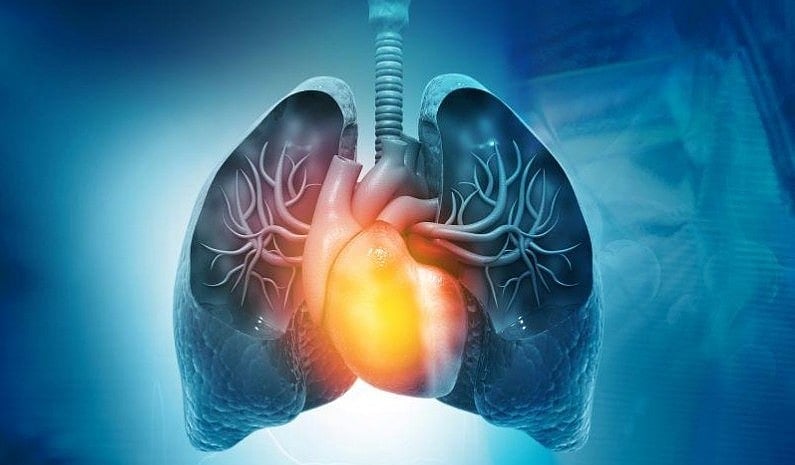
Ready-to-eat food environment-associated risk for heart failure stronger for those who are poorly educated, living in urban areas
WEDNESDAY, Feb. 28, 2024 (HealthDay News) — Exposure to ready-to-eat food environments is associated with a higher risk for incident heart failure, according to a study published online Feb. 27 in Circulation: Heart Failure.
Qiaochu Xue, M.P.H., from the School of Public Health and Tropical Medicine at Tulane University in New Orleans, and colleagues examined the association between ready-to-eat food environments and incident heart failure at an individual level in a large prospective cohort study. Exposure to ready-to-eat food environments, including pubs or bars, restaurants or cafeterias, and fast-food outlets, was measured as both proximity and density metrics. By summing the densities of three types of food environments, a composite ready-to-eat food environment density score was developed.
The researchers observed associations for closer proximity to and greater density of ready-to-eat food environments, especially pubs and bars and fast-food outlets, with an elevated risk for incident heart failure. The risk for heart failure was 16 percent higher for participants in the highest density score category versus those with no exposure to composite ready-to-eat food environments. Significant interactions were seen for food environments with education, urbanicity, and density of physical activity facilities on heart failure risk; participants who were poorly educated, were living in urban areas, and did not have physical activity facilities had a stronger ready-to-eat food environment-associated risk for heart failure.
“Our findings lend support to the improvement of neighborhood food environments in the prevention of heart failure,” the authors write.
 Elevated C-Reactive Protein Linked to Increased Risk for Incident Heart Failure, All-Cause Mortality
  UACR, UPCR Provide Indistinguishable Prognostic Information in CKD
  Use of SAMA, SABA Linked to Cardiovascular Events, Mortality in Asthma, COPD
  2011 to 2021 Saw Heart Failure-Related Hospitalization Rise in CKD
  GLP-1 Receptor Agonists, SGLT-2is Slow Renal Function Decline in T2D With Albuminuria
 .jpeg) 1997 to 2022 Saw Increase in Pediatric Hospitalizations With AKI
1997 to 2022 Saw Increase in Pediatric Hospitalizations With AKI  Early Complications Common in Older Kidney Transplant Recipients
  Frailty Linked to Incident Cognitive Decline in Men With CKD


.jpg)

